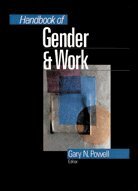
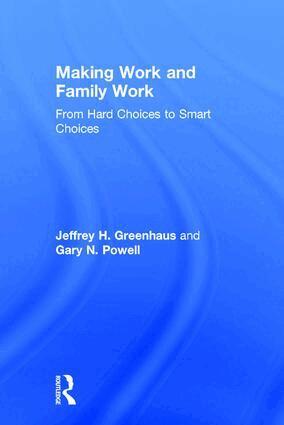
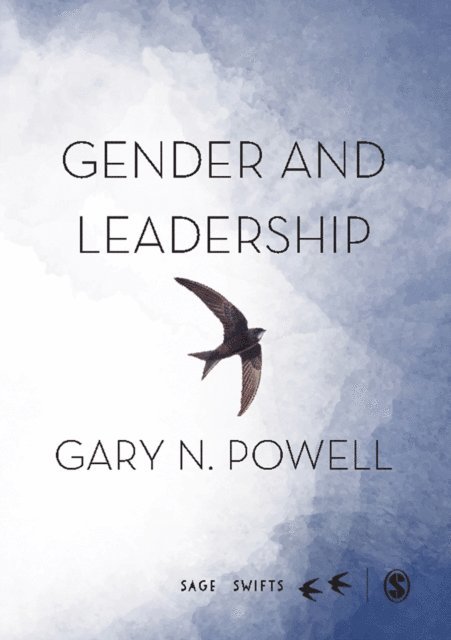
Gary N. Powell, Ph.D. is Professor Emeritus of Management at the University of Connecticut. He is author of Gender in Management (6th ed.), Gender and Leadership, Making Work and Family Work: From Hard Choices to Smart Choices, and Managing a Diverse Workforce: Learning Activities (3rd ed.), and the editor of Handbook of Gender and Work. He is an internationally recognized scholar and educator on gender, diversity, and work-family issues in the workplace. His graduate course on women and men in management won an award on innovation in education from the Committee on Equal Opportunity for Women of the Association to Advance Collegiate Schools of Business (AACSB). He has won the University of Connecticut School of Business Outstanding Graduate Teaching Award (four times) and Outstanding Undergraduate Teaching Award. He has received the University of Connecticut President’s Award for Promoting Multiculturalism.He has served as Chair of the Women in Management Division (now Diversity, Equity, and Inclusion Division) of the Academy of Management and received both the Janet Chusmir Service Award for his contributions to the division and the Sage Scholarship Award for his contributions to research on gender in organizations. He has received the Richard Whipp Lifetime Achievement Award of the British Academy of Management for his contributions to business and management research in the United Kingdom (UK). He has received the Ellen Galinsky Generative Researcher Award of the Work and Family Researchers Network and was also named as a Top Ten Extraordinary Contributor for his contributions to work and family research. He has served as Distinguished Scholar at Lancaster University Management School in Lancaster, UK. He has published over 120 articles in journals such as Academy of Management Journal, Academy of Management Review, Journal of Applied Psychology, Journal of Management, Journal of Management Studies, Personnel Psychology, Organizational Behavior and Human Decision Processes, Journal of Business Venturing, Journal of Vocational Behavior, Journal of Organizational Behavior, Journal of Occupational and Organizational Psychology, Entrepreneurship Theory and Practice, and Human Relations; contributed over 30 chapters to edited volumes; and made over 180 presentations at professional conferences. He is a Fellow of the British Academy of Management, Academy of Social Sciences, and Eastern Academy of Management. He has served on the Board of Governors of the Academy of Management and as President of the Eastern Academy of Management. He has served as co-editor of a special issue of Academy of Management Review on work-life theory and on the editorial board of Academy of Management Review, Journal of Management, Journal of Management Studies, Human Relations, and Academy of Management ExecutivePrior to joining the faculty at UConn, he worked at General Electric (GE), graduating from its Manufacturing Management Program. At GE, he designed and implemented automated project scheduling systems as well as systems for inventory control, materials procurement, and so on. He has provided management training and development for many companies, including Webster Financial Corporation, The Hartford Financial Services Group, The Implementation Partners (TIP), GE Capital, General Signal, Apple Computer, Monroe Auto Equipment, Allstate, and CIGNA and has conducted numerous other workshops.He holds a doctorate in organizational behavior and a master’s degree in management science from the University of Massachusetts and a bachelor’s degree in management from the Massachusetts Institute of Technology (MIT).