• Fri frakt över 249 kr
  • •
  • Snabba leveranser
  • •
  • Billiga böcker
Kundservice

Du är på sajten för privatpersoner.

Företag, bibliotek eller offentlig verksamhet?

Du handlar på classic.bokus.com, där alla dina funktioner finns intakta.
Till classic.bokus.com
Bokus logotyp. Gå till startsidan.
  • Erbjudanden
  • Student
  • Topplistor
  • Barn & ungdom
  • Bokus Play
  • E-böcker
  • Ljudböcker
  • Pocketböcker
  • Spel och pussel

Pocketfynda! Hundratals böcker för 49 kr/st →

Sidfot

Mina sidor

    Hjälp

    • Kundservice
    • Vanliga frågor och svar
    • Frakt och leverans
    • Retur vid ångerrätt
    • Reklamera vara
    • Betalning
    • Köpvillkor
    • Allmänna villkor
    • Information om webbplatsens tillgänglighet

    Om Bokus

    • Om oss
    • Pressrum
    • För studenter
    • För företag
    • För bibliotek och offentlig verksamhet
    • För leverantörer
    • Hållbarhet

    Populärt

    • Aktuella erbjudanden
    • Presentkort
    • Studentlitteratur
    • Nya böcker
    • Topplistor
    • Signerade böcker
    • Engelska böcker

    Inspiration

    • Boktips
    • BookTok
    • Barnbokskaraktärer
    • Populära författare
    Logotyp för Bokus
    Följ oss på Facebook (extern länk)Följ oss på Instagram (extern länk)Följ oss på YouTube (extern länk)Följ oss på TikTok (extern länk)
    bokus @ CookiesAnpassa cookiesIntegritetspolicyKöpvillkor
    Till Citymail hemsida (extern länk)Till Budbee hemsida (extern länk)Till Postnord hemsida (extern länk)Till Schenker hemsida (extern länk)Till Early Bird hemsida (extern länk)Till Walleys hemsida (extern länk)
    1. Ekonomi och Ledarskap
    2. Ledarskapsböcker

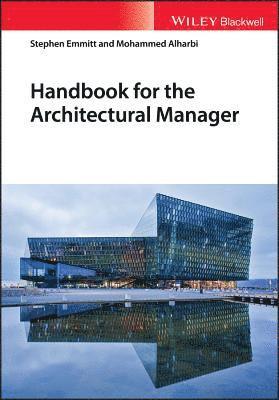
    Handbook for the Architectural Manager

    AvStephen Emmitt,Mohammed A. Alharbi

    Häftad, Engelska, 2018

    612 kr

    Skickas . Fri frakt över 249 kr.

    Beskrivning

    The essential resource for becoming more effective in the highly competitive architectural marketplaceHandbook for the Architectural Manager offers architects a comprehensive resource that brings together critical information on four interlinked areas: managing the architectural office, projects, stakeholders, and learning. Unlike other books on the topic that only stress management of the business or the management of projects, this book offers a guiding framework that encompasses the architectural manager's role in developing the practice’s competitive strategies and overseeing the project portfolio.Written by noted experts in the field, Handbook for the Architectural Manager is grounded in current research in which, for the first time, the components of architectural management have been analyzed systematically, tested, and developed for practical application. Designed to explore typical architectural management issues, the book provides clear and concise direction with practical step-by-step guidance as well as helpful checklists, templates and scenarios, and case studies to illustrate best practice. This essential resource: Offers a groundbreaking handbook that contains a comprehensive management framework for architectural practiceContains new insights and guidance based on solid research on managing the architectural practiceBrings together in one book the best management techniques of the office, projects, stakeholders, and learningIncludes a well-grounded critical review of the existing literature on the topicDesigned for professionals in the field but written in accessible language suitable for studentsHandbook for the Architectural Manager offers a practical guide for overseeing the development of architectural designs and associated activities and ensuring all work is consistent (i.e. adheres to current standards, legislation, client specifications, and office protocols) and completed on time as well as information on staff development and learning.

    Produktinformation

    • Utgivningsdatum:2018-06-29
    • Mått:165 x 239 x 8 mm
    • Vikt:318 g
    • Format:Häftad
    • Språk:Engelska
    • Antal sidor:160
    • Förlag:John Wiley and Sons Ltd
    • ISBN:9781119225508

    Utforska kategorier

    • Ledarskapsböcker inom Ekonomi och Ledarskap
    • Arkitektur inom Kultur

    Mer om författaren

    Stephen Emmitt, BA(Hons), Dip. Arch, MA (Prof. Ed.), PhD., Department of Architecture and Civil Engineering, University of Bath, UK. Emmitt is an architect, professor of architectural practice and author of 21 books on architectural management and architectural technology. He is Editor-in-Chief of the journal Architectural Engineering & Design Management. Mohammed Alharbi, Dip., BSc., MSc., PhD., Department of Architectural Engineering, Taibah University, Saudi Arabia. Alharbi is an architect, assistant professor of project management and a member of CIBW096 Architectural Management. He has a PhD in architectural management and has published in Engineering, Construction and Architectural Management and Frontiers of Architectural Research.

    Innehållsförteckning

    • Preface ix1 Introduction 11.1 An Argument for a Management Framework 11.2 Agenda 41.3 Structure 41.4 Value 52 Architecture and Management 72.1 Setting the Scene 72.2 Architecture and Management 72.2.1 Architectural Practice 82.3 Design 92.3.1 Design as an Activity (Process) 92.3.2 Design as Collaboration (Co-design) 102.3.3 Design as Learning 102.3.4 Design as an Output (Product) 112.3.5 Types of Design and Management Challenges 112.4 The Management of Design 122.4.1 In Construction 122.4.2 In Architecture 132.4.3 Comparing Roles 132.5 The Business of Architecture 142.5.1 The Challenge of Uniqueness 153 Architectural Management 173.1 Setting the Scene 173.2 Architectural Management: What it is 173.2.1 The Meaning of Architectural Management 183.2.2 A Practical Definition of Architectural Management 193.3 Benefits of Adopting Architectural Management 203.4 Levels of Application 213.5 The Architectural Manager 233.5.1 What does the Architectural Manager do? 233.5.2 Knowledge and Skills 253.5.3 Who is Best Qualified to Practise or Lead Architectural Management? 263.6 Ensuring Consistency 273.7 Self-reflection 283.8 Managing Expectations 283.9 Taking on the Architectural Manager Role 304 Architectural Management Framework 334.1 Setting the Scene 334.2 The Essentials 334.2.1 Architectural Offices 334.3 Strategic Concerns: People and Processes 344.3.1 People 344.3.2 Processes 364.4 Practical Concerns: Managing Resources 364.4.1 Less is More 374.4.2 Managing Design Effort 374.4.3 Staff Deployment 374.4.4 Identifying Good Habits and Eliminating Inefficiencies 384.4.5 Balancing Risk and Reward 394.4.6 Ensuring Consistency 404.5 A Practical Framework 414.6 How to use the Framework 415 Managing the Business 435.1 Business Model 445.2 Organisation Design 475.3 Marketing 485.4 Human Resource Management 515.5 Information Technology Utilisation 545.6 Workplace Design and Management 555.7 Ethics and Legal Issues 575.8 Knowledge Management 605.9 Growth Planning 615.10 Financial Management 626 Managing Projects 676.1 Design Excellence 686.2 Design Management 706.3 Project Management 726.4 Construction Management 756.5 Facilities Management 776.6 Property ‘Real Estate’ Development 786.7 Interior Design 806.8 Architectural Support Services 826.9 Investments and other Business Ventures 836.10 Quality Management 847 Managing Stakeholders 877.1 Stakeholder Identification 887.2 Stakeholder Analysis 907.3 Stakeholder Communication 927.4 Stakeholder Engagement 947.5 Conflict Management 967.6 Value Management 977.7 Managing the Firm’s Social Responsibility 997.8 Managing Sustainability 1007.9 Client Education 1027.10 Managing Client Requirements 1028 Managing Learning 1058.1 The Learning Firm 1068.2 Managing Individual Learning 1088.3 Managing Group Learning 1108.4 Managing Organisational Learning 1138.5 Managing Inter-Organisational Learning 1158.6 Managing Continuing Professional Development 1178.7 Measuring Effectiveness 1198.8 Measuring the Architectural Manager’s Leadership Skills 1218.9 Analogical Comparison with Others 1238.10 Collaborating with Professional Bodies 1259 Practical Application 1299.1 The Sole Practitioner 1299.1.1 Scenario 1299.1.2 Applying Architectural Management – Managing Learning 1309.1.3 Reflection and Measuring Performance 1309.2 The Small Office 1319.2.1 Scenario 1319.2.2 Applying Architectural Management – Managing Projects 1329.2.3 Reflection and Measuring Performance 1329.3 The Medium-sized Office 1339.3.1 Scenario 1339.3.2 Applying Architectural Management – Managing the Business 1349.3.3 Reflection and Measuring Performance 1349.4 The Large Office 1359.4.1 Scenario 1359.4.2 Applying Architectural Management – Managing Stakeholders 1359.4.3 Reflection and Measuring Performance 1379.5 And Finally…it is Your Turn 137Further Reading 139Architectural Management 139Design Management for AEC 139Generic Design Management 140References 141Index 143