• Fri frakt över 249 kr
  • •
  • Snabba leveranser
  • •
  • Billiga böcker
Kundservice

Du är på sajten för privatpersoner.

Företag, bibliotek eller offentlig verksamhet?

Du handlar på classic.bokus.com, där alla dina funktioner finns intakta.
Till classic.bokus.com
Bokus logotyp. Gå till startsidan.
  • Erbjudanden
  • Student
  • Topplistor
  • Barn & ungdom
  • Bokus Play
  • E-böcker
  • Ljudböcker
  • Pocketböcker
  • Spel och pussel

Pocketfynda! Hundratals böcker för 49 kr/st →

Sidfot

Mina sidor

    Hjälp

    • Kundservice
    • Vanliga frågor och svar
    • Frakt och leverans
    • Retur vid ångerrätt
    • Reklamera vara
    • Betalning
    • Köpvillkor
    • Allmänna villkor
    • Information om webbplatsens tillgänglighet

    Om Bokus

    • Om oss
    • Pressrum
    • För studenter
    • För företag
    • För bibliotek och offentlig verksamhet
    • För leverantörer
    • Hållbarhet

    Populärt

    • Aktuella erbjudanden
    • Presentkort
    • Studentlitteratur
    • Nya böcker
    • Topplistor
    • Signerade böcker
    • Engelska böcker

    Inspiration

    • Boktips
    • BookTok
    • Barnbokskaraktärer
    • Populära författare
    Logotyp för Bokus
    Följ oss på Facebook (extern länk)Följ oss på Instagram (extern länk)Följ oss på YouTube (extern länk)Följ oss på TikTok (extern länk)
    bokus @ CookiesAnpassa cookiesIntegritetspolicyKöpvillkor
    Till Citymail hemsida (extern länk)Till Budbee hemsida (extern länk)Till Postnord hemsida (extern länk)Till Schenker hemsida (extern länk)Till Early Bird hemsida (extern länk)Till Walleys hemsida (extern länk)
    1. Filosofi och religion
    2. Filosofi
    3. Filosofiska discipliner

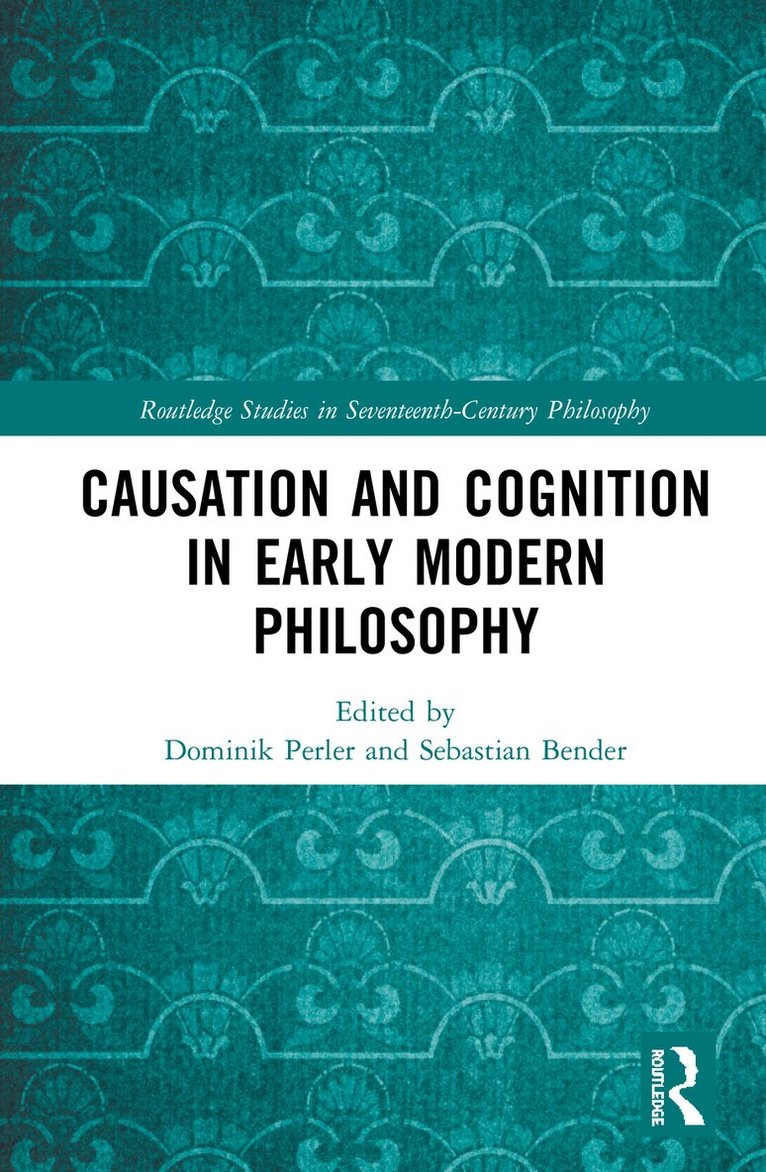
    Causation and Cognition in Early Modern Philosophy

    AvDominik Perler,Sebastian Bender

    Inbunden, Engelska, 2019

    Del i serien Routledge Studies in Seventeenth-Century Philosophy

    2 410 kr

    Beställningsvara. Skickas inom 10-15 vardagar. Fri frakt över 249 kr.

    Beskrivning

    This book re-examines the roles of causation and cognition in early modern philosophy. The standard historical narrative suggests that early modern thinkers abandoned Aristotelian models of formal causation in favor of doctrines that appealed to relations of efficient causation between material objects and cognizers. This narrative has been criticized in recent scholarship from at least two directions. Scholars have emphasized that we should not think of the Aristotelian tradition in such monolithic terms, and that many early modern thinkers did not unequivocally reduce all causation to efficient causation.In line with this general approach, this book features original essays written by leading experts in early modern philosophy. It is organized around five guiding questions:What are the entities involved in causal processes leading to cognition?What type(s) or kind(s) of causality are at stake? Are early modern thinkers confined to efficient causation or do other types of causation play a role?What is God's role in causal processes leading to cognition?How do cognitive causal processes relate to other, non-cognitive causal processes?Is the causal process in the case of human cognition in any way special? How does it relate to processes involved in the case of non-human cognition?The essays explore how fifteen early modern thinkers answered these questions: Francisco Suárez, René Descartes, Louis de la Forge, Géraud de Cordemoy, Nicolas Malebranche, Thomas Hobbes, Baruch de Spinoza, Gottfried Wilhelm Leibniz, Ralph Cudworth, Margaret Cavendish, John Locke, John Sergeant, George Berkeley, David Hume, and Thomas Reid. The volume is unique in that it explores both well-known and understudied historical figures, and in that it emphasizes the intimate relationship between causation and cognition to open up new perspectives on early modern philosophy of mind and metaphysics.

    Produktinformation

    • Utgivningsdatum:2019-07-30
    • Mått:152 x 229 x 22 mm
    • Vikt:612 g
    • Format:Inbunden
    • Språk:Engelska
    • Serie:Routledge Studies in Seventeenth-Century Philosophy
    • Antal sidor:362
    • Förlag:Taylor & Francis Ltd
    • ISBN:9781138505346

    Utforska kategorier

    • Filosofiska discipliner inom Filosofi och religion

    Mer om författaren

    Dominik Perler is Professor of Philosophy at Humboldt-Universität, Berlin, and Member of the Berlin-Brandenburg Academy of Arts and Science. His books include Partitioning the Soul: Debates from Plato Leibniz (ed., 2014), The Faculties: A History (ed., 2015), Feelings Transformed: Philosophical Theories of the Emotions, 1270-1670 (2018).Sebastian Bender is Lecturer at the philosophy department at Humboldt-Universität, Berlin. His research focuses primarily on early modern philosophy, in particular on the metaphysics and philosophy of mind of this era. In 2016, he published his first book, Leibniz’ Metaphysik der Modalität.

    Recensioner i media

    "This volume is a welcome addition to early modern scholarship, providing a source of reflection on the connection between cognition theory and causation theory. The collection's great merit is exploiting this cognition-causation connection to provide a new avenue for historical research that is at the same time philosophically significant."Journal of the History of Philosophy

    Innehållsförteckning

    • IntroductionDominik Perler & Sebastian Bender1. Suárez on Intellectual Cognition and Occasional CausationDominik Perler2. Descartes on the Causal Structure of CognitionAlison Simmons3. Cartesian Causation and Cognition: Louis de la Forge and Géraud de CordemoyTad Schmaltz4. Causation and Cognition in MalebrancheStephan Schmid5. Ralph Cudworth: Plastic Nature, Cognition and the Cognizable WorldSarah Hutton6. Nothing Is Simply One Thing: Conway on Multiplicity in Causation and CognitionJulia Borcherding7. Cavendish on Material Causation and CognitionDavid Cunning8. The Mechanical Mind: Hobbes on Sense Cognition and ImaginationMartine Pécharman9. Knowing Mind through Knowing Body: Spinoza on Causal Knowledge of the Self and the External WorldDaniel Garber10. The Many Faces of Spinoza’s Causal AxiomMartin Lin11. Locke on Causation and CognitionJennifer Marušić12. Embodied Cognition without Causal Interaction in LeibnizJulia Jorati13. John Sergeant and Antoine Le Grand on the Occasional Cause of CognitionHan Thomas Adriaenssen14. Berkeley on Causation, Ideas and Necessary ConnectionsSebastian Bender15. Hume and "Reason as a Kind of Cause"P. J. E. Kail16. Reid on Intentionality and CausationJames Van Cleve