• Fri frakt över 249 kr
  • •
  • Snabba leveranser
  • •
  • Billiga böcker
Kundservice

Du är på sajten för privatpersoner.

Företag, bibliotek eller offentlig verksamhet?

Du handlar på classic.bokus.com, där alla dina funktioner finns intakta.
Till classic.bokus.com
Bokus logotyp. Gå till startsidan.
  • Erbjudanden
  • Student
  • Topplistor
  • Barn & ungdom
  • Bokus Play
  • E-böcker
  • Ljudböcker
  • Pocketböcker
  • Spel och pussel

Pocketfynda! Hundratals böcker för 49 kr/st →

Sidfot

Mina sidor

    Hjälp

    • Kundservice
    • Vanliga frågor och svar
    • Frakt och leverans
    • Retur vid ångerrätt
    • Reklamera vara
    • Betalning
    • Köpvillkor
    • Allmänna villkor
    • Information om webbplatsens tillgänglighet

    Om Bokus

    • Om oss
    • Pressrum
    • För studenter
    • För företag
    • För bibliotek och offentlig verksamhet
    • För leverantörer
    • Hållbarhet

    Populärt

    • Aktuella erbjudanden
    • Presentkort
    • Studentlitteratur
    • Nya böcker
    • Topplistor
    • Signerade böcker
    • Engelska böcker

    Inspiration

    • Boktips
    • BookTok
    • Barnbokskaraktärer
    • Populära författare
    Logotyp för Bokus
    Följ oss på Facebook (extern länk)Följ oss på Instagram (extern länk)Följ oss på YouTube (extern länk)Följ oss på TikTok (extern länk)
    bokus @ CookiesAnpassa cookiesIntegritetspolicyKöpvillkor
    Till Citymail hemsida (extern länk)Till Budbee hemsida (extern länk)Till Postnord hemsida (extern länk)Till Schenker hemsida (extern länk)Till Early Bird hemsida (extern länk)Till Walleys hemsida (extern länk)
    1. Kultur
    2. Arkitektur

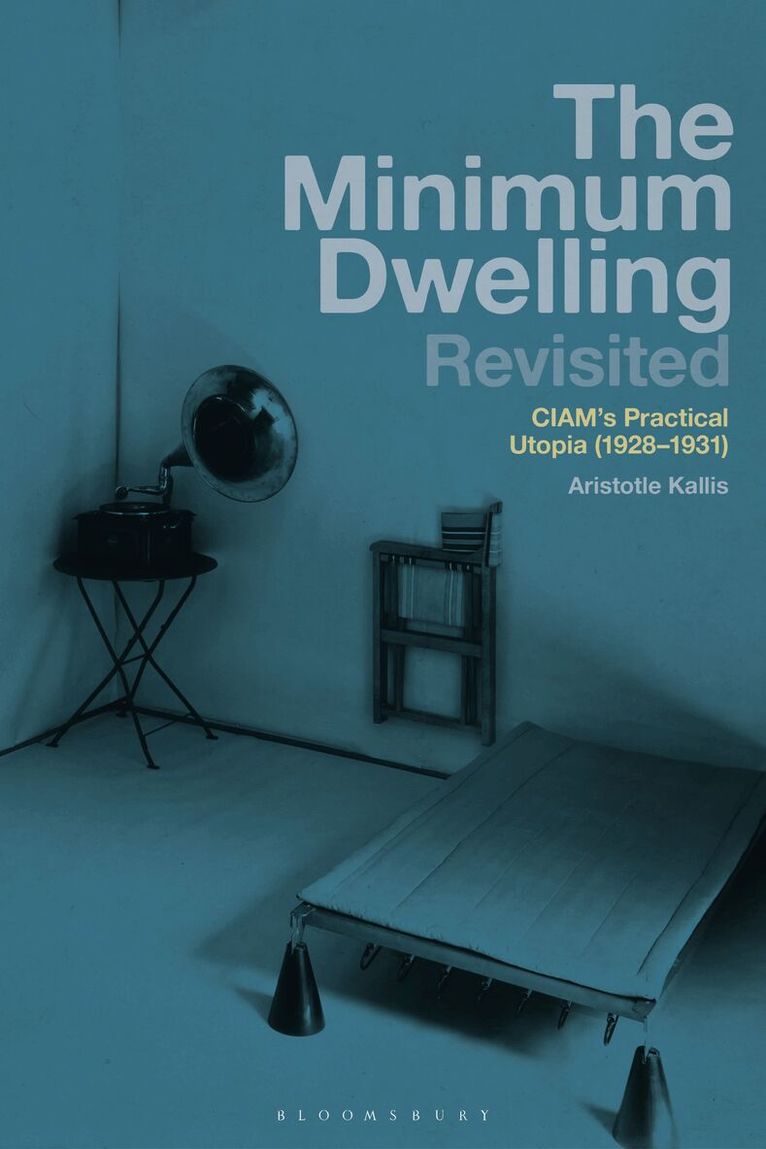
    Minimum Dwelling Revisited

    CIAM's Practical Utopia (1928–31)

    AvAristotle Kallis

    Häftad, Engelska, 2025

    Del i serien Bloomsbury Visual Arts

    420 kr

    Beställningsvara. Skickas inom 10-15 vardagar. Fri frakt över 249 kr.

    Fler format och utgåvor

    Inbunden

    1 269 kr

    E-bok

    451 kr

    E-bok

    451 kr

    Beskrivning

    This book provides an intellectual history of the modernist "minimum dwelling", exploring how early modernism saw mass housing as a primary vehicle for achieving the utopian transformation of society. It reappraises the often-overlooked 2nd and 3rd CIAM conferences (1929-31), addressing their engagement with the "minimum dwelling" and revealing them both as milestones in the organisation's annals and as seminal moments in the history of interwar modernism.In 1929, an eclectic international group of avant-garde modernist architects, including Ernst May, Mart Stam, Walter Gropius and Le Corbusier, met in Frankfurt for the second instalment of the CIAM conferences. They discussed a design programme for cost-effective, good-quality housing, seeking new approaches and processes to maximize quality and functionality while ensuring affordability for the wider population. In exploring the meaning and form of the 'minimum dwelling', they also re-defined dwelling as the hub of a new way of living, proposing a revolutionary multi-scalar approach to urban design based on the concept of the Existenzminimum (‘optimally minimal housing’).Despite the two conferences falling short of the organizer’s expectations, and being overshadowed by later instalments, the participating architects sanctioned a semantic shift from minimum as bare necessity to a very different, aspirational, kind of minimalism – transforming the entire conversation on mass low-cost dwelling in design, social and ethical terms.Split into two parts, The Minimum Dwelling Revisited first takes a genealogical approach to explore the provenance of the concept of "minimum dwelling" prior to the 2nd and 3rd CIAM conferences, it then traces the proceedings of the two conferences themselves. Addressing the origins of the "minimum dwelling" concept but also its legacies, and serving as a corrective to the overemphasis on 4th CIAM conference and the Athens Charter, the book is essential reading for scholars researching urban design during the Interwar period.

    Produktinformation

    • Utgivningsdatum:2025-05-29
    • Mått:152 x 232 x 16 mm
    • Vikt:380 g
    • Format:Häftad
    • Språk:Engelska
    • Serie:Bloomsbury Visual Arts
    • Antal sidor:248
    • Förlag:Bloomsbury Publishing PLC
    • ISBN:9781350346222

    Utforska kategorier

    • Arkitektur inom Kultur
    • Arkitekturhistoria inom Kultur

    Mer om författaren

    Aristotle Kallis is Professor of Modern and Contemporary History at the School of Humanities, Keele University, UK.

    Recensioner i media

    The early Modern Movement was passionately committed to addressing the housing needs of the industrial working classes. In this meticulously researched book, Aristotle Kallis presents an authoritative account of the emergence and significance of the Minimum Dwelling (Existenzminimum) as an important expression of that commitment. It supplies important new understandings to our knowledge of twentieth-century European architectural and planning history.

    Innehållsförteckning

    • List of IllustrationsAcknowledgmentsAbbreviationsIntroduction‘Contact Zone’ and 'Practical Utopia'Structure1. Genealogies of the MinimumPoverty, ‘Human Needs', and 'Minimum'Habitation and 'Minimum Needs'Early Interventions and Reform InitiativesExistenzminimumThe Low-cost Housing Calculus2. The 'Small Dwelling' Between Emergency and AspirationSize and DwellingThe 'Small Dwelling' after WW1From the 'Small' to the 'Smallest' Dwelling (Kleinstwohnung)The Pioneering Cases of Vienna and Frankfurt3. International Expert Networks and The Housing Question in the Interwar PeriodThe IFHTP Encounters the Question of Mass Housing: Vienna, 1926The IFHTP Congress in Paris, 1928: The Trope of the 'Housing For the Very Poor'The IFHTP Congress in Rome, 1929: Planning and Financing Mass Urban Housing4. The 'Minimum Dwelling' as UtopiaWW1 as Rupture: The Space of UtopiaInterwar Modernism as Discourse: Minimum and OptimumArchitecture as RevolutionThe Private Cell, The Public Sphere, and What Lies In-BetweenThe Soviet Experience: Pursuing the Minimum in UtopiaThe 'Dwelling Ration': Social Utopia in Disguise‘Frictionless Living': The Studies of Alexander Klein5. CIAM2: The 'Minimum Dwelling' In FocusCIAM and its 'Lesser' CongressesCIAM’s First Steps and the Question of DwellingSetting Up the First 'Working Congress'The 1929 Frankfurt Congress (CIAM2)Language Matters: The Opacity of the ExistenzminimumThe Aftermath of the Frankfurt Congress6. CIAM3: Dwelling as the Unlikely Hub og Modern ArchitectureFrom CIAM2 to CIAM3: Exploring Scales in Three-Dimensional SpaceThe Elusive Theme(s) of CIAM3: The Battle of the ScalesThe Brussels CongressThe 'Minimum Dwelling' in CIAM37. The CIAM2 and CIAM3 ExhibitionsThe Exhibition Field in Interwar Europe: Showcasing the 'Minimum'The Minimum Dwelling on Show: Exhibiting CIAM2Exhibiting CIAM3ConclusionsBibliographyIndex