Inbunden, Engelska, 2027
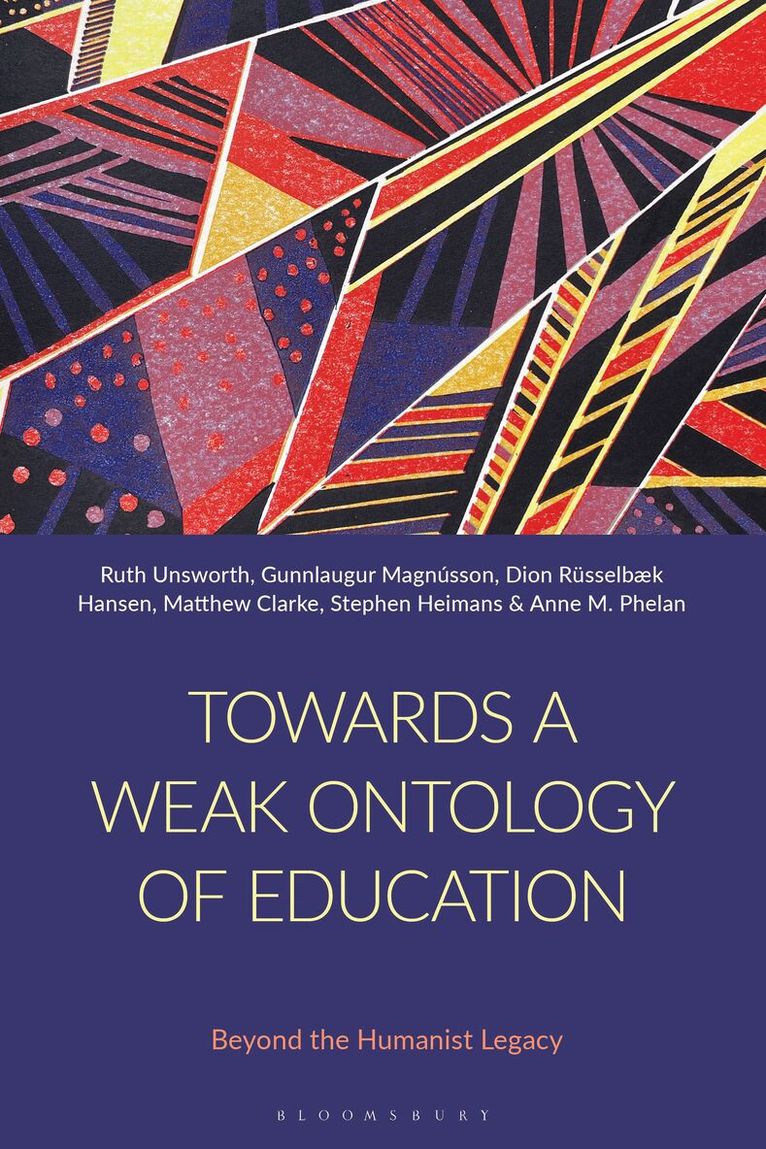
Towards a Weak Ontology of Education
Av Ruth Unsworth, Gunnlaugur Magnússon, Dion Rüsselbæk Hansen, Matthew Clarke, Stephen Heimans, Anne M. Phelan
1227 kr
Kommande
Beskrivning
This book critiques the humanist legacy in education, arguing that it frames our thoughts, imaginations and conceptualisations of what education means and can be about. It offers an alternative perspective, unburdened by this legacy, and grounded in a ‘weak ontology’, as a means of opening up new possibilities for the educational imagination. The authors argue that by embracing humanism’s values of rectitude and redemption as foundational, education becomes nothing more than a means to “social hygiene and economic productivity” (Bojesen, 2020). The authors offer a repertoire of concepts that begin to affirm educational experience, each chapter exploring the potential and challenges of these concepts. Those concepts include subjectivity and inclination, conversation, natality and the event, finitude and death, and indeterminability. These are used to challenge the dominant educational drives for progress and economic growth and offers a bold and timely vision for education that truly matters in an age of relentless expansion and mounting global crises.
Produktinformation
- Utgivningsdatum: 2027-01-07
- Mått: 156 x 234 x 25 mm
- Vikt: 454 g
- Format: Inbunden
- Språk: Engelska
- Antal sidor: 160
- Förlag: Bloomsbury Publishing PLC
- ISBN: 9781350608849
Utforska kategorier
Betyg & recensioner
0 recensioner
Inga recensioner tillgängliga.