- Nyhet
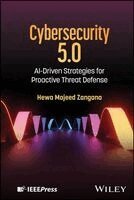
Cybersecurity 5.0
AI-Driven Strategies for Proactive Threat Defense
1 430 kr
Beställningsvara. Skickas inom 5-8 vardagar. Fri frakt över 249 kr.
Beskrivning
Produktinformation
- Utgivningsdatum:2026-06-23
- Format:Inbunden
- Språk:Engelska
- Antal sidor:560
- Upplaga:26001
- Förlag:John Wiley & Sons Inc
- ISBN:9781394426232
Utforska kategorier
Mer om författaren
Hewa Majeed Zangana, PhD, is an Assistant Professor at Duhok Polytechnic University, Iraq. He has held several academic and leadership positions including Acting Dean, Head of the Computer Science Department, and Director of the Curriculum Division at DPU. His research focuses on cybersecurity, intelligent systems, and AI-driven security solutions. He is also the editor of the forthcoming Defense in Depth: Modern Cybersecurity Strategies and Evolving Threats.
Innehållsförteckning
- About the Author xxxiiiPreface xxxvPart I Foundations of Cybersecurity 5.0 11 The Evolution of Cybersecurity: From Firewalls to AI 31.1 Introduction 31.2 Foundations of Early Cybersecurity 61.3 The Rise of Intrusion Detection and Prevention Systems (IDPSs) 81.4 The Emergence of Cloud and IoT Security Challenges 111.4.1 Cloud Security: From Centralized Control to Shared Responsibility 111.4.2 IoT Ecosystems: Security at the Edge 121.4.3 The Convergence of Cloud and IoT: A Complex Security Fabric 121.4.4 Leadership and Policy Dimensions in Cloud- IoT Security 131.4.5 Toward a Defense- in- Depth Cloud- IoT Architecture 141.5 Machine Learning and Automation in Cyber Defense 141.5.1 The Rise of Data- Driven Security Intelligence 141.5.2 Automation and Intelligent Orchestration 151.5.3 Predictive and Adaptive Threat Modeling 151.5.4 The Role of Automation in Reducing Human Dependency 161.5.5 AI- Augmented Training and Human– Machine Collaboration 161.5.6 Applications Across Industry Domains 161.5.7 Challenges and Future Directions 171.6 AI- Driven Cybersecurity: The Modern Era (Cybersecurity 5.0) 171.6.1 Conceptualizing Cybersecurity 5.0 181.6.2 From Reactive Defense to Predictive Intelligence 181.6.3 The Rise of Autonomous Security Ecosystems 191.6.4 Cognitive Modeling and Situational Awareness 201.6.5 Ethical and Leadership Dimensions of AI- Driven Defense 201.6.6 Cross- Sectoral Implementations of Cybersecurity 5.0 201.6.7 Training, Education, and Human- AI Collaboration 211.6.8 Challenges and the Road Ahead 211.7 Comparative Analysis: Traditional Versus AI- Based Cyber Defense 221.7.1 Traditional Cyber Defense: Reactive and Perimeter- Oriented 221.7.2 AI- Based Cyber Defense: Predictive, Adaptive, and Autonomous 221.7.3 Comparative Advantages and Limitations 231.7.4 Human and Organizational Roles in Both Paradigms 231.7.5 Contextual Applications and Sectoral Implications 251.7.6 Ethical, Strategic, and Structural Considerations 251.7.7 Synthesis: From Defense to Anticipation 251.8 Challenges and Ethical Implications of AI in Cybersecurity 261.8.1 Technical and Operational Challenges 261.8.2 The Ethical Dimension: Bias, Transparency, and Accountability 271.8.3 AI Weaponization and Dual- Use Dilemmas 271.8.4 Privacy, Surveillance, and Human Rights Considerations 281.8.5 Governance, Regulation, and Workforce Adaptation 281.8.6 The Path Forward: Balancing Innovation and Responsibility 291.9 Future Trends and Directions 291.9.1 AI- Driven Adaptive Cyber Defense 301.9.2 Quantum- Resistant Cryptography and Zero- Trust Architectures 301.9.3 Cybersecurity in Cyber- Physical and IoT Systems 301.9.4 Data- Centric Security and Big Data Analytics 311.9.5 Human- Centric Leadership and Ethical Governance 311.9.6 Integration of Cognitive, AI, and Ethical Models in Cyber Defense 321.9.7 A Vision for Cybersecurity 5.0 321.10 Conclusion 33References 342 The Cyber Threat Landscape in the AI Era 372.1 Introduction 372.2 Evolution of Cyber Threats: From Traditional to AI- Empowered Attacks 382.3 AI as a Double- Edged Sword in Cybersecurity 402.4 Emerging Categories of AI- Era Cyber Threats 422.4.1 AI- Powered Malware 422.4.2 Adversarial Attacks on AI Systems 422.4.3 Deepfakes and Synthetic Media Exploitation 432.4.4 Autonomous Cyber Campaigns 432.4.5 Advanced Persistent Threats (APTs) Enhanced by AI 432.4.6 AI- Enabled Multi- Domain and Hybrid Attacks 432.4.7 Threats to Networked Autonomous Systems 442.5 Threat Actors and Motivations in the AI Era 442.5.1 State- Sponsored Actors 442.5.2 Cybercriminal Organizations 452.5.3 Hacktivists and Ideologically Driven Actors 462.5.4 Insider Threats and Opportunistic Actors 462.5.5 Autonomous or AI- Augmented Threat Agents 462.5.6 Hybrid and Multi- Domain Adversaries 462.5.7 Motivational Frameworks in the AI Era 472.6 AI- Driven Attack Vectors and Techniques 472.6.1 AI- Enhanced Phishing and Social Engineering 472.6.2 Automated Vulnerability Exploitation 482.6.3 Intelligent Malware and Ransomware 482.6.4 AI- Powered Denial- of- Service (DoS) Attacks 482.6.5 AI- Assisted Reconnaissance and Espionage 482.6.6 Adversarial Attacks on AI Systems 482.6.7 Multi- Domain and Hybrid AI- Driven Operations 492.6.8 Implications for Cyber Defense 492.7 Defensive Strategies Against AI- Empowered Threats 502.7.1 AI- Enhanced Threat Detection and Monitoring 502.7.2 Predictive Vulnerability Management 502.7.3 Defensive AI Against Adversarial Attacks 502.7.4 Multi- Layered Cybersecurity Frameworks 512.7.5 Cyber Threat Intelligence and Collaboration 512.7.6 Human- AI Synergy in Cyber Defense 512.7.7 Strategic Deterrence and Policy Measures 512.7.8 Continuous Evolution and Adaptive Defense 522.8 Regulatory and Ethical Implications 532.8.1 Legal Frameworks and International Regulation 532.8.2 National Cybersecurity Policies 532.8.3 Ethical Considerations in AI- Driven Cyber Operations 542.8.4 Compliance and Organizational Responsibilities 542.8.5 Balancing Security and Privacy 542.8.6 Future Directions in Regulation and Ethics 542.9 Future Outlook of the Cyber Threat Landscape 552.9.1 Emerging Technologies and Their Implications 552.9.2 Hybrid and Multi- Domain Threats 552.9.3 Evolving Cyber Warfare Strategies 562.9.4 Regulatory, Ethical, and Policy Considerations 562.9.5 Strategic Outlook and Recommendations 562.10 Conclusion 57References 583 Fundamentals of Machine Learning and Data Analytics for Security 613.1 Introduction 613.2 Foundations of Machine Learning in Cybersecurity 633.2.1 Conceptual Overview of Machine Learning in Cyber Defense 633.2.2 Defense- in- Depth and Machine Learning Integration 643.2.3 Machine Learning Applications in Cyber Threat Detection 653.2.4 Data Analytics and Bayesian Reasoning in Predictive Security 663.2.5 Machine Learning for Critical Infrastructure Protection 663.2.6 Challenges and Considerations in ML- Based Security 673.2.7 Quantitative and Analytical Evaluation of Defense Models 673.2.8 Toward Adaptive and Resilient Machine Learning Systems 673.3 Essential Algorithms and Models for Security Applications 683.3.1 Defense- in- Depth and Multi- Layered Security Architectures 683.3.2 Machine Learning Algorithms for Security Intelligence 693.3.3 Defense Models for Critical and Emerging Technologies 693.3.4 Integrating AI and Blockchain for Layered Security 703.3.5 Optimized and Automated Security Design 703.3.6 Summary of Algorithmic Defense Paradigms 713.4 Data Analytics in Cybersecurity 713.4.1 The Role of Data Analytics in Layered Security Defense 713.4.2 Data Sources and Analytical Pipelines 723.4.3 Analytical Models for Threat Detection 723.4.4 Predictive and Behavioral Analytics 733.4.5 Data Analytics for Critical Infrastructure and Emerging Technologies 743.4.6 Quantitative and Governance- Oriented Analytics 743.4.7 Integrated Analytical Frameworks for Cyber Resilience 753.4.8 Summary 753.5 Feature Engineering and Data Preprocessing for Cybersecurity 763.5.1 Data Acquisition and Cleaning 763.5.2 Feature Extraction and Transformation 773.5.3 Feature Selection and Dimensionality Optimization 773.5.4 Data Normalization, Encoding, and Balancing 783.5.5 Advanced Feature Engineering Using AI and Analytics 793.5.6 Integration with Multi- Layered Defense Systems 793.6 Applications of ML and Data Analytics in Cybersecurity 803.6.1 Intrusion Detection and Anomaly Detection Systems 803.6.2 Malware and Ransomware Detection 813.6.3 Phishing, Fraud, and Social Engineering Detection 813.6.4 Cyber Defense for Critical Infrastructure and Industrial Systems 813.6.5 Data Analytics for Threat Intelligence and Predictive Security 823.6.6 Cloud Security and Privacy- Preserving Analytics 823.6.7 Multi- Domain and Layered Security Architectures 833.6.8 Summary 833.7 Evaluation Metrics and Model Validation 843.7.1 Importance of Evaluation in Cyber Defense Systems 853.7.2 Common Evaluation Metrics in Cybersecurity ML Models 853.7.3 Model Validation Techniques 853.7.4 Defense- in- Depth Validation Frameworks 863.7.5 Quantitative and Qualitative Performance Evaluation 863.7.6 Benchmarking and Continuous Model Assessment 873.7.7 Summary of Evaluation Practices 873.8 Challenges and Limitations 873.8.1 Complexity of Multi- Layered Defense Architectures 883.8.2 Data Quality, Availability, and Bias 883.8.3 Integration Challenges and System Interoperability 883.8.4 Resource Constraints and Performance Overheads 893.8.5 Adversarial Attacks and Model Robustness 893.8.6 Human Factors and Behavioral Limitations 893.8.7 Lack of Standardization and Regulatory Alignment 903.8.8 Validation Difficulties and Performance Measurement Gaps 903.8.9 Rapidly Evolving Threat Landscape 903.8.10 Ethical and Operational Risks of AI- Driven Defense 903.8.11 Limitations in Defense Coordination and Response Automation 913.8.12 Scalability and Adaptability Constraints 913.8.13 Summary 913.9 Emerging Trends and Future Directions 923.10 Conclusion 94References 95Part II AI-Driven Cyber Defense 994 Intrusion Detection with Machine Learning 1014.1 Introduction 1014.2 Fundamentals of Intrusion Detection Systems (IDS) 1024.2.1 Definition and Purpose of IDS 1034.2.2 Types of Intrusion Detection Systems 1034.2.3 Components of IDS 1044.2.4 Challenges in IDS Deployment 1054.2.5 Evolution of IDS with Artificial Intelligence 1054.2.6 Summary 1064.3 Role of Machine Learning in Intrusion Detection 1064.3.1 Supervised Learning in Intrusion Detection 1064.3.2 Unsupervised Learning for Anomaly Detection 1064.3.3 Semi- Supervised and Hybrid Approaches 1074.3.4 Deep Learning for Advanced Intrusion Detection 1074.3.5 Explainable AI in ML- Driven IDS 1074.3.6 Benefits of ML- Based Intrusion Detection 1084.3.7 Challenges and Limitations 1094.3.8 Future Directions 1094.3.9 Summary 1094.4 Datasets for Training and Evaluation 1094.4.1 Publicly Available IDS Datasets 1104.4.2 Dataset Characteristics and Preprocessing 1104.4.3 Synthetic and Simulated Datasets 1114.4.4 Evaluation Metrics 1114.4.5 Challenges in Dataset Usage 1114.4.6 Summary 1124.5 Machine Learning Algorithms for Intrusion Detection 1124.5.1 Supervised Learning Algorithms 1124.5.2 Unsupervised Learning Algorithms 1134.5.3 Semi- Supervised Learning 1134.5.4 Ensemble Learning Methods 1134.5.5 Deep Learning Approaches 1144.5.6 Explainable AI in Intrusion Detection 1144.5.7 Challenges and Future Directions 1144.5.8 Summary 1154.6 Feature Engineering and Selection 1154.6.1 Importance of Feature Engineering in Cybersecurity 1154.6.2 Feature Selection Methods 1164.6.3 Feature Representation Techniques 1164.6.4 Challenges in Feature Engineering and Selection 1164.6.5 Emerging Trends 1174.6.6 Summary 1174.7 System Architecture of ML- Based IDS 1184.7.1 Core Components of ML- Based IDS 1184.7.2 Architectural Variants 1194.7.3 Integration with Explainable AI 1194.7.4 Challenges and Considerations 1194.7.5 Emerging Trends 1204.7.6 Summary 1204.8 Evaluation Metrics and Performance Assessment 1204.8.1 Key Evaluation Metrics 1204.8.2 Benchmark Datasets and Standardized Evaluation 1224.8.3 Explainable AI and Performance Transparency 1224.8.4 Challenges in Performance Assessment 1224.8.5 Emerging Evaluation Strategies 1234.8.6 Summary 1234.9 Adversarial Attacks and Model Robustness 1234.9.1 Overview of Adversarial Attacks 1234.9.2 Implications of Adversarial Attacks 1244.9.3 Assessing Model Robustness 1244.9.4 Challenges in Maintaining Robustness 1254.9.5 Emerging Approaches to Enhance Robustness 1254.9.6 Summary 1254.10 Deployment and Real- World Applications 1264.10.1 Enterprise and Network Security 1264.10.2 Cloud and Industrial IoT Security 1264.10.3 Cybersecurity in the Metaverse and Emerging Digital Ecosystems 1264.10.4 Explainable AI for Security Decision- Making 1274.10.5 AI in Cyber Threat Intelligence and Incident Response 1274.10.6 Challenges in Real- World Deployment 1274.10.7 Case Studies of AI Deployment 1284.10.8 Summary 1284.11 Challenges and Future Trends 1284.11.1 Technical Challenges 1294.11.2 Explainability and Trust 1294.11.3 Ethical, Legal, and Privacy Concerns 1294.11.4 AI and Cyber Threat Evolution 1294.11.5 Future Trends 1304.11.6 Research Directions 1304.11.7 Summary 1304.12 Conclusion 131References 1315 Deep Learning for Malware and Ransomware Defense 1355.1 Introduction 1355.2 Understanding Malware and Ransomware 1375.2.1 Evolution and Taxonomy of Malware 1385.2.2 Ransomware: Anatomy and Impact 1385.2.3 Attack Vectors and Propagation Mechanisms 1395.2.4 Targets and Consequences 1395.2.5 The Human and Sociotechnical Dimensions 1405.2.6 Toward Intelligent and Decentralized Malware Defense 1405.3 Traditional Defense Mechanisms: Limitations and Challenges 1405.4 Role of Deep Learning in Cyber Defense 1435.5 Deep Learning Architectures for Malware Detection 1465.5.1 Dataset Preparation and Feature Representation 1485.5.2 Data Acquisition and Decentralization 1485.5.3 Data Cleaning and Validation 1495.5.4 Data Labeling and Annotation 1495.5.5 Feature Extraction and Representation 1495.5.6 Data Normalization and Transformation 1505.5.7 Data Storage, Versioning, and Governance 1505.5.8 Future Outlook: Toward Self- Managed Datasets 1515.6 Model Training, Validation, and Evaluation 1515.6.1 Model Training Framework 1525.6.2 Optimization and Hyperparameter Tuning 1525.6.3 Validation Protocols 1525.6.4 Evaluation Metrics and Performance Analysis 1535.6.5 Integrating Blockchain for Model Integrity 1535.6.6 Future Outlook for Model Training and Evaluation 1535.7 Ransomware Detection and Behavior Analysis 1545.8 Adversarial Attacks on Deep Learning Models 1565.9 Deployment in Real- World Systems 1585.10 Case Studies and Experimental Results 1605.10.1 Healthcare Systems 1605.10.2 Financial and Decentralized Payment Systems 1605.10.3 Industrial and IoT Environments 1615.10.4 Metaverse and Industrial 4.0 Applications 1615.10.5 Energy and Smart Grid Systems 1625.10.6 Integrated AI- Blockchain Frameworks 1625.11 Future Directions and Research Challenges 1625.11.1 Decentralized Financial Systems (DeFi) and Blockchain Integration 1635.11.2 Healthcare Systems and Secure Data Management 1635.11.3 Internet of Things (IoT) and Industrial Applications 1635.11.4 Industrial Metaverse and Decentralized AI 1635.11.5 Energy Systems and Smart Grids 1645.11.6 Privacy, Security, and Sociotechnical Considerations 1645.11.7 Scalability, Interoperability, and Standardization 1645.11.8 AI and Blockchain Co- Evolution 1645.12 Conclusion 165References 1666 Adversarial AI and Defensive Countermeasures 1696.1 Introduction 1696.2 Understanding Adversarial AI 1716.3 Types of Adversarial Attacks 1726.3.1 Evasion Attacks 1736.3.2 Poisoning Attacks 1736.3.3 Model Inversion Attacks 1736.3.4 Generative Adversarial Attacks 1736.4 Social Engineering- Enhanced Adversarial Attacks 1746.4.1 Hybrid Attacks 1746.5 Adversarial Threats in Cybersecurity Systems 1756.5.1 Technical Adversarial Threats 1756.5.2 Human- Centric Adversarial Threats 1756.5.3 Organizational Vulnerabilities 1756.5.4 IoT and Cyber- Physical System Threats 1766.5.5 Hybrid and Coordinated Threats 1766.5.6 Implications for Cybersecurity Strategy 1766.6 Mechanisms of Adversarial Example Generation 1766.6.1 Gradient- Based Methods 1776.6.2 Optimization- Based Attacks 1776.6.3 Transferability and Black- Box Attacks 1776.6.4 Human Factor Exploitation in Adversarial Generation 1776.6.5 Generative Models for Adversarial Examples 1786.6.6 Physical and Real- World Adversarial Examples 1786.6.7 Implications for Cybersecurity 1786.7 Evaluating AI System Robustness 1796.7.1 Adversarial Testing and Stress Evaluation 1806.7.2 Benchmarking Metrics 1806.7.3 Human Factor Integration 1806.7.4 Scenario- Based Assessment 1806.7.5 Continuous Monitoring and Feedback Loops 1816.7.6 Evaluation in Real- World Environments 1816.7.7 Implications for Cybersecurity Strategy 1826.8 Defensive Countermeasures and Robust AI Strategies 1826.8.1 Adversarial Training and Model Hardening 1826.8.2 Incorporating Human Factors into Defense Strategies 1826.8.3 Real- Time Monitoring and Threat Detection 1836.8.4 Multi- Layered Defense Architecture 1836.8.5 Education, Awareness, and Human- Centric Mitigation 1836.8.6 Continuous Evaluation and Adaptive Defense 1836.8.7 Strategic Implications for Organizations 1846.8.8 Summary 1846.9 Model Explainability and Interpretability in Defense 1846.9.1 Importance of Explainable AI in Cyber Defense 1846.9.2 Techniques for Achieving Model Explainability 1856.9.3 Human- Centric Interpretability 1856.9.4 Trust, Accountability, and Compliance 1856.9.5 Mitigating Human Vulnerabilities through Interpretability 1856.9.6 Continuous Evaluation and Adaptive Explainability 1866.9.7 Organizational Implications 1866.9.8 Summary 1866.10 Adversarial AI in Reinforcement Learning and Autonomous Systems 1866.10.1 Understanding Adversarial Threats in RL 1876.10.2 Types of Adversarial Attacks on Autonomous Systems 1876.10.3 Human Factors and Adversarial Resilience 1876.10.4 Defensive Mechanisms and AI Robustness 1876.10.5 Human– AI Collaboration in Adversarial Defense 1886.10.6 Future Directions and Challenges 1886.10.7 Summary 1886.11 Human- in- the- Loop Defense Strategies 1896.11.1 Role of Humans in Cyber Defense 1896.11.2 Human Factors and Vulnerabilities 1896.11.3 HITL Defense Mechanisms 1896.11.4 Integrating HITL into Autonomous and AI Systems 1906.11.5 Organizational and Cultural Considerations 1906.11.6 Future Directions 1916.11.7 Summary 1916.12 Case Studies and Experimental Analysis 1916.12.1 Case Study Selection and Methodology 1916.12.2 Human Factor Assessments in Case Studies 1926.12.3 Experimental Analysis of HITL Defense Mechanisms 1926.12.4 Measuring Organizational Cybersecurity Resilience 1926.12.5 Data- Driven Insights and Analytics 1926.12.6 Sector- Specific Findings 1936.12.7 Lessons Learned and Best Practices 1936.12.8 Summary 1936.13 Future Directions and Research Challenges 1936.13.1 Integrating Human Factors in Cybersecurity Design 1946.13.2 Addressing Stress, Fatigue, and Cognitive Load 1946.13.3 Advancing Cybersecurity Awareness and Education 1946.13.4 Trust, Collaboration, and Organizational Culture 1946.13.5 Human- in- the- Loop Cybersecurity Systems 1956.13.6 Addressing Emerging Threats and Sociotechnical Risks 1956.13.7 Data- Driven Human Factor Analytics 1956.13.8 Summary 1956.14 Conclusion 196References 197Part III Emerging Technologies in Cybersecurity 5.0 2017 Blockchain for Secure and Transparent Systems 2037.1 Introduction 2037.2 Fundamentals of Blockchain Technology 2057.2.1 Core Principles and Architecture 2057.2.2 Decentralization and Trust Mechanisms 2067.2.3 Immutability and Transparency 2077.2.4 Smart Contracts and Automation 2077.2.5 Consensus Algorithms and Security 2077.2.6 Applications Across Domains 2087.2.7 Challenges and Limitations 2087.2.8 Integration with Cyber AI 2097.3 Blockchain Architectures and Types 2097.4 Consensus Mechanisms and Their Security Implications 2127.4.1 Proof of Work (PoW) and Its Security Trade- offs 2127.4.2 Proof of Stake (PoS) and Enhanced Efficiency 2137.4.3 Delegated Proof of Stake (DPoS) and Centralization Risks 2137.4.4 Byzantine Fault Tolerance (BFT) and Permissioned Blockchains 2147.4.5 Emerging Consensus Mechanisms and Hybrid Models 2147.4.6 Security Implications of Consensus Protocols 2157.5 Blockchain in Cybersecurity: Applications and Use Cases 2167.5.1 Blockchain for Data Integrity and Confidentiality 2177.5.2 Decentralized Identity and Access Management 2177.5.3 Cyber Threat Intelligence and Secure Communication 2177.5.4 Smart Contracts for Automated Security Enforcement 2187.5.5 Blockchain in IoT and Critical Infrastructure Protection 2187.5.6 Blockchain for Enterprise and Financial Security 2187.5.7 Blockchain in Supply Chain and Industry 4.0 Security 2197.5.8 Challenges and Security Vulnerabilities in Blockchain 2197.5.9 Integration with AI and Emerging Cyber Defense Models 2197.6 Enhancing Transparency and Trust through Blockchain 2207.6.1 The Role of Decentralization in Building Trust 2207.6.2 Immutability and Auditability for Enhanced Transparency 2207.6.3 Transparency in Enterprise and Financial Systems 2217.6.4 Blockchain for Public Trust and Governance 2217.6.5 Enhancing Supply Chain and Industrial Transparency 2217.6.6 Cybersecurity Transparency through Smart Contracts and Consensus 2227.6.7 The Intersection of Transparency, AI, and Cybersecurity 2227.6.8 Overcoming Challenges to Trust and Transparency 2227.6.9 Building Trust through Continuous Validation and Governance 2237.7 Integration of Blockchain with Artificial Intelligence 2237.8 Blockchain- Based Security Frameworks and Architectures 2267.9 Challenges and Limitations of Blockchain in Security 2297.10 Emerging Trends and Innovations 2327.11 Case Studies and Practical Implementations 2357.12 Future Research Directions 2377.13 Conclusion 239References 2408 IoT, Edge, and Cloud Security Challenges 2438.1 Introduction 2438.2 Understanding IoT, Edge, and Cloud Environments 2448.2.1 IoT Environments 2448.2.2 Edge Computing Environments 2448.2.3 Cloud Environments 2458.2.4 Federated and Hybrid Architectures 2458.2.5 Blockchain and AI- Enhanced Security 2458.2.6 Semantic Interoperability and Cross- Domain Integration 2458.3 Security Threat Landscape 2478.3.1 IoT Security Threats 2478.3.2 Edge Computing Threats 2478.3.3 Cloud Security Threats 2478.3.4 Federated and Collaborative Threats 2488.3.5 Cross- Domain and Interoperability Threats 2488.3.6 Emerging Threat Vectors 2488.4 IoT Security Challenges 2498.4.1 Device- Level Security Challenges 2498.4.2 Network and Communication Security 2498.4.3 Data Privacy and Integrity 2508.4.4 Scalability and Resource Management 2508.4.5 Interoperability and Standardization Challenges 2508.4.6 Emergent Threats in Advanced IoT Ecosystems 2508.4.7 Security Considerations in IoT- Cloud Integrated Architecture 2508.5 Edge Computing Security Issues 2518.5.1 Distributed Attack Surface 2528.5.2 Data Privacy and Confidentiality 2528.5.3 Network Security and Communication Threats 2528.5.4 Authentication and Access Control Challenges 2528.5.5 Resource Constraints and Security Trade- offs 2538.5.6 Interoperability and Standardization Issues 2538.5.7 Emerging Threats and Newer Security Needs 2538.6 Cloud Security Challenges 2548.6.1 Data Confidentiality and Privacy 2548.6.2 Data Integrity and Trust Management 2548.6.3 Multi- Tenancy and Access Control 2548.6.4 Compliance, Regulatory, and Governance Challenges 2558.6.5 Advanced Persistent Threats 2558.6.6 Resource and Scalability Limitations 2558.6.7 Interoperability and Integration Issues 2558.7 Cross- Layer Security Integration 2568.7.1 Importance of Cross- Layer Security 2568.7.2 Integrated Threat Detection and Response 2568.7.3 Federated Security Approaches 2568.7.4 Data Integrity and Provenance 2578.7.5 Privacy Preservation Across Layers 2578.7.6 Scalability and Interoperability Challenges 2578.7.7 Emerging Solutions and Future Directions 2578.8 Artificial Intelligence and Machine Learning in Security 2588.8.1 AI and ML for Threat Detection 2598.8.2 Integration with Cloud and Edge Environments 2598.8.3 Blockchain- Enhanced AI Security 2598.8.4 Privacy- Preserving AI Techniques 2598.8.5 Scalability and Adaptive Intelligence 2608.8.6 Cross- Domain and Interoperable AI Security 2608.8.7 Future Directions 2608.9 Blockchain and Zero Trust Architectures 2618.9.1 Fundamentals of Blockchain in Security 2618.9.2 Zero Trust Principles in IoT and Cloud 2618.9.3 Blockchain- Enabled Zero Trust Ecosystems 2628.9.4 Applications in Healthcare and Critical Systems 2628.9.5 Scalability and Interoperability Challenges 2628.9.6 Emerging Trends and Directions for the Future 2628.9.7 Summary 2638.10 Regulatory and Compliance Considerations 2638.10.1 Regulatory Frameworks and Standards 2638.10.2 Privacy- Preserving Mechanisms 2648.10.3 Blockchain and Compliance Assurance 2648.10.4 Security Auditing and Risk Management 2648.10.5 Interoperability and Cross- Domain Challenges 2658.10.6 Future Directions in Compliance- Driven Security 2658.10.7 Summary 2658.11 Emerging Trends and Future Research Directions 2658.11.1 Federated and Edge- Fog Architectures 2668.11.2 Privacy- Preserving and Security- Enhanced Solutions 2668.11.3 Integration with AI and Quantum Technologies 2668.11.4 Blockchain and Decentralized Security Models 2668.11.5 Interoperability and Standardization Efforts 2668.11.6 Green and Sustainable IoT- Cloud Systems 2678.11.7 Future Research Directions 2678.11.8 Summary 2678.12 Case Studies and Real- World Implementations 2688.12.1 Healthcare Monitoring Systems 2688.12.2 Smart Cities and Urban Management 2698.12.3 Industrial IoT and Critical Infrastructure 2698.12.4 Security- Centric Implementations 2698.12.5 Large- Scale and Emerging Applications 2708.12.6 Collaborative and Federated Learning Deployments 2708.12.7 Lessons Learned and Future Directions from Case Studies 2708.13 Conclusion 271References 2729 Quantum- Safe Cryptography and Future- Proofing Security 2759.1 Introduction 2759.2 Background: Cryptography in the Pre- Quantum Era 2779.2.1 Traditional Foundations of Cryptography 2779.2.2 The Role of Cryptography in New Digital Ecosystems 2789.2.3 Early Hybrid and Optimization- Based Security Frameworks 2789.2.4 Challenges and the Imminent Quantum Threat 2799.2.5 Transitioning Toward Quantum Proficiency and Hybrid Cryptography 2799.2.6 Prefiguring the Stage for Quantum Safe Cryptography 2809.3 Quantum Computing and Its Threat to Cryptography 2819.4 Foundations of Quantum- Safe (Post- Quantum) Cryptography 2839.4.1 Lattice- Based Cryptography (LBC) 2839.4.2 Code- Based Cryptography 2849.4.3 Multivariate and Hash- Based Cryptography 2849.4.4 Isogeny- Based and Hybrid Cryptographic Models 2849.4.5 Quantum- Assisted Cryptographic Enhancements 2849.4.6 Post- Quantum Security in Communication and Networking 2859.4.7 Toward a Quantum- Safe Ecosystem 2859.5 Quantum- Safe Cryptographic Algorithms and Techniques 2869.5.1 Post- Quantum Cryptographic Algorithms 2869.5.2 Quantum- Assisted and Hybrid Cryptographic Techniques 2879.5.3 QKD and Secure Communication Channels 2879.5.4 Quantum Algorithms and Optimization for Cryptographic Strength 2889.5.5 Quantum Steganography and Data Concealment 2889.5.6 QML for Cryptographic Enhancement 2889.5.7 Quantum- Secure Networking and Interconnect Models 2899.6 Integrating QSC in AI- Driven Security Systems 2899.6.1 AI and Quantum- Safe Encryption Working Together 2899.6.2 AI QKD and Authentication 2909.6.3 QML for Security Intelligence 2909.6.4 Quantum- Assisted Optimization in AI Security Frameworks 2919.6.5 Integrating Quantum Cryptography with AI- Driven Data Governance 2919.6.6 AI for Quantum- Secure Networking and System Integration 2919.6.7 Quantum Steganography and AI Enhanced Concealment 2929.6.8 Toward Cognitive, Self- Healing Quantum- Safe Security Systems 2929.7 Hybrid Cryptographic Models for Transitioning to Post- Quantum Security 2939.8 Quantum- Safe Security for Emerging Technologies 2969.9 Policy, Standards, and Regulatory Perspectives 2999.10 Challenges and Limitations 3019.10.1 Computational and Hardware Limitations 3029.10.2 Algorithmic Complexity and Standardization Challenges 3029.10.3 Network and Communication Limitations 3029.10.4 Security and Vulnerability Concerns 3029.10.5 Integration with Emerging Technologies 3039.10.6 Policy, Regulatory, and Ethical Challenges 3039.10.7 Cost and Implementation Barriers 3039.10.8 Knowledge Gaps and Research Limitations 3049.11 Future Directions and Research Opportunities 3049.11.1 Advanced Quantum Algorithms and Hybrid Computing 3059.11.2 PQC and Secure Protocols 3059.11.3 Quantum- Enhanced Communication Networks 3059.11.4 IoT and Smart City Security 3059.11.5 QML and AI Integration 3069.11.6 Quantum Key Management and Digital Signatures 3069.11.7 Non- Terrestrial and Satellite Quantum Networks 3069.11.8 Standardization, Policy, and Ethical Considerations 3069.11.9 Future Applications and Emergent Use Cases 3079.11.10 Challenges to Overcome for Broad Adoption 3079.12 Case Studies and Applications 3079.12.1 Quantum- Assisted Wireless Networks 3079.12.2 Quantum 6G and Beyond Communications 3089.12.3 Quantum Cryptography and Post- Quantum Security 3089.12.4 QML in Wireless Systems 3089.12.5 Quantum- Assisted Digital Signatures and Secure Communication 3099.12.6 Non- Terrestrial and Satellite Quantum Networks 3099.12.7 Pq- Dlt 3099.12.8 Emerging Applications and Hybrid Architectures 3099.12.9 Security in IoT and Federated Networks 3109.12.10 Summary of Key Insights 3109.13 Conclusion 310References 311Part IV Human and Organizational Dimensions 31510 Human Factors and Insider Threat Mitigation 31710.1 Introduction 31710.2 Understanding Human Factors in Cybersecurity 31810.2.1 Behavioral and Cognitive Factors 31810.2.2 Organizational and Cultural Influences 31910.2.3 Social Engineering and Interaction Dynamics 31910.2.4 Unintentional Insider Threats 31910.2.5 Integrating Human Factors into Cybersecurity Practices 32010.2.6 Summary 32010.3 Insider Threat Landscape 32110.3.1 Scope and Impact 32110.3.2 Drivers of Insider Threats 32110.3.3 Unintentional Insider Threats 32110.3.4 Threat Modeling and Detection 32210.3.5 Organizational and Leadership Considerations 32210.3.6 Summary 32210.4 Behavioral Indicators and Risk Assessment 32310.4.1 Indicative Behaviors 32310.4.2 Human Factors and Risk Assessment 32310.4.3 Sociotechnical Approaches 32410.4.4 Malicious Insiders’ Behavioral Risk Indicators 32410.4.5 Mitigation by Means of Behavioral Analysis 32410.4.6 Summary 32410.5 AI and Machine Learning for Insider Threat Detection 32510.5.1 Machine Learning Approaches 32510.5.2 Behavioral Profiling and Risk Scoring 32610.5.3 Integration with Human Factors 32610.5.4 Applications in Critical Infrastructure and Healthcare 32610.5.5 Challenges and Limitations 32610.5.6 Future Directions 32710.6 Organizational Strategies for Insider Threat Mitigation 32710.6.1 Cybersecurity Culture 32810.6.2 Human- Centric Policies and Workforce Management 32810.6.3 Risk Assessment and Continuous Monitoring 32810.6.4 Leadership and Governance 32810.6.5 Integration of Technology and Human Oversight 32910.6.6 Best Practices 32910.6.7 Continuous Improvement and Learning 32910.7 Human– AI Collaboration in Cyber Defense 33010.7.1 Complementary Roles of Humans and AI 33010.7.2 Improving Threat Detection and Response 33110.7.3 Socio- Technical Considerations 33110.7.4 Ethics and Governance Implications 33110.7.5 Future Directions 33110.8 Future Trends and Research Directions 33210.8.1 Advanced AI and Machine Learning Integration 33210.8.2 Security Designed with Humans in Mind 33310.8.3 Socio- Technical and Organizational Approaches 33310.8.4 Cyber- Physical and Critical Infrastructure Security 33310.8.5 Emerging Research Directions 33310.8.6 Summary 33410.9 Challenges and Limitations 33410.9.1 Human Factor Challenges 33410.9.2 Organizational and Cultural Limitations 33510.9.3 Technological Constraints 33510.9.4 Socio- Technical and Systemic Limitations 33510.9.5 Industry- Specific Constraints 33510.9.6 Leadership and Governance Challenges 33610.9.7 Summary 33610.10 Conclusion 336References 33711 Policy, Governance, and Ethical AI in Cyber Defense 33911.1 Introduction 33911.2 The Role of Policy and Governance in Cyber Defense 34111.2.1 Policy as a Strategic Instrument 34111.2.2 Governance and Accountability 34211.2.3 Integration of Policy, Governance, and AI 34211.2.4 Summary 34311.3 AI Governance Models and Frameworks 34311.3.1 Core Principles of AI Governance 34311.3.2 AI Governance Models 34411.3.3 Frameworks for AI Governance 34411.3.4 Integrating AI Governance with Cybersecurity Practices 34511.3.5 Summary 34511.4 Ethical Considerations in AI- Driven Cyber Defense 34511.4.1 Privacy and Data Protection 34611.4.2 Prejudice and Fairness 34711.4.3 Accountability and Transparency 34711.4.4 Human Intervention and Decision Making 34711.4.5 Ethical Implications of Autonomous Cyber Operations 34711.4.6 Culture and Ethics of Organizations 34811.4.7 Summary 34811.5 Legal and Regulatory Perspectives 34811.5.1 Global Cybersecurity Legislation 34811.5.2 Compliance and Risk Management 34911.5.3 Sector- Specific Regulations 34911.5.4 Emerging Legal Challenges 34911.5.5 Enforcement and Ethical Considerations 35011.5.6 Future Directions 35011.6 Responsible AI in Cybersecurity Operations 35011.6.1 Principles of Responsible AI 35011.6.2 Responsible AI Implementation in Cybersecurity Operations 35111.6.3 Sector- Specific Considerations 35111.6.4 Challenges and Mitigation Strategies 35211.6.5 Future Directions 35211.7 Governance for Data Integrity and Model Security 35311.7.1 Value of Data Governance 35311.7.2 Security Considerations for Models 35311.7.3 Governance Frameworks and Best Practices 35311.7.4 Challenges and Emerging Solutions 35411.7.5 Strategic Implications 35411.8 Policy Framework for AI- Enabled Cyber Defense Systems 35411.8.1 Strategic Objectives of AI Cyber Defense Policies 35511.8.2 Core Policy Components 35511.8.3 Guidelines for Implementation 35611.8.4 Challenges and Future Directions 35611.8.5 Strategic Implications 35611.9 Ethical AI Decision- Making Framework 35711.9.1 Principles of Ethical AI in Cybersecurity 35711.9.2 Structural Components of an Ethical AI Framework 35811.9.3 Directions of Ethical AI Implementation 35811.9.4 Challenges and Future Considerations 35811.10 Challenges and Future Directions 35911.10.1 Key Challenges 35911.10.2 Future Directions 36011.10.3 Summary 36111.11 Conclusion 361References 36212 Building Resilient and Self- Healing Cybersecurity Systems 36512.1 Introduction 36512.2 The Concept of Cyber Resilience 36712.3 Self- Healing Systems: Foundations and Mechanisms 37012.3.1 Foundations of Self- Healing Systems 37112.3.2 Mechanisms of Self- Healing 37112.3.2.1 Detection and Diagnosis 37212.3.2.2 Automated Recovery and Restoration 37212.3.2.3 Reinforcement and Continuous Learning 37312.3.3 Architectural Integration 37312.3.4 Frameworks and Models Supporting Self- Healing 37312.3.5 Future Outlook of Self- Healing Mechanisms 37412.4 Architecture of a Self- Healing Cybersecurity System 37412.4.1 Architecture Overview 37412.4.2 Core Components of the Architecture 37512.4.2.1 Intelligent Monitoring and Threat Perception 37512.4.2.2 AI- Powered Decision and Orchestration Engine 37612.4.2.3 Autonomous Response and Recovery Mechanisms 37612.4.2.4 Resilience Feedback and Learning Module 37612.4.3 Integration of Frameworks and Standards 37712.4.4 Communication and Coordination Layers 37712.4.5 Architectural Governance and Policy Integration 37812.4.6 Strategic Resilience Design Principles 37812.5 Role of Artificial Intelligence and Machine Learning 37912.6 Integration with Cybersecurity 5.0 Paradigm 38112.7 Implementation Challenges and Solutions 38412.8 Case Studies and Real- World Applications 38712.9 Future Trends and Research Directions 39012.10 Conclusion 392References 392Part V Future Directions 39513 Autonomous Cybersecurity: Toward Self- Defending Systems 39713.1 Introduction 39713.2 Understanding Autonomous Cybersecurity 39913.2.1 Conceptual Foundations and Evolution 40013.2.2 Core Components of Autonomous Cybersecurity 40013.2.3 Threat Hunting and Proactive Defense 40113.2.4 Mimicry, Adaptation, and Natural Defense Models 40113.2.5 Integration with Cyber- Physical and Societal Systems 40113.2.6 Modern Threat Landscape and the Need for Autonomy 40213.2.7 Toward Intelligent, Self- Defending Ecosystems 40213.3 Core Components of a Self- Defending System 40313.3.1 Threat Intelligence and Predictive Analytics 40313.3.2 Adaptive Defense and Moving Target Strategies 40313.3.3 Autonomous Threat Hunting and Anomaly Detection 40313.3.4 AI- Driven Defense Automation 40413.3.5 Multi- Layered and Zero- Trust Architectures 40413.3.6 Cyber Deception and Game- Theoretic Defense Models 40413.3.7 Network Monitoring and Situational Awareness 40513.3.8 Security for Distributed and Remote Environments 40513.3.9 Integration with Cyber- Physical and National Defense Systems 40513.3.10 Lessons from Natural and Cross- Domain Defense Models 40513.4 The Role of Artificial Intelligence and Machine Learning 40613.4.1 AI as the Core of Autonomous Defense 40613.4.2 Machine Learning for Predictive Threat Intelligence 40613.4.3 AI- Enabled Threat Hunting and Detection 40713.4.4 Intelligent Automation and Adaptive Defense 40713.4.5 Game Theory, Deception, and Proactive AI Defense 40813.4.6 Reinforcement Learning and Moving Target Defense 40813.4.7 AI for Cyber- Physical and Distributed Environments 40813.4.8 Policy Development, Ethics, and Human- AI Collaboration 40913.4.9 Toward a Cognitive Cyber Defense Ecosystem 40913.5 Mechanisms of Self- Defense and Autonomy 41013.5.1 AI- Driven Decision and Response Systems 41013.5.2 Dynamic and Adaptive Defense Strategies 41013.5.3 Threat Hunting and Autonomous Analysis 41113.5.4 Cyber Deception and Game- Theoretic Defense 41113.5.5 Defense- in- Depth and Zero- Trust Integration 41213.5.6 Network Awareness and Continuous Monitoring 41213.5.7 Security in Cyber- Physical and National Systems 41213.5.8 Nature- Inspired and Cross- Domain Mechanisms 41313.5.9 Integration and Convergence of Mechanisms 41313.6 Integration Within Cybersecurity 5.0 Framework 41413.6.1 Conceptual Foundation of Cybersecurity 5.0 41413.6.2 AI and Machine Learning as Core Enablers 41413.6.3 Integration of Adaptive Defense and Resilient Architectures 41513.6.4 Human– AI Collaboration and Threat Intelligence Integration 41513.6.5 Cross- Domain and Sectoral Integration 41613.6.6 Game Theory, Cyber Deception, and Predictive Defense 41613.6.7 Building Ethical, Transparent, and Sustainable Autonomy 41613.6.8 Toward a Fully Integrated Cybersecurity 5.0 Ecosystem 41713.7 Architectural Framework for Autonomous Cyber Defense 41713.7.1 Foundational Design Principles 41813.7.2 Layered Structure and Functional Components 41813.7.3 Integration of Threat Intelligence and Automation 41913.7.4 Cyber Deception and Moving Target Defense 42013.7.5 Collaborative Threat Hunting and Cognitive Autonomy 42013.7.6 Toward Self- Defending Cyber- Physical Systems 42013.8 Key Technologies Enabling Autonomy 42113.8.1 Artificial Intelligence and Machine Learning for Self- Defense 42113.8.2 Automation and Cognitive Analytics 42213.8.3 Moving Target Defense and Dynamic Reconfiguration 42213.8.4 Game Theory and Threat Intelligence Optimization 42213.8.5 Advanced Defense Architectures and Zero Trust Frameworks 42313.8.6 Cyber Resilience and Recovery Mechanisms 42313.8.7 Cyber Deception and Threat Modeling Innovations 42313.8.8 Integrating Cyber- Physical and Cognitive Systems 42413.9 Challenges and Limitations 42413.9.1 Complexity and System Integration Challenges 42413.9.2 Data Quality, Bias, and Explainability in AI Models 42513.9.3 Evolving and Persistent Threats 42513.9.4 Limitations in Cyber Resilience and Recovery 42613.9.5 Security Risks in Autonomous and Remote Operations 42613.9.6 Policy, Governance, and Ethical Concerns 42613.9.7 Resource Constraints and Implementation Costs 42713.9.8 Human Oversight, Training, and the “Black Box” Problem 42713.9.9 Strategic and Environmental Constraints 42813.9.10 Summary 42813.10 Case Studies and Practical Implementations 42813.10.1 Enterprise Network Security and Zero Trust Implementations 42913.10.2 Threat Hunting and Advanced Persistent Threats (APTs) 42913.10.3 Cyber- Physical Systems and Industrial Control Security 42913.10.4 Connected and Autonomous Vehicles (CAVs) 43013.10.5 AI and Machine Learning for Predictive Defense 43013.10.6 Moving Target Defense and Cyber Deception 43013.10.7 Remote Workforce Security 43113.10.8 Healthcare and Data- Intensive Sectors 43113.10.9 Lessons Learned and Best Practices 43113.10.10 Summary 43213.11 Future Research Directions 43213.11.1 Integration of AI and Machine Learning in Adaptive Defense 43213.11.2 Cyber- Physical Systems and IoT Security 43313.11.3 Enhancing Cyber Resilience Frameworks 43313.11.4 Advanced Threat Hunting and Proactive Defense 43313.11.5 Quantum- Resistant and Future- Proof Security Mechanisms 43413.11.6 Addressing Human- AI Collaboration Challenges 43413.11.7 Cross- Sector and Global Threat Intelligence Sharing 43413.11.8 Summary 43413.12 Conclusion 435References 43514 Case Studies Across Sectors (Finance, Healthcare, and Government) 43914.1 Introduction 43914.2 Methodology and Case Study Selection 44114.2.1 Research Framework 44114.2.2 Selection Criteria for Case Studies 44114.2.3 Collection and Analysis 44214.2.4 Theoretical and Practical Basis 44214.2.5 Validation and Evaluation 44314.2.6 Ethical Considerations and Limitations 44314.2.7 Summary 44314.3 Cybersecurity 5.0 Overview Across Sectors 44414.4 Case Study 1: Financial Sector 44714.4.1 Cyber Threat Environment in Finance 44714.4.2 AI- Based Cybersecurity Structures within Financial Systems 44714.4.3 Case Study: AI Fraud Detection in Banking 44814.4.4 Cybersecurity for Accounting and Digital Financial Records 44814.4.5 AI for IoT- Integrated Financial Ecosystems 44914.4.6 Smart Contract and FinTech Security 45014.4.7 Threat Modeling and Risk Assessment in Financial Systems 45014.4.8 Sector- Specific Lessons and Best Practices 45014.5 Case Study 2: Healthcare Sector 45114.5.1 An Overview of Cyber Threats in Healthcare 45114.5.2 AI- Driven Threat Detection and Predictive Analytics 45214.5.3 Risk Management and Cyber Resilience Strategies 45314.5.4 Incident Response and Forensic Analysis 45314.5.5 Challenges in Implementation and Best Practices 45314.5.6 Findings Summary 45414.6 Case Study 3: Government Sector 45414.6.1 Cyber Threat Landscape in Government Systems 45414.6.2 AI- Driven Risk Management and Predictive Analytics 45514.6.3 Cybersecurity in Smart and Critical Infrastructure 45514.6.4 Training, Policy, and Capacity Building 45614.7 Comparative Analysis Across Sectors 45714.7.1 Threat Landscape and Sectoral Vulnerabilities 45814.7.2 Role of AI, ML, and Predictive Analytics 45814.7.3 Cyber Risk Management and Governance Structures 45914.7.4 AI Implementation Challenges Across Sectors 45914.7.5 Training, Education, and Capacity Building 45914.7.6 Cross- Sectoral Best Practices and Lessons Learned 46014.8 Common Challenges and Mitigation Strategies 46014.8.1 Technical Complexity and Model Vulnerabilities 46114.8.2 Data Privacy, Security, and Ethical Concerns 46114.8.3 Evolving Threat Landscape and Systemic Vulnerabilities 46214.8.4 Skill Gap and Human Factors 46214.8.5 Integration, Scalability, and Interoperability Issues 46214.8.6 Toward Resilience in AI- Driven Cyber Defense 46314.9 Policy and Governance Implications 46314.9.1 The Changing Cyber Governance Landscape 46314.9.2 Regulatory Challenges to AI Cybersecurity 46414.9.3 Data Sovereignty, Privacy, and Ethical Governance 46414.9.4 Sector- Based Governance and Policy Adaptation 46514.9.5 Cross- Sectoral Collaboration and Public- Private Partnerships 46514.9.6 Toward an AI- Governed Cybersecurity Policy Ecosystem 46514.10 Future Directions 46614.10.1 AI- Based Cybersecurity and Predictive Analytics 46614.10.2 IoT and Cyber- Physical Systems Security 46614.10.3 Data- Driven and Privacy- Preserving Cybersecurity 46714.10.4 Advanced Authentication and Behavioral Biometrics 46714.10.5 Cybersecurity Education, Training, and Workforce Development 46714.10.6 Policy Innovation and Global Governance 46814.10.7 Emerging Trends and Research Opportunities 46814.11 Conclusion 468References 46915 Roadmap to Cybersecurity 5.0 47315.1 Introduction 47315.1.1 The Paradigm Shift Toward Cyber Resilience 47315.1.2 Integrating Cyber Defense and Resilient Architecture 47415.1.3 Emerging Enablers: AI, Zero Trust, and Smart Defense 47415.1.4 Toward a Unified Roadmap for Cybersecurity 5.0 47515.2 Evolution of Cybersecurity Paradigms 47515.2.1 Early Cyber Defense and the Rise of Reactive Security 47615.2.2 From Defense- in- Depth to Integrated Cyber Resilience 47615.2.3 The Age of Integrative and Cognitive Cybersecurity 47715.2.4 Cybersecurity 5.0: The Dawn of Proactive and Autonomous Defense 47815.2.5 Toward a Cyber- Resilient Future 47815.3 Defining Cybersecurity 5.0 47915.4 Core Pillars of Cybersecurity 5.0 48115.4.1 Cyber Resilience as the Foundational Layer 48115.4.2 Adaptive and Intelligent Defense Architectures 48315.4.3 Zero- Trust and Layered Security Paradigm 48315.4.4 Intelligent Automation and AI- Driven Cyber Defense 48415.4.5 Governance, Risk- driven Strategy, and Policy Integration 48415.4.6 Human- Machine Collaboration and Continuous Capacity Building 48515.4.7 Synthesis of the Pillars 48515.5 Strategic Roadmap and Development Phases 48515.6 Technological Enablers 48915.6.1 Artificial Intelligence and Machine Learning for Autonomous Defense 48915.6.2 ZTA with Layered Defense 49015.6.3 Blockchain and Distributed Trust Systems 49015.6.4 Cloud and Edge Computing Security 49115.6.5 Quantum- Ready Cryptography and Advanced Encryption 49115.6.6 Human- Machine Collaboration and Training Capacity 49215.6.7 Integrated Frameworks and Systemic Resilience 49215.6.8 Summary of Technological Enablers in Cybersecurity 5.0 49215.7 Organizational Transformation 49315.8 Policy, Regulation, and Ethics 49615.8.1 Policy Frameworks for Cyber Resilience 49615.8.2 Regulatory Evolution and Standardization 49715.8.3 Ethical Dimensions in Cyber Security 5.0 49715.8.4 Governance and Accountability Mechanisms 49815.8.5 Global Collaboration and Legal Harmonization 49815.8.6 Ethical AI and Responsible Innovation 49915.8.7 Toward a Unified Ethical- Policy Ecosystem 49915.9 Challenges and Risk Factors 50015.10 Measuring Progress Toward Cybersecurity 5.0 50215.11 Vision for the Future 50415.12 Conclusion 506References 507Index 511
Mer från samma författare
Integrating Artificial Intelligence in Cybersecurity and Forensic Practices
Marwan Omar, Hewa Majeed Zangana, Derek Mohammed
Inbunden, 2024
3 437 kr
Integrating Artificial Intelligence in Cybersecurity and Forensic Practices
Marwan Omar, Hewa Majeed Zangana
Häftad, 2024
3 173 kr
Leveraging Large Language Models for Quantum-Aware Cybersecurity
Hewa Majeed Zangana, Marwan Omar
Inbunden, 2024
3 668 kr
Leveraging Large Language Models for Quantum-Aware Cybersecurity
Hewa Majeed Zangana, Marwan Omar
Häftad, 2024
3 173 kr
Revolutionizing Cybersecurity With Deep Learning and Large Language Models
Hewa Majeed Zangana, Jamal Al-Karaki, Marwan Omar
Inbunden, 2025
2 987 kr
Du kanske också är intresserad av
Application of Large Language Models (LLMs) for Software Vulnerability Detection
Marwan Omar, Hewa Majeed Zangana
Häftad, 2024
3 978 kr
Intelligent Construction Monitoring Systems: Real-Time Safety, Environmental Prediction, and Risk Management
Aquil Mirza Mohammed, Hewa Majeed Zangana
Häftad, 2026
2 119 kr
Harnessing AI for Teacher Support and Professional Development
Hewa Majeed Zangana, Calvin Nobles, Marwan Omar
Inbunden, 2025
2 059 kr
Integrating Artificial Intelligence in Cybersecurity and Forensic Practices
Marwan Omar, Hewa Majeed Zangana
Häftad, 2024
3 173 kr
Securing Large Language Models Against Emerging Threats
Hewa Majeed Zangana, Marwan Omar
Inbunden, 2025
2 925 kr
Harnessing AI for Teacher Support and Professional Development
Hewa Majeed Zangana, Calvin Nobles
Häftad, 2025
1 592 kr
Revolutionizing Cybersecurity With Deep Learning and Large Language Models
Hewa Majeed Zangana, Jamal Al-Karaki, Marwan Omar
Inbunden, 2025
2 987 kr
AI in Digital Forensics and Cybercrime Investigation
Hewa Majeed Zangana, Marwan Omar
Inbunden, 2025
2 961 kr