• Fri frakt över 249 kr
  • •
  • Snabba leveranser
  • •
  • Billiga böcker
Kundservice

Du är på sajten för privatpersoner.

Företag, bibliotek eller offentlig verksamhet?

Du handlar på classic.bokus.com, där alla dina funktioner finns intakta.
Till classic.bokus.com
Bokus logotyp. Gå till startsidan.
  • Erbjudanden
  • Nyheter
  • Student
  • Topplistor
  • Barn & ungdom
  • Bokus Play
  • E-böcker
  • Pocketböcker
  • Spel & pussel

10% rabatt på allt med kod: NYSTART10 →

Sidfot

Mina sidor

    Hjälp

    • Kundservice
    • Vanliga frågor och svar
    • Frakt och leverans
    • Retur vid ångerrätt
    • Reklamera vara
    • Betalning
    • Köpvillkor
    • Allmänna villkor
    • Information om webbplatsens tillgänglighet

    Om Bokus

    • Om oss
    • Pressrum
    • För studenter
    • För företag
    • För bibliotek och offentlig verksamhet
    • För leverantörer
    • Hållbarhet

    Populärt

    • Aktuella erbjudanden
    • Presentkort
    • Studentlitteratur
    • Nya böcker
    • Topplistor
    • Signerade böcker
    • Engelska böcker

    Inspiration

    • Boktips
    • BookTok
    • Populära bokserier
    • Barnbokskaraktärer
    • Populära författare
    Logotyp för Bokus
    Följ oss på Facebook (extern länk)Följ oss på Instagram (extern länk)Följ oss på YouTube (extern länk)Följ oss på TikTok (extern länk)
    bokus @ CookiesAnpassa cookiesIntegritetspolicyKöpvillkor
    Till Citymail hemsida (extern länk)Till Budbee hemsida (extern länk)Till Postnord hemsida (extern länk)Till Schenker hemsida (extern länk)Till Early Bird hemsida (extern länk)Till Walleys hemsida (extern länk)
    1. Data och IT
    2. IT-säkerhet

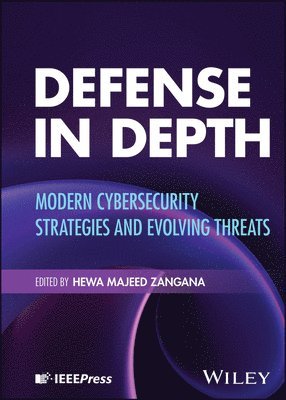
    Defense in Depth

    Modern Cybersecurity Strategies and Evolving Threats

    AvHewa Majeed Zangana,Hewa Majeed Zangana

    Inbunden, Engelska, 2025

    1 349 kr

    Beställningsvara. Skickas inom 5-8 vardagar. Fri frakt över 249 kr.

    Beskrivning

    Up-to-date reference on the evolving landscape of cybersecurity, focusing on strategies that integrate AI, blockchain, and human factors Defense in Depth delivers a comprehensive guide to the rapidly developing field of digital threats and defenses. This book examines how defense-in-depth approaches integrate multiple layers of security to protect against a wide range of threats; how AI technologies are being utilized for threat detection, response, and prediction; and how blockchain technology can be leveraged to enhance security measures, particularly in ensuring data integrity and securing transactions. Case studies of significant cyberattacks are included throughout the text to elucidate key concepts. The book discusses additional topics such as: The critical importance of cybersecurity in today’s interconnected world and the historical evolution of cyber threats, highlighting modern attack vectorsCore principles of defense, detailing layered security measures across networks, applications, data, and endpointsHuman factors, often the weakest link in cybersecurity, with strategies for mitigating risksMachine learning and neural networks and their usage in AI-driven security solutions across finance, healthcare, and governmentAdvanced defense techniques, practical applications, and future directions in cybersecurityDefense in Depth is an essential reference on the state of the art in the field for cybersecurity professionals, IT practitioners, and researchers. It is also an excellent learning aid for advanced students in cybersecurity, particularly those in graduate programs.

    Produktinformation

    • Utgivningsdatum:2025-11-20
    • Mått:188 x 264 x 24 mm
    • Vikt:865 g
    • Format:Inbunden
    • Språk:Engelska
    • Antal sidor:304
    • Förlag:John Wiley & Sons Inc
    • ISBN:9781394340729

    Utforska kategorier

    • IT-säkerhet inom Data och IT
    • Nätverk och kommunikation inom Data och IT

    Mer om författaren

    Hewa Majeed Zangana is an Assistant Professor at Duhok Polytechnic University (DPU) in Iraq. He has held numerous academic and administrative positions, including Assistant Professor at Ararat Private Technical Institute, Lecturer at DPU’s Amedi Technical Institute and Nawroz University, and Acting Dean of the College of Computer and IT at Nawroz University. His administrative roles have included Director of the Curriculum Division at the Presidency of DPU, Manager of the Information Unit at DPU’s Research Center, and Head of the Computer Science Department at Nawroz University. Dr. Zangana has authored numerous articles in peer-reviewed journals, including Inform: Jurnal Ilmiah Bidang Teknologi Informasi dan Komunikasi, Indonesian Journal of Education and Social Science, TIJAB, INJIISCOM, IEEE, EAI, and AJNU. In addition to his journal contributions, he has published many academic books with IGI Global, several of which are indexed in Scopus and Web of Science (Clarivate). Beyond publishing, Dr. Zangana actively contributes to the academic community through editorial service. He serves as a reviewer for many reputable journals. He is also a member of several academic and scientific committees, including the Scientific Curriculum Development Committee, the Student Follow-up Program Committee, and the Committee for Drafting the Rules of Procedure for Consultative Offices.

    Innehållsförteckning

    • Editor Biography xxiList of Contributors xxiiiPreface xxv1 Introduction to Modern Cybersecurity 1Hewa Majeed Zangana1.1 Overview of Cybersecurity Evolution 11.2 Current Cyber Threat Landscape 21.3 Core Principles of Cybersecurity 41.4 DiD as a Cybersecurity Strategy 71.5 Cybersecurity Frameworks and Standards 101.6 Emerging Technologies and Their Security Implications 131.7 Cybersecurity Skills and Workforce Development 151.8 Conclusion and Road Ahead 18References 202 Evolving Cyber Threats: Understanding the New Battlefield 23Marwan Omar2.1 Introduction 232.2 Historical Context of Cyber Threats 262.3 Types of Modern Cyber Threats 282.4 Motivations Behind Modern Cyber Threats 322.5 Case Studies of Recent High-Impact Attacks 352.6 Emerging Technologies and their Role in Cyber Threat Evolution 382.7 Defensive Strategies Against Evolving Cyber Threats 402.8 Role of Government and International Collaboration 442.9 Future Trends and Threat Landscape 462.10 Conclusion 48References 493 Defense in Depth: A Multilayered Approach 51Jamal N. Al-Karaki3.1 Introduction 513.2 The Layers of Defense in Depth 533.3 Implementing Defense in Depth Across Different Environments 573.4 Integrating Cyber Threat Intelligence 603.5 Adapting to Emerging Threats with Defense in Depth 613.6 Monitoring and Incident Response in a Multilayered Architecture 633.7 Evaluating the Effectiveness of Defense in Depth 653.8 Challenges and Future Directions 683.9 Conclusion 70References 704 The Role of Artificial Intelligence in Cybersecurity 73Derek Mohammed4.1 Introduction 734.2 Key Applications of AI in Cyber Defense 754.3 Artificial-Intelligence-Powered Tools and Technologies in Cybersecurity 794.4 Enhancing Defense in Depth with Artificial Intelligence 814.5 Integrating Artificial Intelligence with Cyber Threat Intelligence 834.6 Artificial-Intelligence-Driven Security Operations Center (SOC) 854.7 Challenges in Implementing Artificial Intelligence in Cybersecurity 874.8 Case Studies: Real-World Applications of Artificial Intelligence in Cyber Defense 894.9 Future of Artificial Intelligence in Cybersecurity 924.10 Conclusion 95References 955 Blockchain Technology: Enhancing Security in a Decentralized World 99Marwan Omar5.1 Introduction 995.2 Blockchain Architecture and Security Fundamentals 1025.3 Blockchain in Decentralized Security Models 1055.4 Applications of Blockchain in Cybersecurity 1085.5 Blockchain-Based Solutions to Emerging Cyber Threats 1105.6 Challenges and Limitations of Blockchain in Cybersecurity 1135.7 Case Studies of Blockchain Implementation in Cybersecurity 1155.8 Ethical and Privacy Considerations in Blockchain-Based Security 1175.9 Future Trends and Innovations in Blockchain for Cybersecurity 1195.10 Conclusion 122References 1236 Human Factors in Cybersecurity: The Weakest Link 127Hewa Majeed Zangana6.1 Introduction 1276.2 Understanding Human Factors in Cybersecurity 1286.3 The Role of Human Error in Cybersecurity Breaches 1316.4 Social Engineering and Insider Threats 1346.5 User Awareness and Training 1376.6 Human-Centric Security Design 1396.7 The Role of Leadership and Organizational Culture 1416.8 The Impact of Organizational Policies on Human Behavior in Cybersecurity 1436.9 Technological Solutions to Mitigate Human Weaknesses 1456.10 Challenges and Future Directions 1486.11 Conclusion 150References 1507 Advanced Defense Techniques: Beyond Traditional Security Measures 153Rebet Keith Jones7.1 Introduction 1537.2 Behavioral Analytics and Anomaly Detection 1587.3 Zero Trust Architecture 1607.4 Deception Technology and Honeypots 1617.5 Threat Intelligence and Proactive Security Measures 1627.6 Endpoint Detection and Response and Extended Detection and Response 1647.7 Cloud Security Posture Management and Cloud Workload Protection 1667.8 Artificial Intelligence and Machine Learning in Cyber Defense 1677.9 Secure Access Service Edge and Network Security Innovations 1697.10 Security Orchestration, Automation, and Response 1717.11 Post-breach Detection and Response Techniques 1737.12 Emerging Defense Techniques and Future Directions 1747.13 Conclusion 176References 1778 Practical Applications and Case Studies 179Marwan Omar8.1 Introduction 1798.2 Case Study: Implementing Zero Trust Architecture in Enterprise Networks 1828.3 Case Study: Cloud Security and Posture Management for Hybrid Environments 1858.4 Application of Artificial Intelligence and Machine Learning in Cyber Threat Detection 1888.5 Case Study: Deception Technology and Honeypots in Financial Sector Security 1898.6 Real-World Implementation of Threat Intelligence Platforms 1918.7 Endpoint Detection and Response for Remote Work Security 1938.8 Case Study: Security Automation, Orchestration, and Response in Healthcare 1948.9 Using Blockchain for Data Integrity in Supply Chain Security 1978.10 Insider Threat Detection and Prevention: A Case Study in the Government Sector 1998.11 Cybersecurity in Critical Infrastructure: Protecting Energy and Utility Sectors 2018.12 Lessons Learned: Key Takeaways from Practical Applications 2038.13 Conclusion 206References 2069 Future Directions in Cybersecurity 209Luay Albtosh and Sia Gholami9.1 Introduction 2099.2 Artificial Intelligence and Machine Learning for Predictive Security 2109.3 Quantum Computing and its Impact on Cryptography 2129.4 Cybersecurity for the Internet of Things and Cyber-Physical Systems 2149.5 Blockchain and Decentralized Security Models 2169.6 Enhanced Privacy Techniques: Homomorphic Encryption and Secure Multiparty Computation 2179.7 Human-Centric Cybersecurity and Behavioral Defense Mechanisms 2189.8 5G and 6G Network Security 2199.9 Cybersecurity in Cloud Computing and Edge Environments 2209.10 Zero Trust Architecture and Adaptive Security Models 2219.11 Biometric Security and Next-Gen Authentication Mechanisms 2239.12 Ethics and Responsible AI in Cybersecurity 2259.13 Cybersecurity for Autonomous Systems and Artificial Intelligence Agents 2279.14 Cybersecurity Workforce Development and Skills of the Future 2299.15 Anticipating Future Threats: Threat Landscape and Emerging Attack Vectors 2319.16 Conclusion: Preparing for the Future of Cybersecurity 233References 23410 Conclusion: Building a Resilient Cyber Defense Framework 237Hewa Majeed Zangana10.1 Introduction 23710.2 Core Components of a Resilient Cyber Defense Framework 23810.3 Proactive Threat Management and Anticipatory Defense 24210.4 Building Resilience Through Zero Trust and Adaptive Security 24410.5 Incident Response and Recovery Planning 24510.6 The Role of Automation in Enhancing Resilience 24610.7 Human Factors and Building a Security-Aware Culture 24610.8 Compliance, Regulation, and Governance as Resilience Enablers 24810.9 Collaborative Defense: Strengthening Resilience Through Partnerships 25010.10 Evolving with Emerging Technologies and Threats 25210.11 Case Study: Resilient Frameworks in Action 25410.12 Key Takeaways and Best Practices for a Resilient Cyber Defense Framework 25710.13 Conclusion: Future-Proofing Cyber Defense for Long-Term Resilience 259References 262Index 265