Inbunden, Engelska, 2002
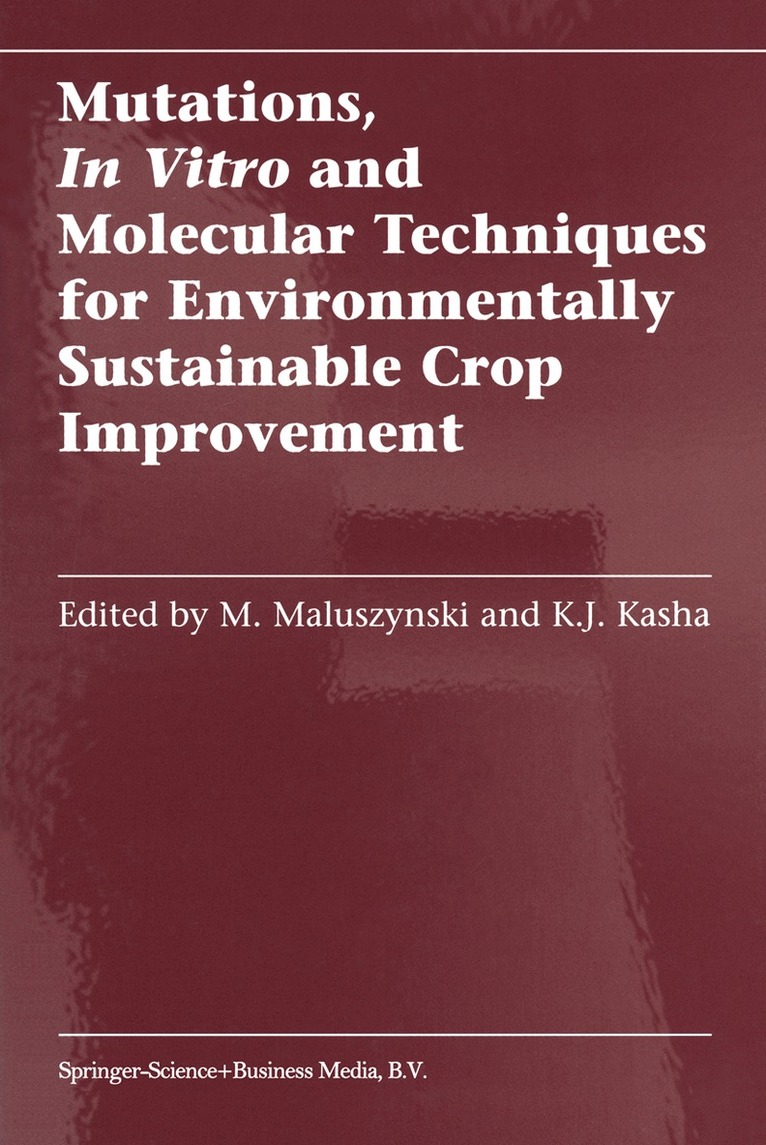
Mutations, In Vitro and Molecular Techniques for Environmentally Sustainable Crop Improvement
Av M. Maluszynski, Kenneth Kasha
1643 kr
Beställningsvara. Skickas inom 10-15 vardagar. Fri frakt över 249 kr.
Beskrivning
This publication contains the results of an FAO/IAEA co-ordinated research project (CRP) on radiation induced mutations and other advanced technologies for the production of crop mutants suitable for environmentally sustainable agriculture. Induced mutation techniques and other biotechnological approaches are major tools for creating variability and selection of stress-resistant or tolerant genotypes. Additionally, scientists have become intensely interested in mutations as a means to widen and deepen our understanding of genome structure and gene function. Among the many potential biotechnologies, in vitro culture and molecular markers seem most appropriate for developing countries. Arising from the diversity of research objectives and strategies, the outcomes of the project are fundamentally twofold. First, a number of biotechnologies were developed and validated in association with the use of mutants to understand the genetics of specific plant traits; and second, a number of mutants were developed with beneficial characteristics and which have significant long-term potential to contribute to sustainable agriculture.
Produktinformation
- Utgivningsdatum: 2002-05-31
- Mått: 155 x 235 x 19 mm
- Vikt: 507 g
- Format: Inbunden
- Språk: Engelska
- Antal sidor: 246
- Upplaga: 2002
- Förlag: Kluwer Academic Publishers
- ISBN: 9781402006029
Utforska kategorier
Betyg & recensioner
0 recensioner
Inga recensioner tillgängliga.