
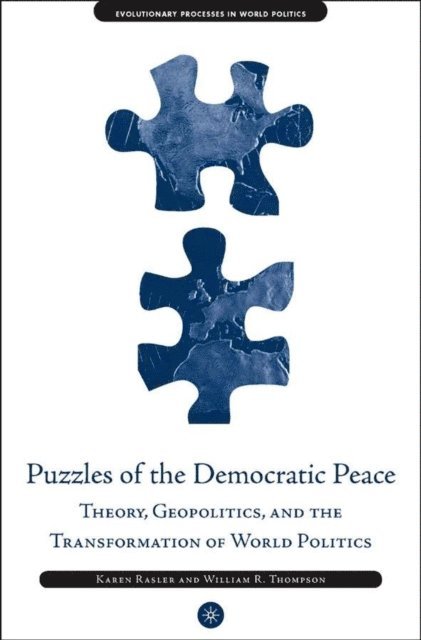
Puzzles of the Democratic Peace
Theory, Geopolitics and the Transformation of World Politics
557 kr
Beställningsvara. Skickas inom 10-15 vardagar. Fri frakt över 249 kr.
Beskrivning
Ever since the revival of Kant's Perpetual Peace thesis, the linkages between democracy and peace has been a central topic in international relations research, with sustained debate over whether it exists and if it does, why it does. In this stimulating volume, two leading IR scholars place the democratic peace debate within a broader context, including the extent of threats in international relations, degree of satisfaction with the status quo, the diffusion of democracy, and the rise of the trading state. Step by step, Thompson and Rasler examine the democratic peace through a series of puzzles concerning arguments at the dyadic, systemic, and individual state levels. Synthesizing a broad range of knowledge and linking islands of theory, Puzzles of the Democratic Peace provides a distinctive look at the state of the field and paths forward.
Produktinformation
Utforska kategorier
Mer om författaren
Recensioner i media
Innehållsförteckning
Hoppa över listan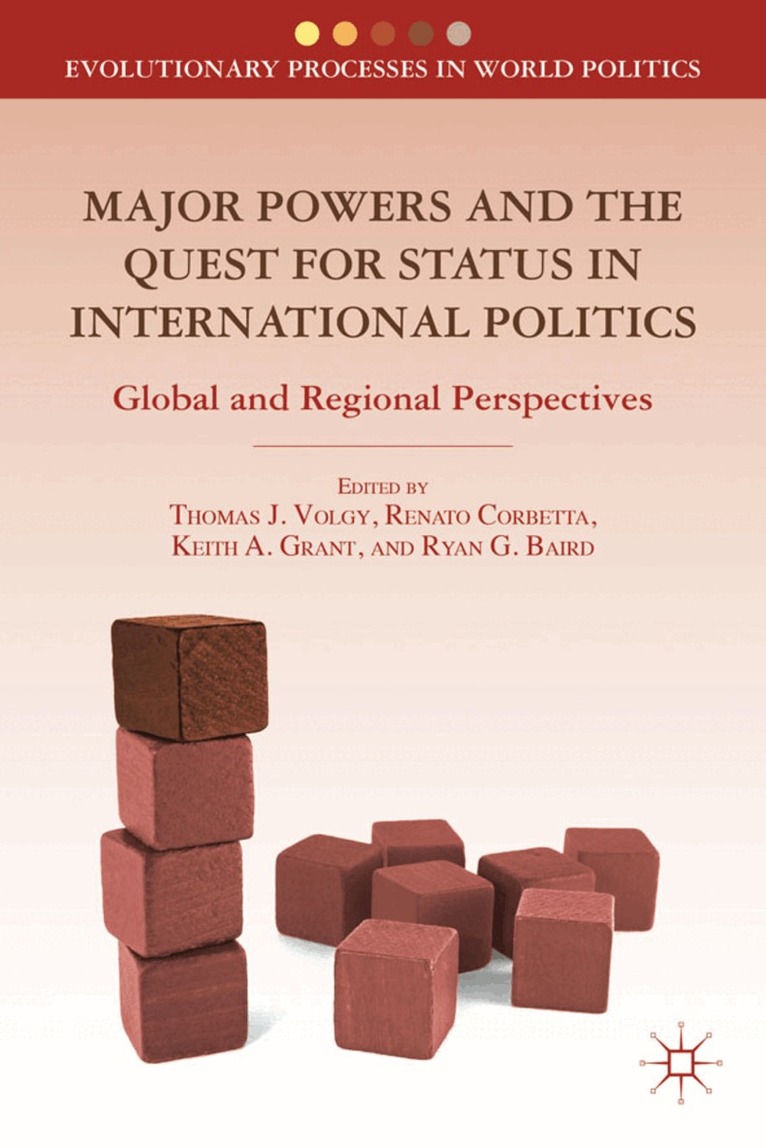
Mer från samma serie
Major Powers and the Quest for Status in International Politics
T. Volgy, R. Corbetta, K. Grant, R. Baird
Inbunden, 2011
573 kr
Major Powers and the Quest for Status in International Politics
T. Volgy, R. Corbetta, K. Grant, R. Baird
Häftad, 2011
557 kr
Historical Evolution of World-Systems
C. Chase-Dunn, E. Anderson, Christopher Chase-Dunn
Inbunden, 2005
557 kr
Hoppa över listan



Du kanske också är intresserad av
Diagnosis and Management of Tubo-Uterine Factors in Infertility
R.F. Harrison, J. Bonnar, W. Thompson
Häftad, 2012
1 139 kr
Del 5
Del 3
In vitro Fertilization, Embryo Transfer and Early Pregnancy
W. Thompson, J. Bonnar, R.F. Harrison
E-bok
2012732 kr
Del 1
In vitro Fertilizȧtion, Embryo Transfer and Early Pregnancy
R.F. Harrison, J. Bonnar, W. Thompson
Häftad, 2013
573 kr