• Fri frakt över 249 kr
  • •
  • Snabba leveranser
  • •
  • Billiga böcker
Kundservice

Du är på sajten för privatpersoner.

Företag, bibliotek eller offentlig verksamhet?

Du handlar på classic.bokus.com, där alla dina funktioner finns intakta.
Till classic.bokus.com
Bokus logotyp. Gå till startsidan.
  • Erbjudanden
  • Student
  • Topplistor
  • Barn & ungdom
  • Bokus Play
  • E-böcker
  • Ljudböcker
  • Pocketböcker
  • Spel och pussel

Pocketfynda! Hundratals böcker för 49 kr/st →

Sidfot

Mina sidor

    Hjälp

    • Kundservice
    • Vanliga frågor och svar
    • Frakt och leverans
    • Retur vid ångerrätt
    • Reklamera vara
    • Betalning
    • Köpvillkor
    • Allmänna villkor
    • Information om webbplatsens tillgänglighet

    Om Bokus

    • Om oss
    • Pressrum
    • För studenter
    • För företag
    • För bibliotek och offentlig verksamhet
    • För leverantörer
    • Hållbarhet

    Populärt

    • Aktuella erbjudanden
    • Presentkort
    • Studentlitteratur
    • Nya böcker
    • Topplistor
    • Signerade böcker
    • Engelska böcker

    Inspiration

    • Boktips
    • BookTok
    • Barnbokskaraktärer
    • Populära författare
    Logotyp för Bokus
    Följ oss på Facebook (extern länk)Följ oss på Instagram (extern länk)Följ oss på YouTube (extern länk)Följ oss på TikTok (extern länk)
    bokus @ CookiesAnpassa cookiesIntegritetspolicyKöpvillkor
    Till Citymail hemsida (extern länk)Till Budbee hemsida (extern länk)Till Postnord hemsida (extern länk)Till Schenker hemsida (extern länk)Till Early Bird hemsida (extern länk)Till Walleys hemsida (extern länk)
    1. Psykologi och pedagogik
    2. Pedagogik
    3. Pedagogisk psykologi

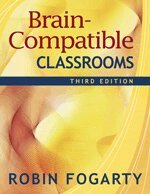
    Brain-Compatible Classrooms

    AvRobin J. Fogarty,Robin J. Fogarty

    Inbunden, Engelska, 2009

    1 311 kr

    Beställningsvara. Skickas inom 3-6 vardagar. Fri frakt över 249 kr.

    Fler format och utgåvor

    Häftad

    643 kr

    Beskrivning

    "An excellent guide for new and veteran teachers who are looking to empower students through brain-compatible lessons."—Heather Vaughn, Early Childhood Program CoordinatorAlbuquerque Public Schools, NM"A fine, useful update of Fogarty′s long-time search for appropriate practical classroom applications of cognitive neuroscience research."—Robert Sylwester, Emeritus Professor of Education, University of OregonAuthor, The Adolescent BrainUse the latest findings in brain research to build high-achievement classrooms!In recent years, much attention has been paid to the research findings on how the brain functions and how that understanding can be used to improve instruction and learning for all students. Robin Fogarty helps educators better understand and utilize the key discoveries in brain research and presents brain-friendly, practical strategies for differentiating learning.Summarizing research from noted theorists such as Arthur L. Costa, Robert J. Marzano, and Daniel Goleman, this updated edition has been reorganized into three parts for a more comprehensive examination of the relationship between brain science and effective classroom practice. Chapters cover:An introduction to the brain and how it works, including gender differences and how they affect learningApplication of brain research findings to learning principles, with compelling implications for the classroomThe brain-mind connection and how cognitive science and brain science complement each otherA four-corner paradigm for quality teaching: setting the climate for learning, using brain-based teaching skills, putting it all into practice, and receiving student feedbackInspiring and insightful, the third edition of Brain-Compatible Classrooms offers a highly relevant, holistic model for applying brain research in the classroom.

    Produktinformation

    • Utgivningsdatum:2009-05-26
    • Mått:215 x 279 x 18 mm
    • Vikt:880 g
    • Format:Inbunden
    • Språk:Engelska
    • Antal sidor:248
    • Upplaga:3
    • Förlag:SAGE Publications Inc
    • ISBN:9781412938860

    Utforska kategorier

    • Pedagogisk psykologi inom Psykologi och pedagogik
    • Pedagogisk metodik inom Psykologi och pedagogik

    Mer om författaren

    Robin Fogarty is President of RFA: A Robin Fogarty Company, a Chicago-based, minority-owned, educational publishing/consulting company. Robin received her doctorate in curriculum and human resource development from Loyola University of Chicago. A leading proponent of the thoughtful classroom, Robin has trained educators throughout the world in curriculum, instruction and assessment strategies.She has taught at all levels, from kindergarten to college, served as an administrator, and consulted with state departments and ministries of education in the United States, Puerto Rico, Russia, Canada, Australia, New Zealand, Germany, Great Britain, Singapore, South Korea, the Netherlands, the Kingdom of Bahrain and Saudi Arabia. Robin has published articles in Educational Leadership, Phi Delta Kappan, The Journal of Staff Development and The Middle School Lournal. She is the author of numerous publications, including Brain-Compatible Classrooms, Literacy Matters, Ten Things New Teachers Need, How to Integrate the Curricula, The Adult Learner, A Look at Transfer, Close the Achievement Gap, Twelve Brain Principles, Nine Best Practices, and From Staff Room to Classroom: Planning and Coaching Professional Learning, How to Teach Thinking Skills Within the Common Core: 7 Key Student Proficiencies of the New National Standards, Invite! Excite! Ignite! 13 Principles for Teaching, Learning and Leading K-12 classroomsRobin received her Bachelor of Arts in Early Childhood Education at SUNY, Potsdam, NY, and her Masters in Instructional Strategies from National Louis University in Evanston, IL.  She is known as the teachers’ teacher and has mentored numerous colleagues in the art and science of working with the adult learner. She brings a wealth of knowledge and passion to all endeavors, has a wealth of knowledge in the field and conducts highly interactive PD sessions.

    Recensioner i media

    "A fine, useful update of Fogarty′s long-time search for appropriate practical classroom applications of cognitive neuroscience research."

    Innehållsförteckning

    • PrefaceAcknowledgmentsAbout the AuthorIntroductionPart I. Physiology and Brain Science1. Brain ScienceThe Brain Is the Universe WithinHow to Be a Critical Consumer of Research on the Brain and LearningJust the Facts! What Are the Facts About the Brain?Macroview: A Look at the Exterior of the Human BrainGeography of the Human Brain (Topography)Three Views of the BrainTop-to-Bottom ViewFront-to-Back ViewLeft-to-Right ViewHow Has the Brain Evolved?Microview: A Look at the Interior of the Human BrainBrain Imaging: How We Know What We KnowHow the Brain WorksNeurotransmittersDifferences Between Males and FemalesPart II. Principles for Teaching and Learning2. Principles of the Brain and LearningThe Bridge Between Brain Science and Cognitive ScienceThe Brain Principles and the Four-Corner FrameworkTwelve Brain Principles of Caine and Caine1. Learning Is Enhanced by Challenge and Inhibited by Threat2. Emotions Are Critical to Patterning3. Learning Involves Both Focused Attention and Peripheral Perception4. The Brain Has a Spatial Memory System and a Set of Systems for Rote Learning5. The Brain Processes Parts and Wholes Simultaneously6. Learning Engages the Entire Physiology7. The Brain Is a Parallel Processor8. Learning Is Embedded in Natural and Social Settings9. Each Brain Is Unique10. The Search for Meaning Is Innate11. The Search for Meaning Occurs Through Patterning12. Learning Always Involves Conscious and Unconscious ProcessesIt′s All About Learning3. Cognitive Science: The Brain Is on My MindBrain Science and Cognitive ScienceNature Versus Nurture (Heredity Versus Environment)Enriched EnvironmentsIntelligence as a Function of ExperienceWindows of OpportunityNutrition-Cognition ConnectionCare and Feeding of the BrainAbuses and AddictionsNew ConclusionsEmotions and the IntellectSafe ClimateThreatChallengeThe Brain and the MindBrain Versus MindTheories of the IntellectGeneral Intelligence Theory: SpearmanTheory of Cognitive Modifiability: FeuersteinTheory of Multiple Intelligences: GardnerSuccessful Intelligence: SternbergLearnable Intelligence: PerkinsIntelligent Behaviors or Habits of Mind: Costa and KallickEmotional Intelligence: GolemanMoral Intelligence: ColesMemory, Learning, and the Human BrainMemory MetaphorIt′s on My ScreenIt′s on My DesktopIt′s on My MenuIt′s on My Hard DriveTypes of Memory SystemsShort-Term MemoryLong-Term MemoryEpisodic, Procedural, Conditional, and Emotional MemoryMemory Lane: Semantic, Episodic, Emotional, Procedural, and AutomaticDeclarative (Explicity) and Procedural (Implicit) MemoryLearning Through Patterns and ChunkingIt′s All About TeachingPart III. Brain-Friendly Strategies4. Strategies for Brain-Compatible ClassroomsThe Four-Corner FrameworkBrain-Compatible ClassroomTeaching FOR Thinking: Setting the ClimateResearch Base - Physiology, Emotions, EnvironmentPrinciples of Brain-Compatible LearningImplications for LearningImplications for Teaching: SatisfactoryTeaching OF Thinking: Instructing Skills and Standards of LearningResearch Base - Brain, Mind, IntellectPrinciples of Brain-Compatible LearningImplications for LearningImplications for Teaching: GoodTeaching WITH Thinking: Structuring InteractionsResearch Base - Active Learning/ConstructivistPrinciples of Brain-Compatible LearningImplications for LearningImplications for Teaching: ExcellentTeaching ABOUT Thinking: Reflecting MetacognitivelyResearch Base - Deep Understanding/TransferPrinciples of Brain-Compatible LearningImplications for LearningImplications for Teaching: SuperiorDefinition and Description of Brain-Compatible ClassroomsResearch on Teacher QualityWhat Teachers SayWhat Experts SayWhat Kids SayA Framework for Quality Revisited5. Setting the Climate for ThinkingBrainwave #1: Emotions - Goleman/LeDeux/ColesBraindrops: StrategiesThreat Alerts the BodyChallenge Engages the IntellectBrainworks: ActivitiesPeople SearchFat/Skinny QuestionsThe Human GraphBrainwave #2: Enriched Environment - Diamond/Conyers and WilsonBrainstorms: ApplicationBraindrops: StrategiesOrganizational EnrichmentsSensory EnrichmentsBrainworks: ActivitiesFour CornersBrainstorms: Application6. Teaching the Skills of ThinkingBrainwave #3: Microskills and Macroskills - Marzano/McTigheBraindrops: StrategiesMicroskillsMacroskillsBrainworks: ActivitiesMicroskill Lesson - Analysis for BiasMacroskill Lesson - Problem SolvingBrainstorms: ApplicationsBrainwave #4: Development of Skills and Concepts - Posner and Keele/CsikszentmihalyiBraindrops: StrategiesBasic/ApprenticeAdvanced/MasterBrainworks: ActivitiesBasic/ApprenticeAdvanced/MasterBrainstorms: Applications7. Structuring the Interaction With ThinkingBrainwave #5: Active Learning - Vygotsky/AusbelBraindrops: StrategiesTeacher Decisions for Cooperative GroupsBUILD Components/Cooperative StrategiesGraphic OrganizersBrainworks: ActivitiesDealing With ParadoxBrainstorms: ApplicationBrainwave #6: Experiential LearningBraindops: StrategiesMultiple IntelligencesIntegrated CurriculumBrainworks: ActivitiesCurriculum CornersBrainstorms: Applications8. Thinking About ThinkingBrainwave #7: ReflectionBraindrops: StrategiesMaking MeaningTransfer of LearningBrainworks: ActivitiesTransfer TalesBrainstorms: ApplicationsBrainwave #8: AssessmentBraindrops: StrategiesTraditional AssessmentsDynamic AssessmentsBrainworks: ActivitiesFolk PortfolioBrainstorms: ApplicationAppendix A: Suggested Videos to Illustrate the Four-Corner FrameworkAppendix B: The BrainGlossaryReferences and Suggested ReadingsIndex