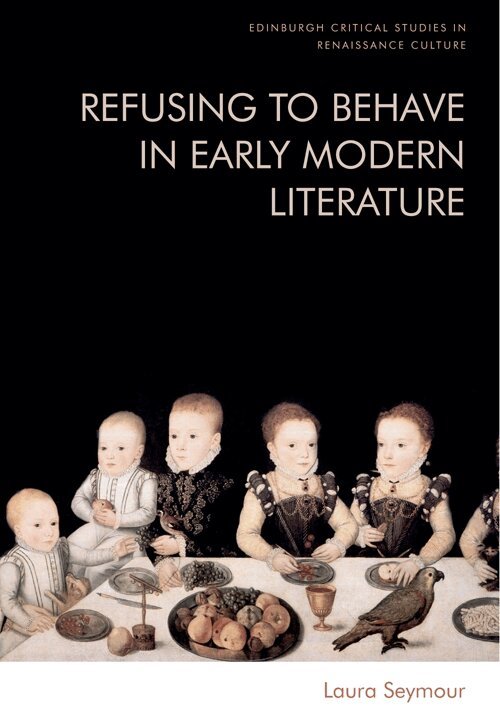
Häftad, Engelska, 2024
Refusing to Behave in Early Modern Literature
Del i serien Edinburgh Critical Studies in Renaissance Culture
561 kr
Beställningsvara. Skickas inom 3-6 vardagar. Fri frakt över 249 kr.
Beskrivning
Produktinformation
- Utgivningsdatum: 2024-08-15
- Mått: 156 x 234 x 13 mm
- Vikt: 218 g
- Format: Häftad
- Språk: Engelska
- Serie: Edinburgh Critical Studies in Renaissance Culture
- Antal sidor: 128
- Förlag: Edinburgh University Press
- ISBN: 9781474491815
Utforska kategorier
Mer om författaren
Laura Seymour is Senior Lecturer in English Literature at Swansea University. She is PI of the collaborative project AMEND – Early Modern European Neurodivergence (2025-2030), funded by the Wellcome Trust. Laura is the author of Refusing to Behave in Early Modern Literature (2022), Shakespeare and Neurodiversity (2025) and Early Modern Neurodivergence (2026) and various articles and book chapters on neurodivergence and early modern literature.
Recensioner i media
Seymour’s brilliant book exfoliates texts to show how the kinaesthetic experience of the characters can be written to evoke the reader’s kinaesthetic experience. Reading her reading makes us aware of the ways our body is involved in making meaning while we read. Her book is a model of how to incorporate research on embodied cognition into literary studies.
Betyg & recensioner
0 recensioner
Inga recensioner tillgängliga.