Inbunden, Engelska, 2015
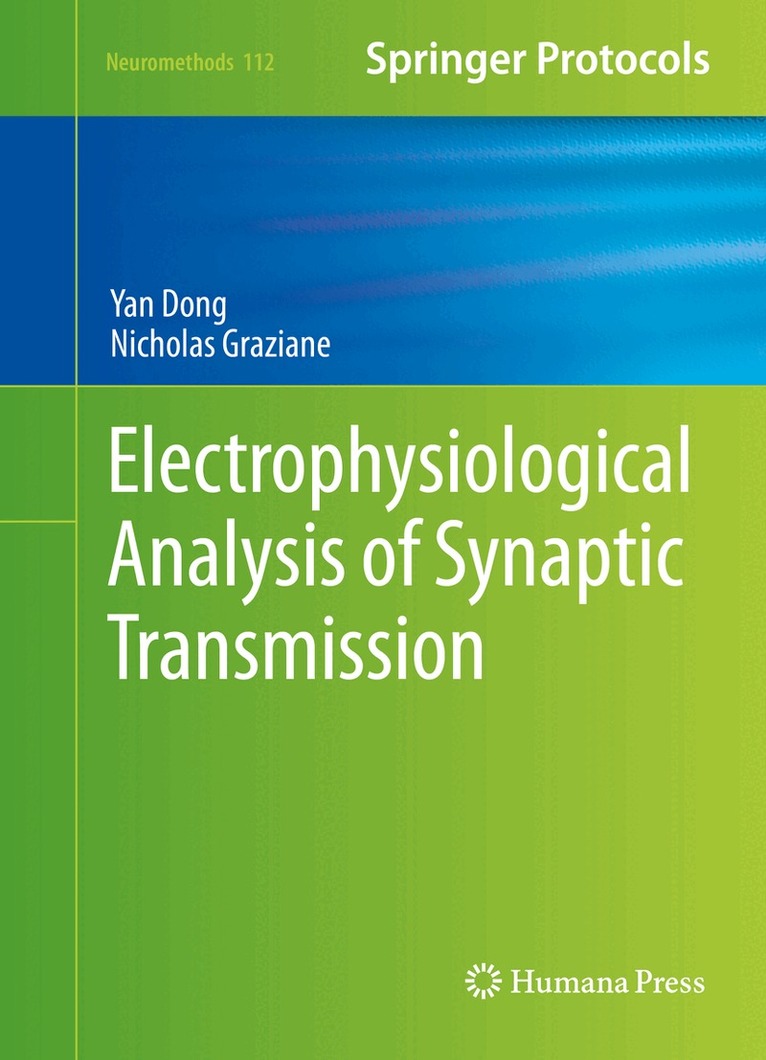
Electrophysiological Analysis of Synaptic Transmission
Av Nicholas Graziane, Yan Dong
1847 kr
Beställningsvara. Skickas inom 10-15 vardagar. Fri frakt över 249 kr.
Beskrivning
Electrophysiological methods are used at nearly all levels of biological research today. From basic science investigation to bringing new drugs to market, electrophysiology is an indispensable research technique that provides essential insights into cellular and molecular functions. This work is intended to be a practical guide for understanding and using contemporary electrophysiological manipulations and assays in brain research. New researchers attempting to learn electrophysiological techniques are confronted with a lack of adequate guiding resources. Currently, most electrophysiology-based research knowledge is passed on by experienced individuals to others within the same laboratory. But, this master-apprentice scenario has many inherent difficulties, as it is both a time intensive process and also leads to incomplete knowledge transfer, or even superstitious and maladaptive practices. Few external guiding resources exist for a budding researcher who wishes to gain the skills necessary to conduct responsible and competent electrophysiology research. Dr. Yan Dong, an expert in utilizing electrophysiological techniques for brain research with fifteen years of experience, and Peter Neumann hope this work can act as a concise and practical aid to remedy the current situation. This book will cover both basic methods and advanced techniques clearly and in depth, as well as the essential background and theory necessary to understand the methods. Additionally, this book also covers conventional and contemporary patch-clamp methods, experimental design, data collection and analysis, common pitfalls to avoid, important nuances, technical concerns, practical applications, and advice for teaching new researchers. Together, this represents a contemporary best-practices guide for collecting and interpreting electrophysiological data for brain research.
Produktinformation
- Utgivningsdatum: 2015-12-16
- Mått: 178 x 254 x 25 mm
- Vikt: 668 g
- Format: Inbunden
- Språk: Engelska
- Serie: Neuromethods
- Antal sidor: 263
- Upplaga: 15001
- Förlag: Humana Press Inc.
- ISBN: 9781493932733
Utforska kategorier
Betyg & recensioner
0 recensioner
Inga recensioner tillgängliga.