• Fri frakt över 249 kr
  • •
  • Snabba leveranser
  • •
  • Billiga böcker
Kundservice

Du är på sajten för privatpersoner.

Företag, bibliotek eller offentlig verksamhet?

Du handlar på classic.bokus.com, där alla dina funktioner finns intakta.
Till classic.bokus.com
Bokus logotyp. Gå till startsidan.
  • Erbjudanden
  • Student
  • Topplistor
  • Barn & ungdom
  • Bokus Play
  • E-böcker
  • Ljudböcker
  • Pocketböcker
  • Spel och pussel

Pocketfynda! Hundratals böcker för 49 kr/st →

Sidfot

Mina sidor

    Hjälp

    • Kundservice
    • Vanliga frågor och svar
    • Frakt och leverans
    • Retur vid ångerrätt
    • Reklamera vara
    • Betalning
    • Köpvillkor
    • Allmänna villkor
    • Information om webbplatsens tillgänglighet

    Om Bokus

    • Om oss
    • Pressrum
    • För studenter
    • För företag
    • För bibliotek och offentlig verksamhet
    • För leverantörer
    • Hållbarhet

    Populärt

    • Aktuella erbjudanden
    • Presentkort
    • Studentlitteratur
    • Nya böcker
    • Topplistor
    • Signerade böcker
    • Engelska böcker

    Inspiration

    • Boktips
    • BookTok
    • Barnbokskaraktärer
    • Populära författare
    Logotyp för Bokus
    Följ oss på Facebook (extern länk)Följ oss på Instagram (extern länk)Följ oss på YouTube (extern länk)Följ oss på TikTok (extern länk)
    bokus @ CookiesAnpassa cookiesIntegritetspolicyKöpvillkor
    Till Citymail hemsida (extern länk)Till Budbee hemsida (extern länk)Till Postnord hemsida (extern länk)Till Schenker hemsida (extern länk)Till Early Bird hemsida (extern länk)Till Walleys hemsida (extern länk)
    1. Psykologi och pedagogik
    2. Pedagogik
    3. Utbildningsstrategier och utbildningspolitik

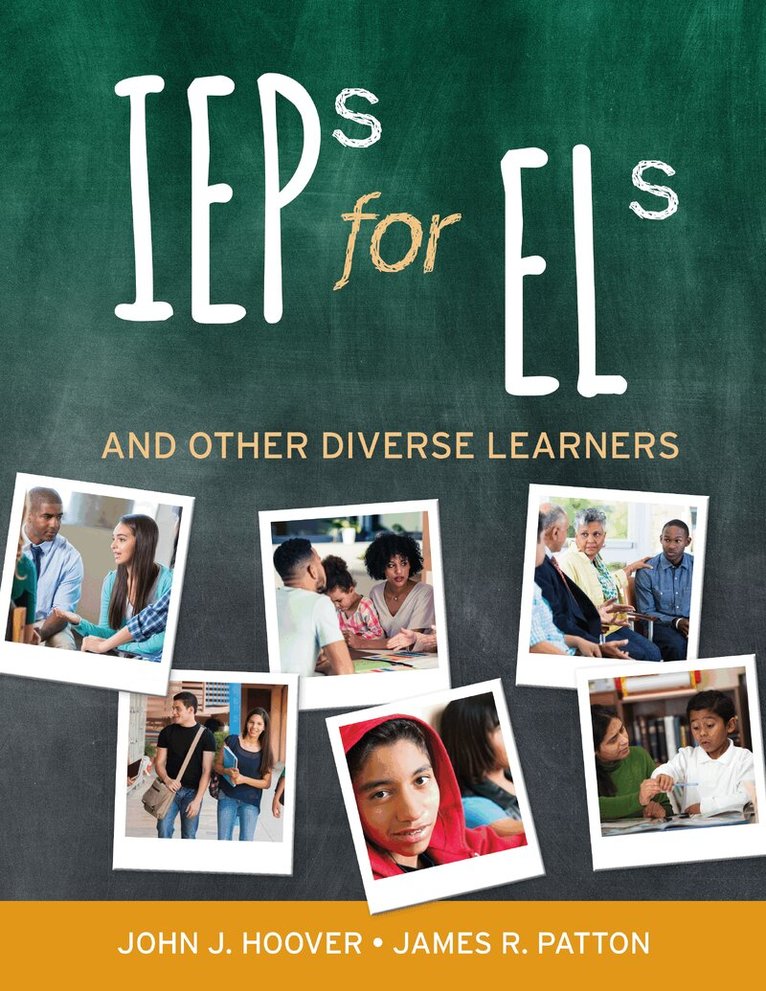
    IEPs for ELs

    And Other Diverse Learners

    AvJohn J. Hoover,James R. Patton

    Häftad, Engelska, 2017

    605 kr

    Beställningsvara. Skickas inom 3-6 vardagar. Fri frakt över 249 kr.

    Beskrivning

    Develop and monitor high-quality IEPs for diverse learners High-quality IEPs are fundamental for guiding the educational process of and developing goals for students who require special education services. English learners (ELs) and other students with learning, emotional, or behavioral disabilities present unique challenges to educators responsible for referring, assessing, and placing them. IEPs for ELs provides educators with numerous research-based strategies and examples of how to write effective IEPs for these K-12 learners. John J. Hoover and James Patton, leading professionals in the areas of special education and linguistic diversity, share their research and how they have supported ELs who have, or are suspected of having, learning and intellectual disabilities. Readers will find:   Practical guidance for developing and monitoring culturally and linguistically responsive IEPsChecklists, guides, and other reproducibles that support IEP developmentCase studies and vignettes highlighting examples of appropriate IEPs for diverse learnersFilled with expert practical advice that covers the IEP process and walks the reader through the procedure for creating high-quality IEPs that take individual differences into account, this guide is essential for special educators and bilingual/EL specialists. "A major strength for this book is its unique tie to English learners, while providing a dual focus on IEP writing. This is a great tool to use when training new special education teachers and IEP facilitators. There are direct connections to writing legally defensible plans with a user-friendly focus on IEP writing. I see this book as a tool to support teachers and students in ensuring that language and cultural considerations are included when developing and updating individual plans."—Renee Bernhardt, Supervisor, Special EducationCherokee County School District, GA

    Produktinformation

    • Utgivningsdatum:2017-06-08
    • Mått:215 x 279 x 19 mm
    • Vikt:600 g
    • Format:Häftad
    • Språk:Engelska
    • Antal sidor:232
    • Förlag:SAGE Publications Inc
    • ISBN:9781506328188

    Utforska kategorier

    • Utbildningsstrategier och utbildningspolitik inom Psykologi och pedagogik
    • Specialundervisning inom Psykologi och pedagogik

    Mer om författaren

    John J. Hoover is Associate Research Professor at the University of Colorado Boulder and a former K–12 special educator, teaching diverse students representing multiple languages and cultures in western, southwestern, and mid-western states. He earned a BA in Elementary and Special Education (Intellectual Disabilities), an MA in Learning Disabilities and Emotional Disorders with an emphasis in Reading, and a PhD in Curriculum specializing in Special Education. His research agenda for the past two decades has focused on the topic of culturally and linguistically responsive special education referral and assessment of English language and other diverse learners. He is currently PI on a multi-year grant funded project addressing ELs and multi-tiered supports, special education referral and assessment of culturally and linguistically diverse learners, and graduate level teacher preparation for teaching English language and other diverse learners with and without disabilities. Select recent coauthored/coedited books include: Why do English learners struggle with reading: Distinguishing language acquisition from learning disabilities (Pearson); Linking assessment to instruction in multi-tiered models: A teacher’s guide to selecting reading, writing and mathematics interventions (Pearson); Differentiating learning differences from learning and behavioral disabilities: Teaching diverse learners through multi-tiered response to intervention (Allyn & Bacon); and Methods for teaching culturally and linguistically diverse exceptional learners (Pearson Merrill). He also is co-author of a nationally normed reading test, Early Reading Assessment (Pro-Ed), and of a research-based educator self-assessment and professional development tool, Core ESL Instructional Practices (CEIP) Guide. Recent referred journal publications include: Increasing usage of ESL instructional practices in a rural county elementary school, Rural Educator (2015); Culturally responsive special education referrals of English learners in one rural county school district: Pilot project, Rural Special Education Quarterly (2015), and Reducing unnecessary referrals: Guidelines for teachers of diverse learners, Teaching Exceptional Children (2012).

    Recensioner i media

    A major strength for this book is its unique tie to English Learners, while providing a dual focus on IEP writing. The material can be used with any student who has learning difficulties, and the book addresses multiple scenarios that are relatable to the real world of teaching. This is a great tool to use when training new special education teachers and IEP facilitators. There are direct connections to writing legally defensible plans with a user-friendly focus on IEP writing. I see this book as a tool to support teachers and students in ensuring that language and cultural considerations are included when developing and updating individual plans.

    Innehållsförteckning

    • AcknowledgmentsAbout the AuthorsAbout the ContributorsIntroduction: Blueprint of IEPs for ELs and Other Diverse LearnersUnderlying Assumptions of the IEP Development StageTopical Areas and TerminologyChapter 1: Understanding a Culturally and Linguistically Diverse Multi-Tiered System of SupportsPractitioner’s PerspectiveOverview of MTSSMTSS and Cultural and Linguistic DiversityCulturally and Linguistically Responsive Teaching QualitiesWhat Makes an IEP Culturally and Linguistically Responsive?Educational Framework for Diverse Learners With DisabilitiesIEP Development Principles for English Language and Other Diverse LearnersConclusionChapter 2: Essential Components of IEPs for English Language and Other Diverse LearnersPractitioner’s PerspectiveRequired Components of IEPs per IDEAOther Mandated IEP Considerations per IDEAIEP Team: Essential Members for DiversityConclusionChapter 3: Role and Function of Academic Language in IEPsPractitioner’s PerspectiveAcademic Language Historical PerspectiveAcademic Language ProcessesInclusion of Academic Language Proficiency in IEP DevelopmentConclusionWebsitesChapter 4: Culturally and Linguistically Responsive Present Levels of Academic Achievement and Functional Performance: Determining Accurate Levels and Developing Meaningful StatementsPractitioner’s PerspectiveWhat Are PLAAFP and Why Are They Important?Creating Meaningful PLAAFP Statements Using the CRISEN PrinciplesExamples of Meaningful and Instructionally Relevant PLAAFP StatementsDeveloping Responsive and Defensible PLAAFPConclusionChapter 5: IEPs and the Development of Measurable Annual Goals Using SMART PrinciplesPractitioner’s PerspectiveIntroductory ConsiderationsWhat Is a SMART Goal?Examples of SMART GoalsDeveloping SMART GoalsMaking SMART Goals Culturally and Linguistically ResponsiveConclusionChapter 6: Delivering Appropriate IEP ServicesPractitioner’s PerspectiveEnglish Language Development and IEP ImplementationAddressing Language and Content During Instruction for English LearnersImplementing the IEPConclusionChapter 7: Special Considerations and DiversityPractitioner’s PerspectiveSupplemental Aids/Services for Diverse LearnersAccommodations and ModificationsAssistive Technology and ServicesFunctional Behavioral Assessment and Behavioral Intervention PlansHigh Stakes Assessment, Diversity, and IEPsConclusionBIP-3: Functional Behavioral Assessment (Sample)BIP-3: Behavioral Intervention Plan (Sample)Chapter 8: IEP Progress Monitoring and Diverse NeedsPractitioner’s PerspectiveProgress Monitoring Defined and OverviewCulturally Responsive Monitoring CompetenciesProgress-Monitoring PracticesProgress-Monitoring Interpretation for Diverse Learners: Special ConsiderationsConclusionChapter 9: Culturally and Linguistically Responsive Transition Planning and ServicesPractitioner’s PerspectiveSuccessful Adult FunctioningBasic Concepts Associated With Transition Planning and ServicesTransition Planning for Culturally and Linguistically Diverse StudentsConclusionChapter 10: Guidelines for Successful IEP Meetings for Diverse LearnersPractitioner’s PerspectiveImportance of Funds of Knowledge in EducationPre-Meeting SuggestionsDuring–IEP Meeting SuggestionsPost-Meeting SuggestionsConclusionChapter 11: Putting the IEP Pieces TogetherSummary of IEP Skill Sets for English Language and Other Diverse LearnersThe Integrated IEP for Diverse LearnersConclusionAppendixCommercially Available Instruments for Determining Present Levels of PerformanceElementary Individualized Education Program (Sample)Secondary Individualized Education Program (Sample)ReferencesIndex