• Fri frakt över 249 kr
  • •
  • Snabba leveranser
  • •
  • Billiga böcker
Kundservice

Du är på sajten för privatpersoner.

Företag, bibliotek eller offentlig verksamhet?

Du handlar på classic.bokus.com, där alla dina funktioner finns intakta.
Till classic.bokus.com
Bokus logotyp. Gå till startsidan.
  • Erbjudanden
  • Student
  • Topplistor
  • Barn & ungdom
  • Bokus Play
  • E-böcker
  • Ljudböcker
  • Pocketböcker
  • Spel och pussel

Pocketfynda! Hundratals böcker för 49 kr/st →

Sidfot

Mina sidor

    Hjälp

    • Kundservice
    • Vanliga frågor och svar
    • Frakt och leverans
    • Retur vid ångerrätt
    • Reklamera vara
    • Betalning
    • Köpvillkor
    • Allmänna villkor
    • Information om webbplatsens tillgänglighet

    Om Bokus

    • Om oss
    • Pressrum
    • För studenter
    • För företag
    • För bibliotek och offentlig verksamhet
    • För leverantörer
    • Hållbarhet

    Populärt

    • Aktuella erbjudanden
    • Presentkort
    • Studentlitteratur
    • Nya böcker
    • Topplistor
    • Signerade böcker
    • Engelska böcker

    Inspiration

    • Boktips
    • BookTok
    • Barnbokskaraktärer
    • Populära författare
    Logotyp för Bokus
    Följ oss på Facebook (extern länk)Följ oss på Instagram (extern länk)Följ oss på YouTube (extern länk)Följ oss på TikTok (extern länk)
    bokus @ CookiesAnpassa cookiesIntegritetspolicyKöpvillkor
    Till Citymail hemsida (extern länk)Till Budbee hemsida (extern länk)Till Postnord hemsida (extern länk)Till Schenker hemsida (extern länk)Till Early Bird hemsida (extern länk)Till Walleys hemsida (extern länk)
    1. Ekonomi och Ledarskap
    2. Nationalekonomi
    3. Internationell ekonomi

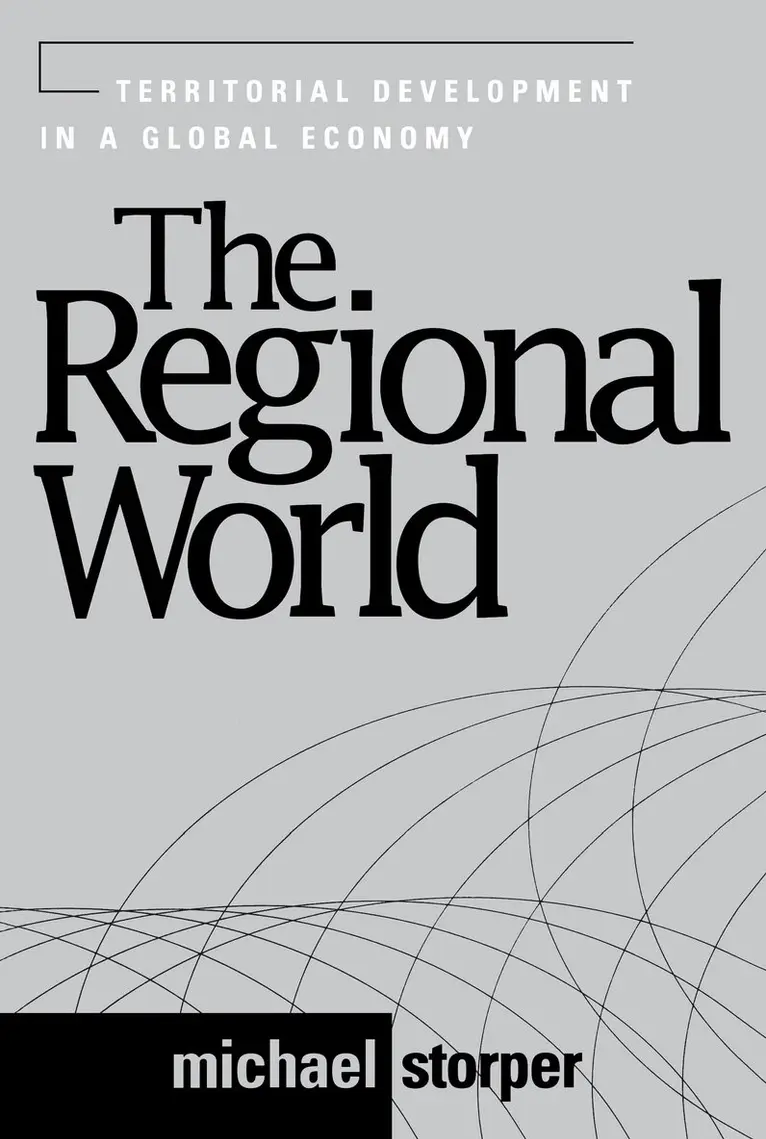
    Regional World

    Territorial Development in a Global Economy

    AvMichael Storper

    Häftad, Engelska, 1997

    Del i serien Perspectives on Economic Change

    723 kr

    Beställningsvara. Skickas inom 3-6 vardagar. Fri frakt över 249 kr.

    Beskrivning

    This pioneering volume proposes a compelling new theory of how regions have sustained their economic viability in the era of multinational corporations. Unlike traditional approaches, which analyze economic systems in terms of their mechanics (inputs, outputs, prices, technology, etc.), this work views them as systems for coordinating human actions and relationships. Reconceptualizing the role of learning, technology, and local institutions in development, Storper illuminates the key role of regional economies as building blocks of the increasingly connected world.A thought-provoking and timely work, The Regional World carries resounding implications for educators, students, and policymakers in economic geography, economic sociology, and international business. It is an essential primary or supplementary text for graduate-level courses on economic, regional, or industrial development and policy and international business.

    Produktinformation

    • Utgivningsdatum:1997-12-23
    • Mått:152 x 229 x 23 mm
    • Vikt:540 g
    • Format:Häftad
    • Språk:Engelska
    • Serie:Perspectives on Economic Change
    • Antal sidor:338
    • Förlag:Guilford Publications
    • ISBN:9781572303157

    Utforska kategorier

    • Internationell ekonomi inom Ekonomi och Ledarskap
    • Sociologi och antropologi inom Samhälle och politik
    • Geografi inom Naturvetenskap och teknik

    Mer om författaren

    Michael Storper is Professor of Regional and International Development in the School of Public Policy and Social Research at the University of California, Los Angeles, and Professor in Social and Human Sciences at the University of Marne-la-Vallée, France.

    Recensioner i media

    A major contribution to both regional science and modern social science. This book treats in an integrated way the major themes of regional economics: industrial districts, urbanization, and globalization. The approach is interdisciplinary, and the author succeeds in bringing together in his own original theoretical framework major elements from the most up-to-date theoretical debates in economics and sociology....The book will certainly become a classic among regional economists, and it has much to offer to anyone interested in what is going on in the social sciences in our time. --Bengt-Aake Lundvall, Department of Business Studies, Aalborg University, DenmarkThis is a path-breaking book written by one of our most prominent economic geographers. It offers a novel and compelling theorization of why regions continue to matter in a global age. In conceptualizing the region, inter alia, as a nexus of untraded interdependencies, Michael Storper forces recognition of the decisive influence upon economic competitiveness, innovation and adaptability, of the social relations of proximity such as sedimented actor rationalities, local knowledge and learning environments, social and cultural conventions, and industrial and institutional legacies. His approach considerably advances regional theory beyond the recent rediscovery of external economies of agglomeration within economics. It paves the way for a new institutionalist and evolutionary paradigm in regional development studies. --Ash Amin, Professor of Geography, University of Durham, UK -

    Innehållsförteckning

    • THE REGIONAL WORLDI. Regions as Relations and Conventions1. The Resurgence of Regional Economies, Ten Years Later2. Regional Economies as Relational AssetsII. Evolution and Territorial Development3. The Evolution of Regional Specificities4. Crossing Industrial Divides in a RegionIII. Products, Technologies, and Territories5. Innovation as Collective Action: Conventions, Products, Technologies, and Territories6. Regional Worlds of Production: Conventions of Learning and Innovation in the Technology Districts of France, Italy, and the United StatesIV. Globalization and Territorial Specificity7. Territories, Flows, and Hierarchies in the Clobal Economy8. The Limits to Globalization: Technology Districts and International Trade9. The World of the City: Local Relations in a Global EconomyV. Regional Institutions, Territorial Orders10. Institutions of the Learning Economy11. Conclusion: Technology, Firm Strategies, and Territorial Order