• Fri frakt över 249 kr
  • •
  • Snabba leveranser
  • •
  • Billiga böcker
Kundservice

Du är på sajten för privatpersoner.

Företag, bibliotek eller offentlig verksamhet?

Du handlar på classic.bokus.com, där alla dina funktioner finns intakta.
Till classic.bokus.com
Bokus logotyp. Gå till startsidan.
  • Erbjudanden
  • Student
  • Topplistor
  • Barn & ungdom
  • Bokus Play
  • E-böcker
  • Ljudböcker
  • Pocketböcker
  • Spel och pussel

Pocketfynda! Hundratals böcker för 49 kr/st →

Sidfot

Mina sidor

    Hjälp

    • Kundservice
    • Vanliga frågor och svar
    • Frakt och leverans
    • Retur vid ångerrätt
    • Reklamera vara
    • Betalning
    • Köpvillkor
    • Allmänna villkor
    • Information om webbplatsens tillgänglighet

    Om Bokus

    • Om oss
    • Pressrum
    • För studenter
    • För företag
    • För bibliotek och offentlig verksamhet
    • För leverantörer
    • Hållbarhet

    Populärt

    • Aktuella erbjudanden
    • Presentkort
    • Studentlitteratur
    • Nya böcker
    • Topplistor
    • Signerade böcker
    • Engelska böcker

    Inspiration

    • Boktips
    • BookTok
    • Barnbokskaraktärer
    • Populära författare
    Logotyp för Bokus
    Följ oss på Facebook (extern länk)Följ oss på Instagram (extern länk)Följ oss på YouTube (extern länk)Följ oss på TikTok (extern länk)
    bokus @ CookiesAnpassa cookiesIntegritetspolicyKöpvillkor
    Till Citymail hemsida (extern länk)Till Budbee hemsida (extern länk)Till Postnord hemsida (extern länk)Till Schenker hemsida (extern länk)Till Early Bird hemsida (extern länk)Till Walleys hemsida (extern länk)
    1. Historia och arkeologi
    2. Historia
    3. Historia: särskilda händelser och ämnen
    4. Kolonialism och imperialism

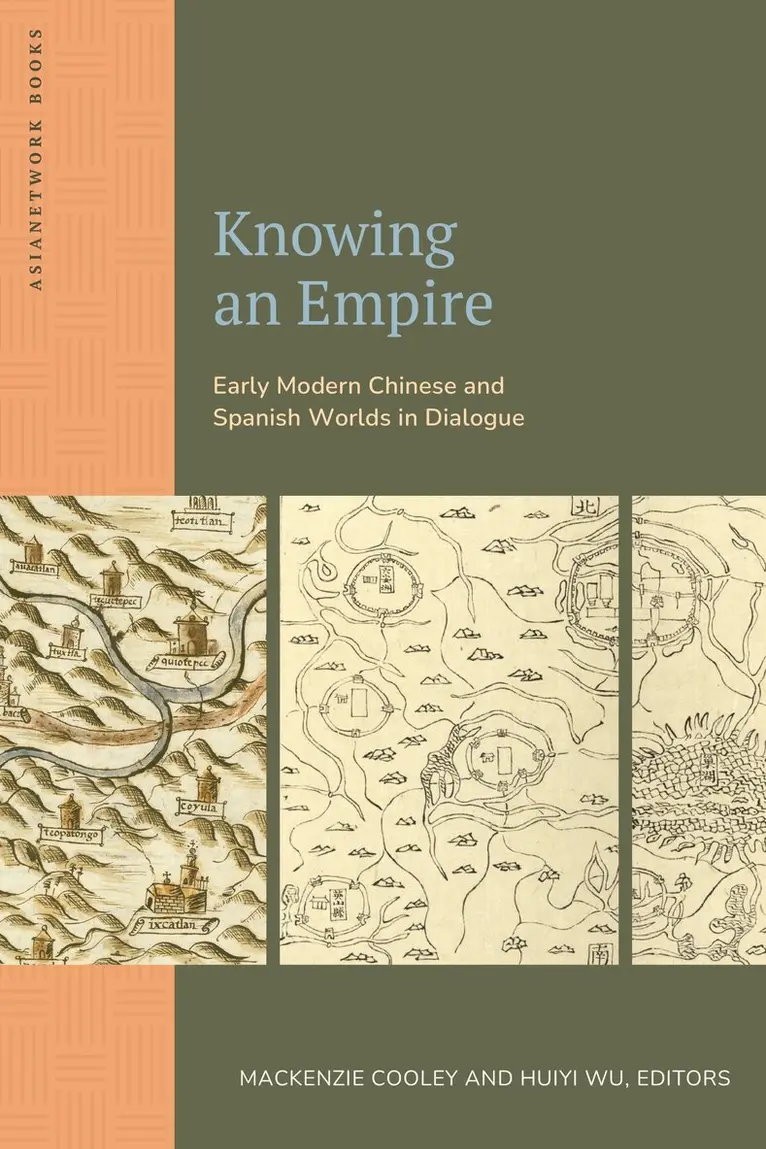
    Knowing an Empire

    Early Modern Chinese and Spanish Worlds in Dialogue

    AvMackenzie Cooley,Huiyi Wu

    Häftad, Engelska, 2025

    Del i serien ASIANetwork Books

    627 kr

    Beställningsvara. Skickas inom 5-8 vardagar. Fri frakt över 249 kr.

    Beskrivning

    Knowing an Empire: Early Modern Chinese and Spanish Worlds in Dialogue unveils how these two vast empires, separated by thousands of miles, developed comparable systems to gather, order, and wield knowledge about their local worlds in the process of empire-building. From the sixteenth to the eighteenth centuries, officials in both empires compiled large quantities of structured data on the climate, topography, natural products, languages, religions, and more of their locales, creating a vision of their empires as diverse yet unified. Through a new methodology of “juxtapositional comparison,” the book reads the difangzhi 地方志 (local gazetteers) of China and the relaciones geográficas of the Spanish world in parallel. Knowing an Empire does not see the conveyance of information across an empire as a top-down process with an active center as a knowledge-maker. Instead, it amplifies a blend of voices that speak as much to imperial bureaucracy as to the rich local and Indigenous cultures, revealing these two early modern empires as diverse polities whose equilibria were constantly rebalanced among local powers. Comprised of 18 chapters, this edited collection reflects on the historical evolution and inner structures of the imperial epistemologies, as well as the many ways historians today read difangzhi and relaciones geográficas to understand the spatial, natural, and social order in both the Chinese and the Spanish empires. At once a comparative and a connected history, it places Chinese and Spanish imperial knowledge in the globalizing early modern world, highlighting the migration of people, goods, and ideas and revealing how these wide-ranging influences are reflected—or not—in the difangzhi and the relaciones. The book concludes by broadening our scope beyond China and Spain to reflect how other early modern empires, such as the Portuguese, failed to develop such systematized imperial genres. With contributions from leading scholars across Latin American and Asian Studies, this book synthesizes political, environmental, and socio-economic history with historical anthropology to highlight parallel governance and knowledge structures. The contributors challenge conventional binaries of Western versus Eastern, and colonial versus non-colonial, presenting a nuanced perspective of early modern empires as dynamic, interconnected entities through the shared challenges of scale, diversity, and increasing globalization. Through these dialogues, Knowing an Empire illuminates the complex entanglement of ruling and understanding. This groundbreaking collection offers a highly innovative and dialogic approach to comparative studies of empires, with major implications for Asian, European, Latin American, transnational, and global history.

    Produktinformation

    • Utgivningsdatum:2025-08-12
    • Mått:152 x 229 x 40 mm
    • Vikt:993 g
    • Format:Häftad
    • Språk:Engelska
    • Serie:ASIANetwork Books
    • Antal sidor:616
    • Förlag:Michigan Publishing Services
    • ISBN:9781643150765

    Utforska kategorier

    • Kolonialism och imperialism inom Historia och arkeologi
    • Asiens historia inom Historia och arkeologi

    Mer om författaren

    Mackenzie Cooley is Associate Professor of Early Modern History of Ideas at Hamilton College. Her books include The Perfection of Nature: Animals, Breeding, and Race in the Renaissance (University of Chicago Press, 2022) and Natural Things in Early Modern Worlds (Routledge, 2023). Huiyi Wu is a historian of early modern Sino-European relationships and a permanent research fellow at the National Center of Scientific Research (CNRS) in France. She is the author of Tranduire la Chine au XVIIIe siècle (Translating China in the Eighteenth Century, Honoré Champion, 2017).

    Recensioner i media

    “Knowing an Empire provides sharp analysis on the early modern Chinese and Spanish empires: their limits and challenges in knowing and governing their domains and the role of the indigenous groups and other people on the ground in acquiring knowledge about these empires. It presents various perspectives and interpretations on the intricacies of imperial knowledge production and demonstrates the richness of data that can be culled from the difanzhi and the relaciones geográficas, which are very important source materials for future studies.”

    Innehållsförteckning

    • Table of ContentsIntroduction: Comparing Parallel Imperial EpistemologiesPart 1: Knowing the State by Mackenzie Cooley and WU Huiyi 1. Questionnaires to Rule an Empire: Reporting Doubt to the Kings in the Relaciones Geográficas by María M. Portuondo2. The Chinese Local Gazetteers: Principles of Compilation by Joseph Dennis3. Imperial Territorial Data before the Age of Print: "Illustrated Guidelines" as Local Repositories for Knowing the Chinese Empire by Alexis LycasPart 2: Structures of Knowing 4. What One Should Know about a Locality: Analyzing Knowledge Categories in the Chinese Local Gazetteers by CHEN Shih-Pei5. Placing New Spain through Early Modern Big Data: Developing a Geographical Text Analysis Approach to the Relaciones Geográficas de Nueva España by Patricia Murrieta-Flores, Diego Jiménez-Badillo, and Mariana Favila-VázquezPart 3: Knowing Space 6. Mapping Ming China: Modes of Mapping in the Comprehensive Geographies of the Late Ming Era by Mario Cams7. Mapping New Spain: Indigenous Cartography and Imperial Knowledge by Barbara E. MundyPart 4: Knowing Nature 8. Arching the Yangzi River (1600-1900) by CHE Qun9. Making Nature Spanish: Environmental Change in the Relaciones by Mackenzie Cooley10. Politics and Scholarship of Local Products in Ming-Qing Provincial Gazetteers by BIAN He11. Strategic Landscapes: Indigenous Knowledge of Andean Geographies as Recorded in the Relaciones Geográficas by Jeremy MikeczPart 5: Knowing People 12. Local Linguistic Knowledge in Qing Gazetteers by Mårten Söderblom Saarela13. Black Settlers Fight for Visibility by Marcella Hayes14. Religions and the Landscape of Faiths in Imperial Chinese Gazetteers by ZHANG Xianqing15. Slavery in Spanish America and Beyond by Stuart M. McManusPart 6: Connections and Transfers 16. Guns, Maize, and Europeans: Early Modern Globalization in Local Gazetteers by WU Huiyi17. Philippine Relaciónes: China and the Spanish Knowledge Acquisition in the Sixteenth Century by YAN Niping Coda: Empires of Informal Knowing 18. The Knowledge Economy of the Portuguese Empire by Dejanirah CoutoBibliography