Mackenzie Cooley – Författare
Visar alla böcker från författaren Mackenzie Cooley. Handla med fri frakt och snabb leverans.
5 produkter
5 produkter
1 025 kr
Skickas inom 7-10 vardagar
A deep history of how Renaissance Italy and the Spanish empire were shaped by a lingering fascination with breeding.The Renaissance is celebrated for the belief that individuals could fashion themselves to greatness, but there is a dark undercurrent to this fêted era of history. The same men and women who offered profound advancements in European understanding of the human condition—and laid the foundations of the Scientific Revolution—were also obsessed with controlling that condition and the wider natural world. Tracing early modern artisanal practice, Mackenzie Cooley shows how the idea of race and theories of inheritance developed through animal breeding in the shadow of the Spanish Empire. While one strand of the Renaissance celebrated a liberal view of human potential, another limited it by biology, reducing man to beast and prince to stud. “Race,” Cooley explains, first referred to animal stock honed through breeding. To those who invented the concept, race was not inflexible, but the fragile result of reproductive work. As the Spanish empire expanded, the concept of race moved from nonhuman to human animals. Cooley reveals how, as the dangerous idea of controlled reproduction was brought to life again and again, a rich, complex, and ever-shifting language of race and breeding was born. Adding nuance and historical context to discussions of race and human and animal relations, The Perfection of Nature provides a close reading of undertheorized notions of generation and its discontents in the more-than-human world.
313 kr
Skickas inom 7-10 vardagar
A deep history of how Renaissance Italy and the Spanish empire were shaped by a lingering fascination with breeding.The Renaissance is celebrated for the belief that individuals could fashion themselves to greatness, but there is a dark undercurrent to this fêted era of history. The same men and women who offered profound advancements in European understanding of the human condition—and laid the foundations of the Scientific Revolution—were also obsessed with controlling that condition and the wider natural world. Tracing early modern artisanal practice, Mackenzie Cooley shows how the idea of race and theories of inheritance developed through animal breeding in the shadow of the Spanish Empire. While one strand of the Renaissance celebrated a liberal view of human potential, another limited it by biology, reducing man to beast and prince to stud. “Race,” Cooley explains, first referred to animal stock honed through breeding. To those who invented the concept, race was not inflexible, but the fragile result of reproductive work. As the Spanish empire expanded, the concept of race moved from nonhuman to human animals. Cooley reveals how, as the dangerous idea of controlled reproduction was brought to life again and again, a rich, complex, and ever-shifting language of race and breeding was born. Adding nuance and historical context to discussions of race and human and animal relations, The Perfection of Nature provides a close reading of undertheorized notions of generation and its discontents in the more-than-human world.
2 036 kr
Skickas inom 10-15 vardagar
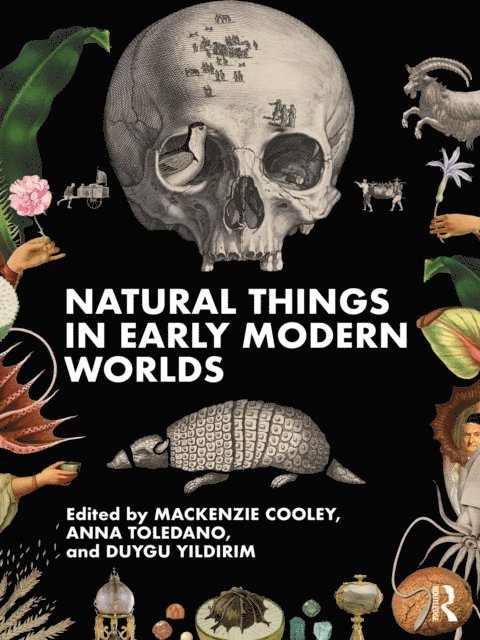
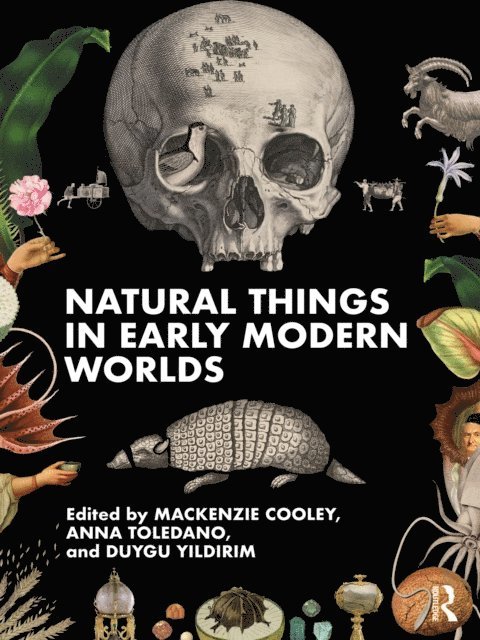
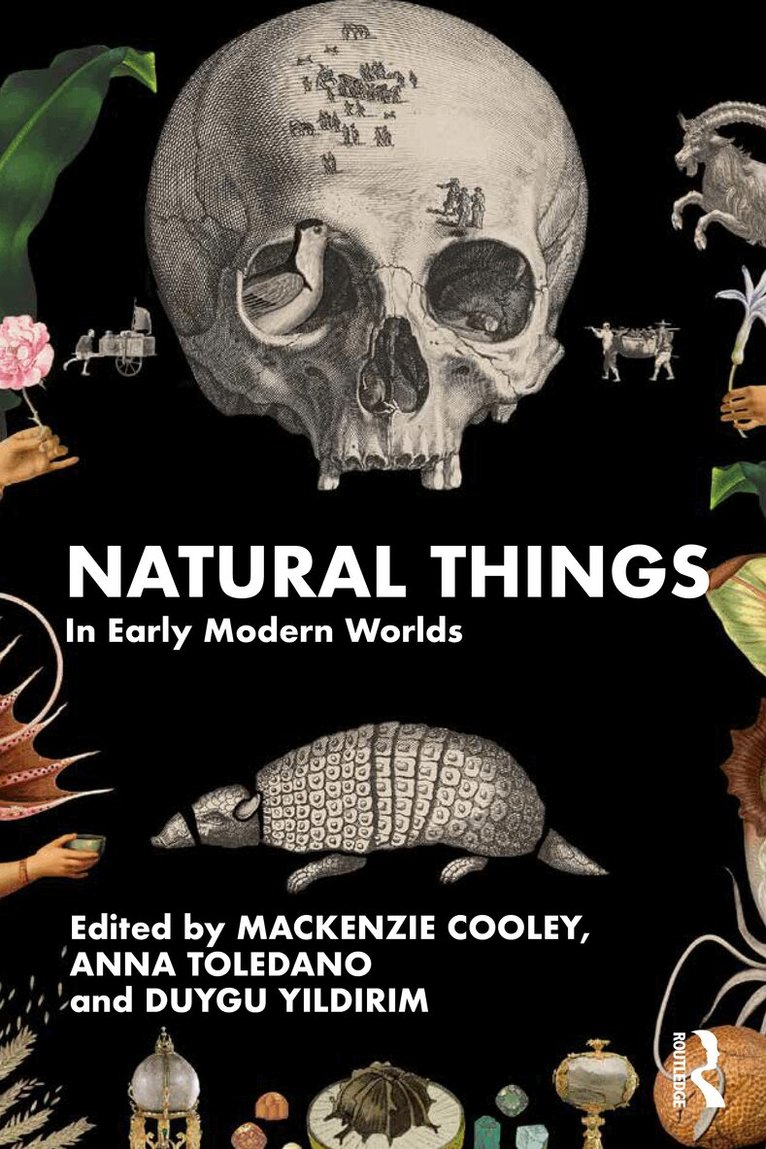
The essays and original visualizations collected in Natural Things in Early Modern Worlds explore the relationships among natural things - ranging from pollen in a gust of wind to a carnivorous pitcher plant to a shell-like skinned armadillo - and the humans enthralled with them.Episodes from 1500 to the early 1900s reveal connected histories across early modern worlds as natural things traveled across the Indian Ocean, the Ottoman Empire, Pacific islands, Southeast Asia, the Spanish Empire, and Western Europe. In distant worlds that were constantly changing with expanding networks of trade, colonial aspirations, and the rise of empiricism, natural things obtained new meanings and became alienated from their origins. Tracing the processes of their displacement, each chapter starts with a piece of original artwork that relies on digital collage to pull image sources out of place and to represent meanings that natural things lost and remade. Accessible and elegant, Natural Things is the first study of its kind to combine original visualizations with the history of science. Museum-goers, scholars, scientists, and students will find new histories of nature and collecting within. Its playful visuality will capture the imagination of non-academic and academic readers alike while reminding us of the alienating capacity of the modern life sciences.
539 kr
Skickas inom 10-15 vardagar
The essays and original visualizations collected in Natural Things in Early Modern Worlds explore the relationships among natural things - ranging from pollen in a gust of wind to a carnivorous pitcher plant to a shell-like skinned armadillo - and the humans enthralled with them.Episodes from 1500 to the early 1900s reveal connected histories across early modern worlds as natural things traveled across the Indian Ocean, the Ottoman Empire, Pacific islands, Southeast Asia, the Spanish Empire, and Western Europe. In distant worlds that were constantly changing with expanding networks of trade, colonial aspirations, and the rise of empiricism, natural things obtained new meanings and became alienated from their origins. Tracing the processes of their displacement, each chapter starts with a piece of original artwork that relies on digital collage to pull image sources out of place and to represent meanings that natural things lost and remade. Accessible and elegant, Natural Things is the first study of its kind to combine original visualizations with the history of science. Museum-goers, scholars, scientists, and students will find new histories of nature and collecting within. Its playful visuality will capture the imagination of non-academic and academic readers alike while reminding us of the alienating capacity of the modern life sciences.
606 kr
Skickas inom 7-10 vardagar
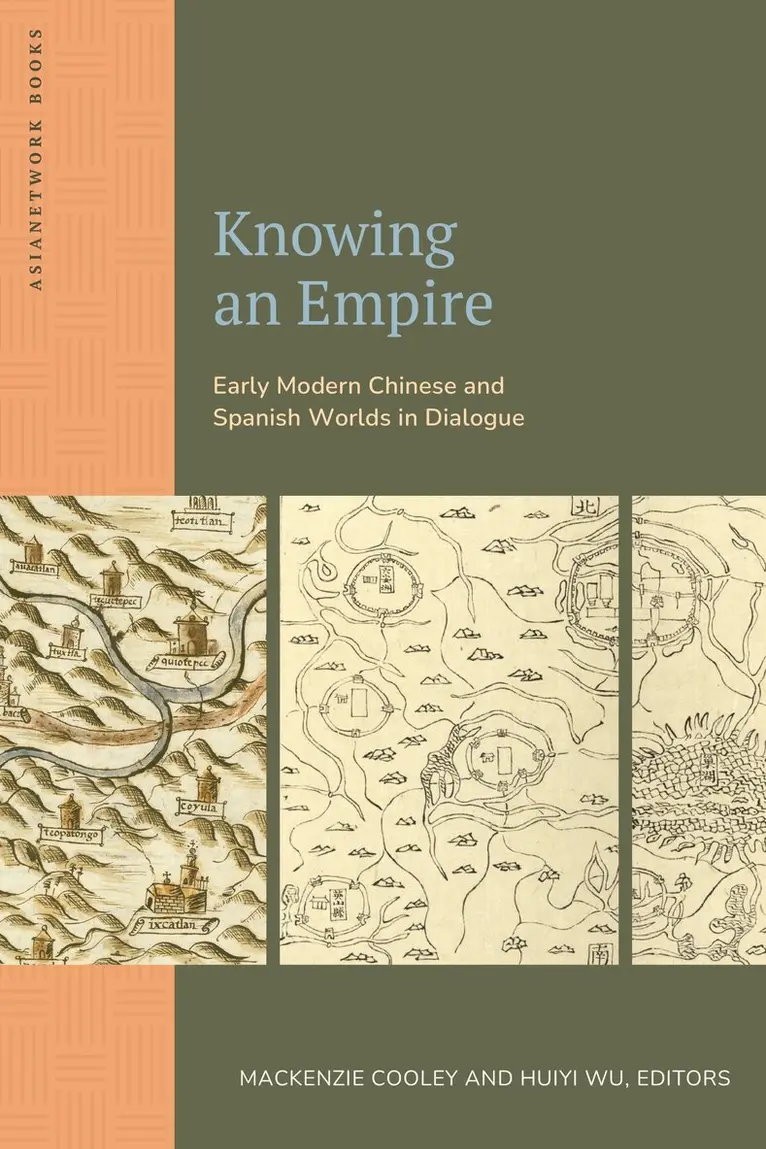
Knowing an Empire: Early Modern Chinese and Spanish Worlds in Dialogue unveils how these two vast empires, separated by thousands of miles, developed comparable systems to gather, order, and wield knowledge about their local worlds in the process of empire-building. From the sixteenth to the eighteenth centuries, officials in both empires compiled large quantities of structured data on the climate, topography, natural products, languages, religions, and more of their locales, creating a vision of their empires as diverse yet unified. Through a new methodology of “juxtapositional comparison,” the book reads the difangzhi 地方志 (local gazetteers) of China and the relaciones geográficas of the Spanish world in parallel. Knowing an Empire does not see the conveyance of information across an empire as a top-down process with an active center as a knowledge-maker. Instead, it amplifies a blend of voices that speak as much to imperial bureaucracy as to the rich local and Indigenous cultures, revealing these two early modern empires as diverse polities whose equilibria were constantly rebalanced among local powers. Comprised of 18 chapters, this edited collection reflects on the historical evolution and inner structures of the imperial epistemologies, as well as the many ways historians today read difangzhi and relaciones geográficas to understand the spatial, natural, and social order in both the Chinese and the Spanish empires. At once a comparative and a connected history, it places Chinese and Spanish imperial knowledge in the globalizing early modern world, highlighting the migration of people, goods, and ideas and revealing how these wide-ranging influences are reflected—or not—in the difangzhi and the relaciones. The book concludes by broadening our scope beyond China and Spain to reflect how other early modern empires, such as the Portuguese, failed to develop such systematized imperial genres. With contributions from leading scholars across Latin American and Asian Studies, this book synthesizes political, environmental, and socio-economic history with historical anthropology to highlight parallel governance and knowledge structures. The contributors challenge conventional binaries of Western versus Eastern, and colonial versus non-colonial, presenting a nuanced perspective of early modern empires as dynamic, interconnected entities through the shared challenges of scale, diversity, and increasing globalization. Through these dialogues, Knowing an Empire illuminates the complex entanglement of ruling and understanding. This groundbreaking collection offers a highly innovative and dialogic approach to comparative studies of empires, with major implications for Asian, European, Latin American, transnational, and global history.