• Fri frakt över 249 kr
  • •
  • Snabba leveranser
  • •
  • Billiga böcker
Kundservice

Du är på sajten för privatpersoner.

Företag, bibliotek eller offentlig verksamhet?

Du handlar på classic.bokus.com, där alla dina funktioner finns intakta.
Till classic.bokus.com
Bokus logotyp. Gå till startsidan.
  • Erbjudanden
  • Student
  • Topplistor
  • Barn & ungdom
  • Bokus Play
  • E-böcker
  • Ljudböcker
  • Pocketböcker
  • Spel och pussel

Pocketfynda! Hundratals böcker för 49 kr/st →

Sidfot

Mina sidor

    Hjälp

    • Kundservice
    • Vanliga frågor och svar
    • Frakt och leverans
    • Retur vid ångerrätt
    • Reklamera vara
    • Betalning
    • Köpvillkor
    • Allmänna villkor
    • Information om webbplatsens tillgänglighet

    Om Bokus

    • Om oss
    • Pressrum
    • För studenter
    • För företag
    • För bibliotek och offentlig verksamhet
    • För leverantörer
    • Hållbarhet

    Populärt

    • Aktuella erbjudanden
    • Presentkort
    • Studentlitteratur
    • Nya böcker
    • Topplistor
    • Signerade böcker
    • Engelska böcker

    Inspiration

    • Boktips
    • BookTok
    • Barnbokskaraktärer
    • Populära författare
    Logotyp för Bokus
    Följ oss på Facebook (extern länk)Följ oss på Instagram (extern länk)Följ oss på YouTube (extern länk)Följ oss på TikTok (extern länk)
    bokus @ CookiesAnpassa cookiesIntegritetspolicyKöpvillkor
    Till Citymail hemsida (extern länk)Till Budbee hemsida (extern länk)Till Postnord hemsida (extern länk)Till Schenker hemsida (extern länk)Till Early Bird hemsida (extern länk)Till Walleys hemsida (extern länk)
    1. Historia och arkeologi
    2. Historia
    3. Allmän historia och världshistoria

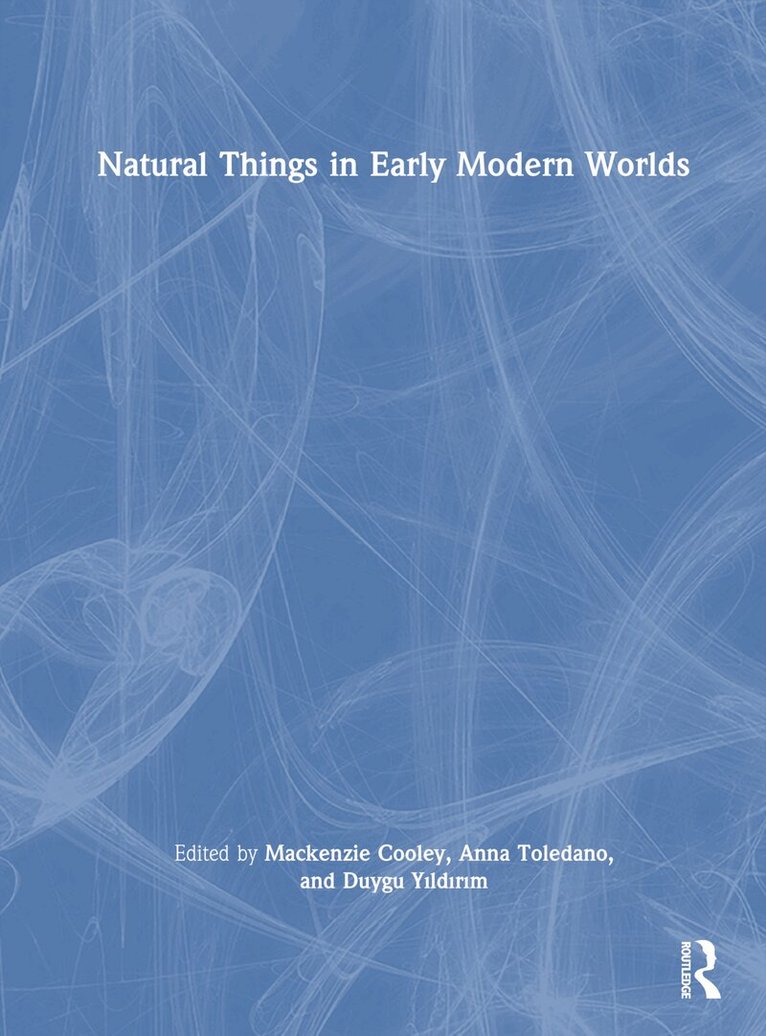
    Natural Things in Early Modern Worlds

    AvMackenzie Cooley,Anna Toledano

    Inbunden, Engelska, 2023

    2 481 kr

    Beställningsvara. Skickas inom 10-15 vardagar. Fri frakt över 249 kr.

    Beskrivning

    The essays and original visualizations collected in Natural Things in Early Modern Worlds explore the relationships among natural things - ranging from pollen in a gust of wind to a carnivorous pitcher plant to a shell-like skinned armadillo - and the humans enthralled with them.Episodes from 1500 to the early 1900s reveal connected histories across early modern worlds as natural things traveled across the Indian Ocean, the Ottoman Empire, Pacific islands, Southeast Asia, the Spanish Empire, and Western Europe. In distant worlds that were constantly changing with expanding networks of trade, colonial aspirations, and the rise of empiricism, natural things obtained new meanings and became alienated from their origins. Tracing the processes of their displacement, each chapter starts with a piece of original artwork that relies on digital collage to pull image sources out of place and to represent meanings that natural things lost and remade. Accessible and elegant, Natural Things is the first study of its kind to combine original visualizations with the history of science. Museum-goers, scholars, scientists, and students will find new histories of nature and collecting within. Its playful visuality will capture the imagination of non-academic and academic readers alike while reminding us of the alienating capacity of the modern life sciences.

    Produktinformation

    • Utgivningsdatum:2023-05-09
    • Mått:210 x 280 x 27 mm
    • Vikt:1 420 g
    • Format:Inbunden
    • Språk:Engelska
    • Antal sidor:396
    • Förlag:Taylor & Francis Ltd
    • ISBN:9781032397184

    Utforska kategorier

    • Allmän historia och världshistoria inom Historia och arkeologi
    • Naturvetenskapens historia inom Naturvetenskap och teknik
    • Djurböcker inom Djur och Natur

    Mer om författaren

    Mackenzie Cooley is an intellectual historian who studies the uses, abuses, and understandings of the natural world in early modern history. She is Assistant Professor of History and Director of Latin American Studies at Hamilton College.Anna Toledano is a historian of science and a museum professional. Her academic research focuses on natural history collecting in eighteenth-century Spain and Spanish America.Duygu Yıldırım is a historian of knowledge working on the comparative and connected histories of science and medicine in the early modern Mediterranean and in the Ottoman Empire. She is Assistant Professor of History at the University of Tennessee, Knoxville.

    Recensioner i media

    "Natural Things is a creative, exciting, and genre-defying volume that helps readers to understand natural history more attentively and capaciously. The volume puts nature back into nature, and follows natural things across built environments, ecological niches, and academic fields, embracing the unruliness required if one puts them, rather than people, at the centre."Surekha Davies, Ph.D. Researcher, Department of History and Art History, Utrecht University, the Netherlands"What better can be said of a book than that it impels the reader to realize things are not as they seem, nor can they be easily categorized, especially not into binary classifications such as natural/unnatural, live/dead, human/nature, indigenous/exotic, west/east, and subject/object. This is a volume full of surprises, changelings, liminalities, and polyvalent meanings. In its capacious and always fascinating roving around the terrains, ecologies, and intersections of material culture, global exchange, environmental history, and the history of knowledge and science/nature studies, Natural Things will unsettle assumptions and introduce instabilities into seemingly fixed points of reference. Read it!"Pamela H. Smith, PhD, Seth Low Professor of History, Columbia University, New York"This excellent collection of essays brings alive crucial exchanges of ideas and objects that characterize the scientific and cultural history of the early modern world. Combining archival erudition, critical historiography, and imaginative visualization, this book is an inspiring new resource for teaching as well as further research. In evocative essays, we are reminded that ‘seeing’ things that make up various understandings of nature should be understood as an active pursuit, whether for us today or in the way we ascribe it to past peoples whose imaginations we try to bring to life in our work. The book provides one of the most successful cases I know for using images as crucial historical evidence rather than as indexical illustrations."Shahzad Bashir, Aga Khan Professor of Islamic Humanities, Brown University USA"This visually arresting and all-absorbing book takes the reader on a kaleidoscopic journey across the world from the Pacific Islands to South Asia, from the Atlantic world to Europe and the Americas at a time in which humans profoundly redefined their relationship with the global natural world. By bringing material culture, ecology, technologies, science and economy into conversation, Natural Things defies disciplinary boundaries and redefines our understanding of nature. It does so by considering a number of surprising ‘things’, among which an pink edible animal and a carnivorous plant; an anti-poison stone and one of the most toxic plants; the produce of the intestines of a sperm whale and a delicious beverage to be sipped in company. After reading Natural Things, when you step out of your front door, you’ll never see the world with the same eyes, and you’ll notice ‘things’ that you had not appreciated before!"Giorgio Riello, Professor of Early Modern Global History, European University Institute, Florence, Italy[This book] pushes readers (…) to begin to ask questions about the natural histories of other organisms and to question more closely long-standing narratives about plant discovery and botany. It’s an interesting blend of more traditional history of science with the newer fields of critical plant studies and the plant humanities, which are also at work enriching our views of the floral world.Maura Flannery, Herbarium World (August 2023)“The volume (…) offers a brilliant contribution to the study of non-European knowledge about nature. A rich and pathbreaking volume that, rather than simplifying, sketches a more complex and nuanced picture of the histories of early modern natural things and the humans they met along their ways"Lavinia Gambini, Journal of Early Modern History 27 (2023) 555–568."Like any worthy Wunderkammer, to reap its finer rewards this eclectic collection demands close looking and deep reading, if not several return visits. Smartly designed, edited, and formatted in the manner of a weighty exhibition catalog, Natural Things in Early Modern Worlds falls into that venerable hybrid genre that since the Enlightenment has sought to marry art and nature. At the same time, it mimics a current trend in museography, wherein visual artists are invited to mount critical interventions within the museum’s galleries."Mark Thurner, Hispanic American Historical Review"This innovative and highly interdisciplinary book analyses the sociocultural and intellectual context of a dozen items significant to the early modern natural world. A series of lucid and accessible essays are accompanied by witty digital collages. The essays are also cleverly divided into sectional themes addressing how natural history objects were manipulated for human use, felt by humans via consumption for food or medication, and preserved or lost by natural historians (…) this lavishly illustrated and large format book is such a pleasure to read, look at, and think with."Anna Marie Roos, Isis—Volume 116, Number 1, March 2025 p183-184

    Innehållsförteckning

    • Introduction: Natural Things in Early Modern WorldsMackenzie Cooley, Anna Toledano, and Duygu YıldırımOn the DesignZoë Sadokierski and Katie DeanPart I: Manipulated1. Pollen: The Sexual Life of Plants in MesoamericaHelen Burgos-Ellis2. Bezoar: Medicine in the Belly of the BeastMackenzie Cooley 3. Canal: Cross-Cultural Encounters and Control of WaterAlexander Statman4. Ambergris: From Sea to Scent in Renaissance ItalyMackenzie Cooley and Kathryn BiedermannPart II: Felt5. Squid: Natural History as Food History Whitney Barlow Robles 6. Coffee: Of Melancholic Turkish Bodies and Sensory ExperiencesDuygu Yıldırım7. Manchineel: Power, Pain, and Knowledge in the Lesser AntillesThomas C. Anderson8. Pitcher Plant: Drowning in her Sweet NectarElaine AyersPart III: Preserved9. Leaf: The Materiality of Early Modern HerbalsJulia Heideklang10. Armadillo: An Animal in Search of a Place Florencia Pierri 11. Bird: Living Names of Félix de Azara’s Lost CollectionAnna Toledano12. Brain: Objecthood, Subjecthood, and the Genius of GaussNicolaas RupkeEpilogue: Nature’s NarrativesPaula FindlenAfterword: The Disorder of ThingsAlan Mikhail Index