ASIANetwork Books – Serie
Visar alla böcker i serien ASIANetwork Books. Handla med fri frakt och snabb leverans.
5 produkter
5 produkter
314 kr
Skickas inom 7-10 vardagar
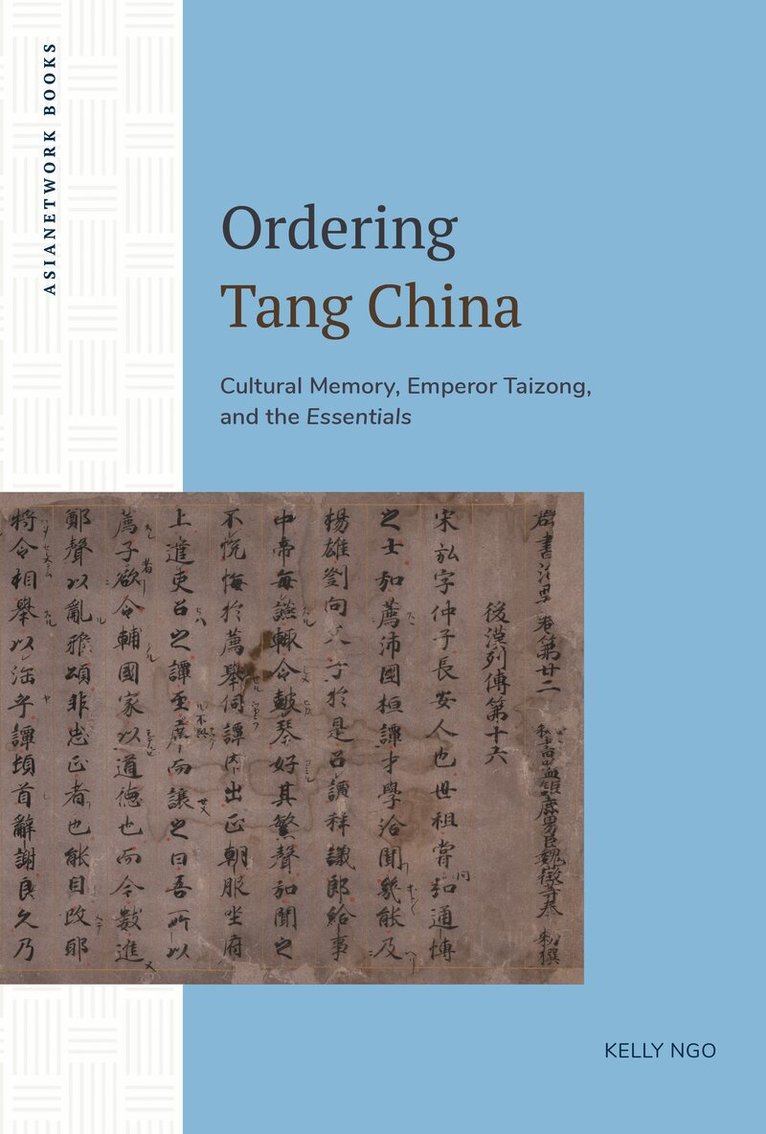
In Ordering Tang China: Cultural Memory, Emperor Taizong and the Essentials, Kelly Ngo presents the first book-length study in English of the Essentials for Bringing about Order from Assembled Texts (Qunshu zhiyao 群書治要), a rulership anthology that became renowned for its model of governance in ancient and early modern East Asia. The Essentials is one of the earliest Chinese anthologies designed to educate rulers in cultivating an ethical character and governing the state. Commissioned for the Tang emperor Taizong in the 620s, the Essentials articulates a distinctive political philosophy through a collection of excerpts from earlier canonical, historical, and masters writings, and their commentaries. Examining the Essentials and its transmission in China, Japan, Korea, and Vietnam through the lens of cultural memory, Ngo explores the foundation, conduct, and impact of Zhenguan rulership, which became synonymous with good governance among later generations of ruling elites, scholars, and historians in China and beyond. By connecting the textual discourse with an analysis of its use and reception across the region, Ngo demonstrates that the Essentials was a key source of Confucian political thought and practice during the early Tang dynasty. In accounting for the place of the Essentials in political advice literature, Ngo illustrates how it drew from the ancient Confucian heritage and was still responsive to contemporaneous political concerns, suggesting that the Essentials played a part in the success of Zhenguan political practice.Ordering Tang China also includes the first English-language translations of portions of the seventh-century anthology, with reference to partial translations published in nine languages. Utilizing the theory of cultural memory to study the Essentials not only opens a fresh approach to learning about the imperial consumption of literature, as well as the theory and practice of emperorship, but also offers a case study for how to study Chinese governance literature, including its “mirror for princes” genre.
431 kr
Skickas inom 7-10 vardagar
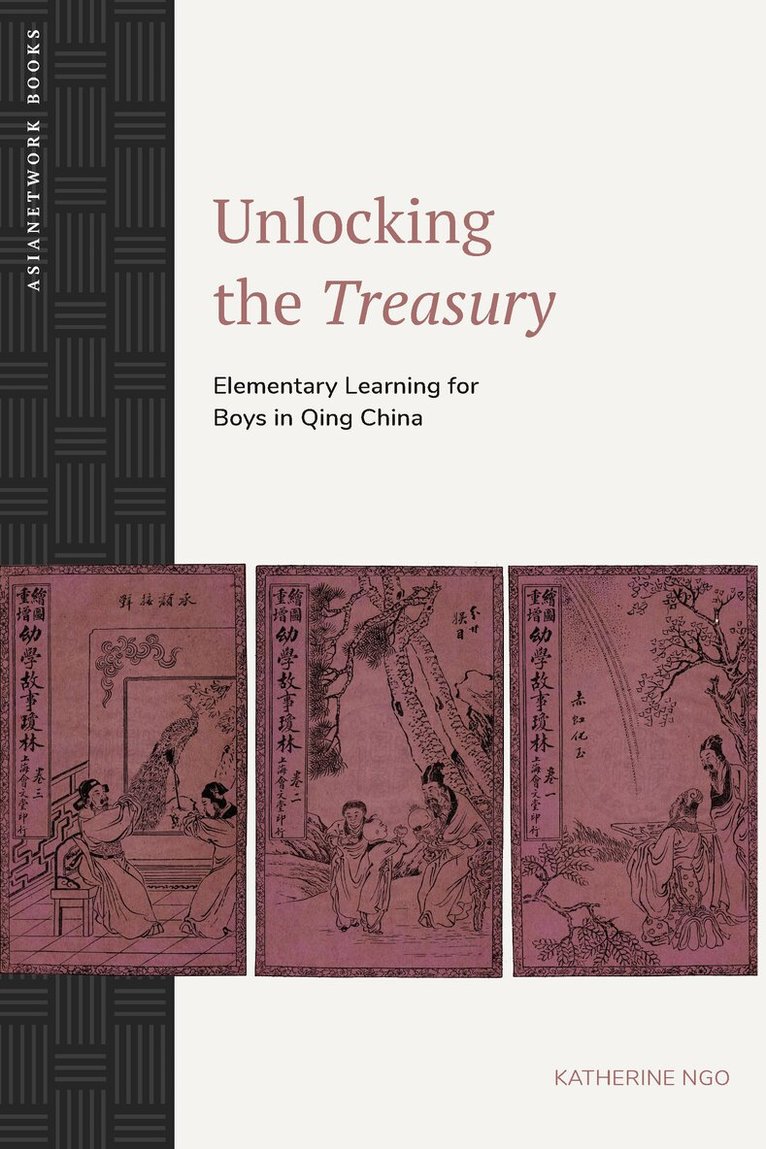
In recent years, the renewed interest in traditional Chinese elementary educational material has led to an increased use of these texts as teaching materials in Chinese schools, as well as popular literature and in academic research. Unlocking the Treasury: Elementary Learning for Boys in Qing China seeks to address the existing gap in Western scholarship regarding pre-modern Chinese primary education, its theories, and textbooks. With a focus on the Qing dynasty textbook, Treasury of Elementary Learning (Youxue qionglin 幼學瓊林), this volume is the first major study of the Treasury in English and reveals a rich tradition of education through close and critical readings of the text. Unlocking the Treasury grounds its study of primary education in the intellectual history of the period. Using the concept of interpretive communities, Katherine Ngo explores the impact of socio-political influences and differences in Qing schools of thought, including the school of principle, the school of heart-mind, and practical learning. As such, this volume examines the Treasury through three critical readings of the text: as a handbook for practical learning, a child-oriented reading of the school of heart-mind, and the instrumental perspective of education as examination training. Ngo reframes the curricular content, skills, learning approaches, and teaching strategies of Chinese pre-modern elementary education with the goal of facilitating a broader transcultural dialogue in contemporary education. Far from the notion of traditional Chinese elementary education being monolithic and “rote learning,” Unlocking the Treasury reveals that elementary learning in the Qing dynasty offered a sophisticated and complex educational agenda with diverse learning goals of examination, preparation, moral development, and textual scholarship training that were shaped by intellectual trends of the time. An engaging text for scholars of Qing China and historians of education alike, Katherine Ngo’s Unlocking the Treasury is essential to understanding the philosophical, historical, literary, and psychological dimensions of education and educational theory in the Qing era.
606 kr
Skickas inom 7-10 vardagar
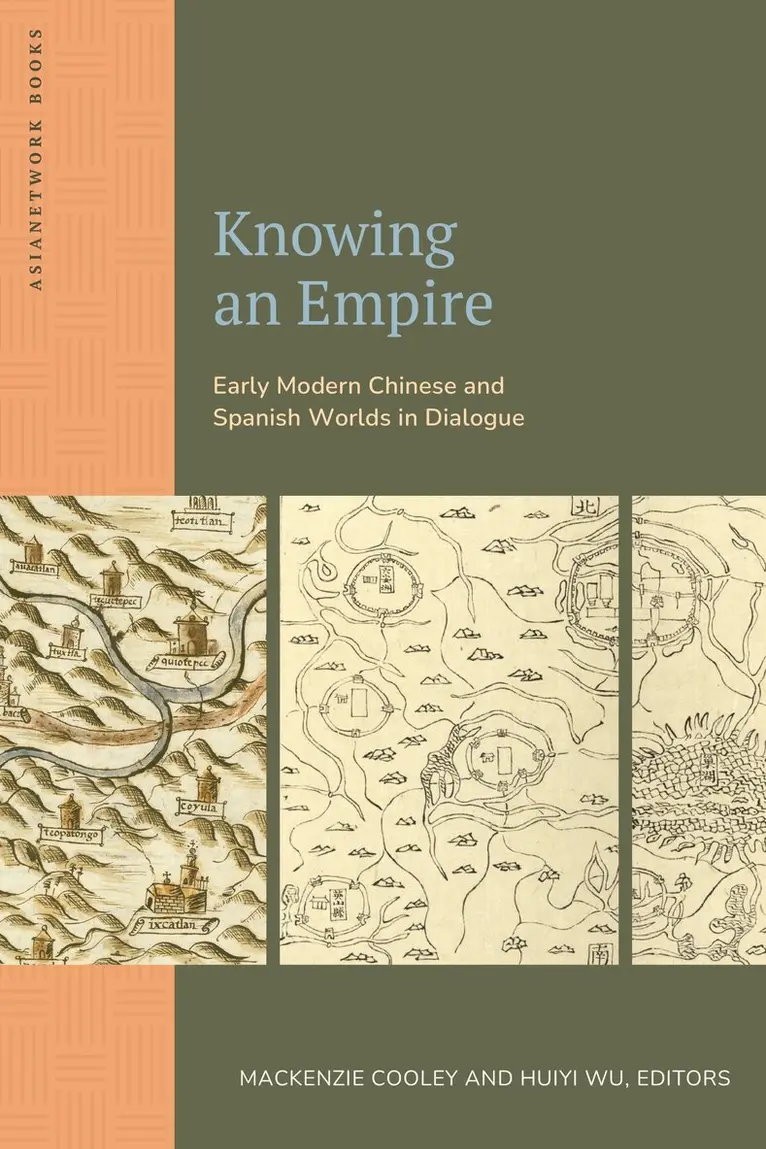
Knowing an Empire: Early Modern Chinese and Spanish Worlds in Dialogue unveils how these two vast empires, separated by thousands of miles, developed comparable systems to gather, order, and wield knowledge about their local worlds in the process of empire-building. From the sixteenth to the eighteenth centuries, officials in both empires compiled large quantities of structured data on the climate, topography, natural products, languages, religions, and more of their locales, creating a vision of their empires as diverse yet unified. Through a new methodology of “juxtapositional comparison,” the book reads the difangzhi 地方志 (local gazetteers) of China and the relaciones geográficas of the Spanish world in parallel. Knowing an Empire does not see the conveyance of information across an empire as a top-down process with an active center as a knowledge-maker. Instead, it amplifies a blend of voices that speak as much to imperial bureaucracy as to the rich local and Indigenous cultures, revealing these two early modern empires as diverse polities whose equilibria were constantly rebalanced among local powers. Comprised of 18 chapters, this edited collection reflects on the historical evolution and inner structures of the imperial epistemologies, as well as the many ways historians today read difangzhi and relaciones geográficas to understand the spatial, natural, and social order in both the Chinese and the Spanish empires. At once a comparative and a connected history, it places Chinese and Spanish imperial knowledge in the globalizing early modern world, highlighting the migration of people, goods, and ideas and revealing how these wide-ranging influences are reflected—or not—in the difangzhi and the relaciones. The book concludes by broadening our scope beyond China and Spain to reflect how other early modern empires, such as the Portuguese, failed to develop such systematized imperial genres. With contributions from leading scholars across Latin American and Asian Studies, this book synthesizes political, environmental, and socio-economic history with historical anthropology to highlight parallel governance and knowledge structures. The contributors challenge conventional binaries of Western versus Eastern, and colonial versus non-colonial, presenting a nuanced perspective of early modern empires as dynamic, interconnected entities through the shared challenges of scale, diversity, and increasing globalization. Through these dialogues, Knowing an Empire illuminates the complex entanglement of ruling and understanding. This groundbreaking collection offers a highly innovative and dialogic approach to comparative studies of empires, with major implications for Asian, European, Latin American, transnational, and global history.
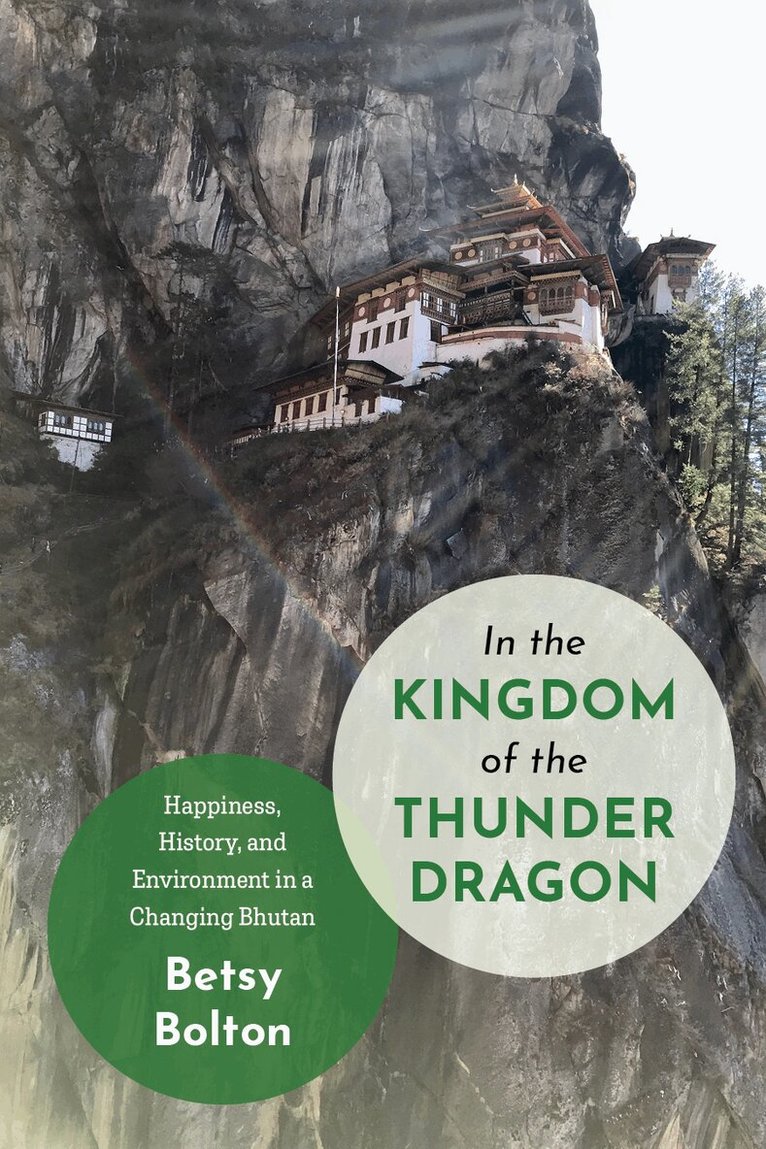
In the Kingdom of the Thunder Dragon
Happiness, History, and Environment in a Changing Bhutan
Häftad, Engelska, 2025
416 kr
Skickas inom 7-10 vardagar
Landlocked, mountainous, and surrounded by global giants India and China, Bhutan has provided remarkable leadership on both climate action and human happiness, despite its pre-2023 status as a least-developed nation. Bhutan was the first country to be internationally recognized as carbon neutral; it is also the birthplace of “Gross National Happiness” (GNH), a pointed alternative to Gross Domestic Product (GDP) as a means of measuring the success of national policies in promoting citizens’ wellbeing. Yet Bhutan has also been a site of ethnic conflict, with roughly tens of thousands people displaced into refugee camps in the 1990s and eventually resettled abroad. International views on Bhutan tend to be sharply split between admiration for its democratizing development strategies and opposition to its human rights abuses—a division partly maintained by Bhutan’s tight limits on immigration and foreign travel within the country. In the first book-length study of its kind, In the Kingdom of the Thunder Dragon explores the tensions and contradictions of Bhutan’s rapid political and economic transformation from the perspective of a Fulbright scholar helping start a new master’s program in the remote east of the country. Mingling personal narrative with historical context to engage undergraduate students and general readers, In the Kingdom of the Thunder Dragon explores Bhutan’s Vajrayana Buddhist heritage and ongoing embrace of tradition alongside development, the country’s newly minted democracy amidst a complicated history of citizenship and belonging, and the challenges the nation faces in a period of increasing globalization. Betsy Bolton further explores Bhutan’s recent events surrounding the 1990s expulsion of the Lhotshampa people and the development of GNH in the early 2000s. From here, Bolton illuminates how these historical narratives and issues have impacted Bhutanese citizens and students through stories gathered at educational and artistic institutions, festivals and community events. In the Kingdom of the Thunder Dragon is a fresh, accessible approach to Bhutanese history and will interest general readers as well as scholars of Asia, history, economics, sociology, and environmental studies.
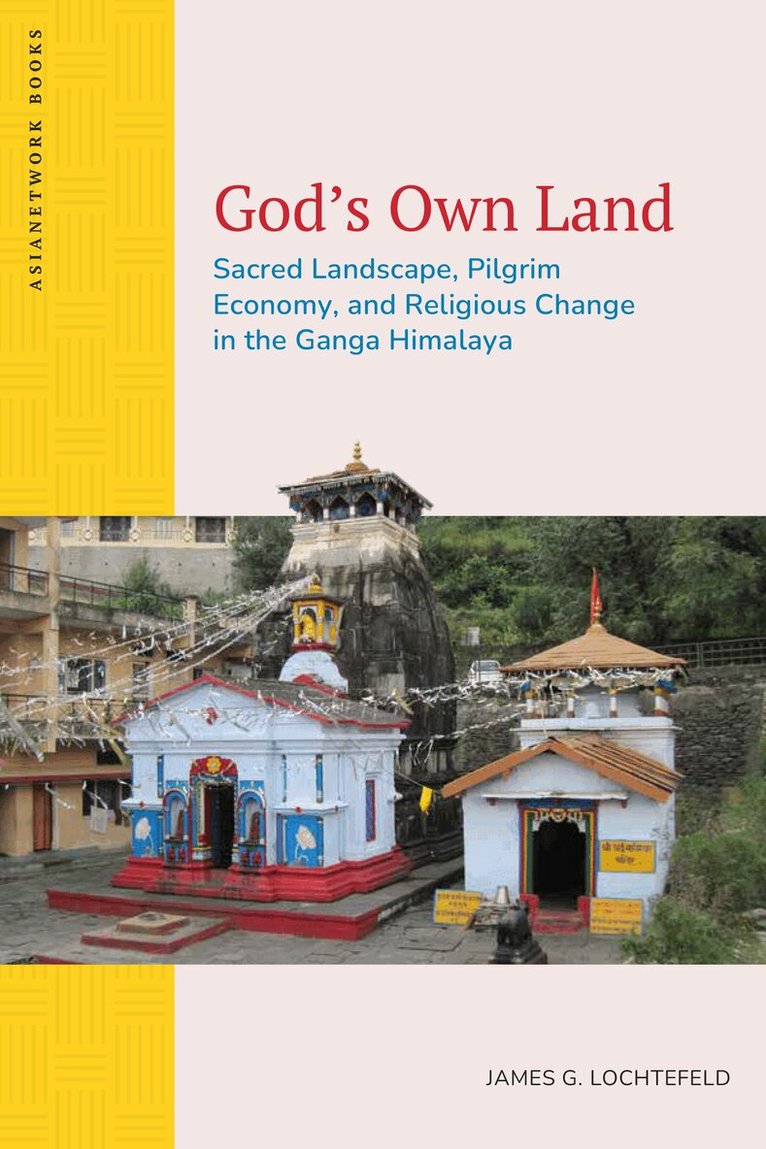
God’s Own Land
Sacred Landscape, Pilgrim Economy, and Religious Change in the Ganga Himalaya
Häftad, Engelska, 2026
376 kr
Skickas inom 7-10 vardagar
God’s Own Land follows the tectonic shift from traditional religious pilgrimage in the early twentieth-century to contemporary pilgrim tourism, in which ever-burgeoning visitor numbers have brought both benefits and challenges to the Garhwal region of India—the source of Hindu India’s sacred river, the Ganges. Despite Hinduism’s regional and sectarian variation, India’s Garhwal Himalaya region is one the most sacred places to Hindus, drawing pilgrims across sectarian lines from throughout the subcontinent and the world. This sacred land—dev bhumi or “land of the gods”—appears in foundational Hindu stories describing the presence and activity of gods, goddesses, saints, and cultural heroes. This study from James G. Lochtefeld draws out Hindu convictions regarding the Garhwal’s eternal and continuing sanctity as a holy region, based on the premise of an “imagined landscape.” This region is strongly associated with divine activity and yet this landscape is also a real place with a real history inhabited by real people, who have historically been poor because of the challenges created by the region’s geography. Juxtaposing the history of the region with its construction in the Hindu imaginary, this multidisciplinary study unpacks the nuanced image of the region, its religious significance, and the impacts of pilgrimages on the community through textual, historical, and ethnographic methods.