- Signerad!
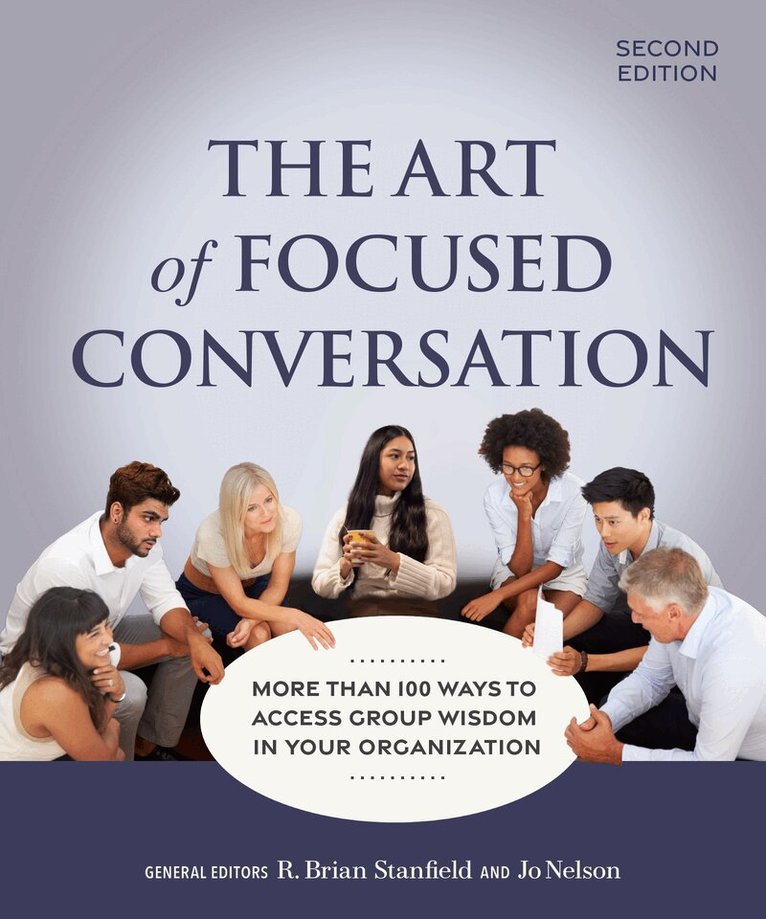
Art of Focused Conversation, Second Edition
More Than 100 Ways to Access Group Wisdom in Your Organization
AvR. Brian Stanfield,Jo Nelson
259 kr
Beställningsvara. Skickas inom 5-8 vardagar. Fri frakt över 249 kr.
Beskrivning
Produktinformation
- Utgivningsdatum:2024-09-10
- Mått:190 x 226 x 25 mm
- Vikt:704 g
- Format:Häftad
- Språk:Engelska
- Antal sidor:368
- Upplaga:2
- Förlag:New Society Publishers
- ISBN:9781774060124
Utforska kategorier
Mer om författaren
R. Brian Stanfield was a recognized leader in the fields of community development and facilitation. As well as his decades of experience as an educator and researcher, he held the position of Director of Publications at the Canadian Institute of Cultural Affairs for many years. In his career with ICA, he played a role in developing the Technology of Participation (ToP) methods, which are widely used in group facilitation and community work around the world. He was editor of the magazine Edges: New Planetary Patterns, General Editor of the first edition of The Art of Focused Conversation and The Workshop Book, and author of The Courage to Lead. Brian's work made a lasting contribution to the use of participatory practices in facilitation. He died in 2006.Jo Nelson is a Certified ToP Facilitator, a founding member of the International Association of Facilitators (IAF), and an IAF Certified Professional Facilitator Emeritus. She worked globally with the Institute of Cultural Affairs (ICA) for 50 years, facilitating participatory development projects in many countries, and designing and teaching all of ICA Canada's ToP facilitator training programs. She has used and refined the Focused Conversation Method since its inception, was a contributor to the first edition of The Art of Focused Conversation, and is author of The Art of Focused Conversation for Schools and co-author of Getting to the Bottom of ToP: Foundations of the Methodologies of the Technology of Participation. Jo has received several awards for her contributions to the field of facilitation, and has been inducted into the IAF Hall of Fame. Jo Nelson lives in Toronto, Canada.
Recensioner i media
Lead a conversation that is focused, intentional, inclusive, and productive—Martin Gilbraith, IAF Certified Professional Facilitator / Master, ICA Certified ToP Facilitator, Past Chair and board member, International Association of FacilitatorsThe gold standard in facilitation methods. I have used it in business for a quarter century. —David G. Patterson, former 30-year CEO of Northwater Capital Management Inc., and founder and chair, Common Earth This is a transformative guide for anyone dedicated to mastering impactful conversations. —Manal Sayid, Lead Facilitator, Sayid Consulting; Regional Director, North America, International Association of Facilitators (IAF); and Board Member, Technology of Participation Network (ToP Network) Jump-start your ability to apply this method and create conversations that matter. —Harold Sahkoskwaientha Tarbell (Akwesasne Mohawk), ICAA Board Member, Tarbell Facilitation Network A great addition to any facilitator's resource library. —T. Duncan Holmes, certified ToP facilitator (CTF) and ToP trainer, and past Director, ICA Canada Expanded by over one hundred pages, this edition offers state-of-the-art theoretical and practical knowledge on effective conversations. —Robertson Work, nonfiction author and social/ecological activist, former UNDP principal policy advisor, NYU Wagner professor, and ICA executive director in four countries I highly recommend this book to anyone who regularly engages with children, youth, or adults and would like to find ways to take conversations to a deeper level with empathy and thoughtfulness. —Jennifer Chin, visual artist and educator
Innehållsförteckning
- PrefaceAttributions and GratitudeIntroduction:Origins of the MethodPART 1: THEORY AND PRACTICECh. 1. Why Do Organizations Need Conversations?Ch. 2. The Focused Conversation Method: An OverviewCh. 3. The Structure of the Focused Conversation MethodCh. 4. How Science Supports Focused ConversationsCh. 5. Preparing a Focused Conversation from ScratchCh. 6. Leading a Focused ConversationCh. 7. Troubleshooting: Common Problems and Suggested SolutionsPART 2: SAMPLE CONVERSATIONSIntroduction to the Sample ConversationsSection A. Conversations for Preparing and PlanningA1. Preparing a Short PresentationA2. Getting Input into Writing a Response to a Book or ArticleA3. Preparing a Group to Write a Progress Report or Status UpdateA4. Preparing a Strategic Presentation on a New ProductA5. Assessing Marketplace TrendsA6. Preparing for the Impact of Government Regulations on a ProductA7. Planning an Organizational Community of PracticeA8. Preparing the Agenda for a MeetingA9. Identifying Key Themes to Discuss at a Subsequent MeetingA10. Establishing Priority of Topics to Be DiscussedA11. Planning an EventA12. Working on a Promotional PieceA13. Selecting a Theme for an Upcoming ConferenceA14. Preparing a Symbol and Slogan for a Public CampaignA15. Designing New Customer Service ProceduresA16. Preparing for Strategic Planning (Through Reflection) A17. Focusing a Group on a Shared ProblemA18. Introducing a New Training TopicA19. Assembling a BudgetA20. Redesigning Office SpaceA21. Organizing an In-House Special Interest GroupSection B. Decision-Making ConversationsB1. Deciding Work PrioritiesB2. Determining Program PrioritiesB3. Developing Terms of Reference for a Project EvaluationB4. Discussing a Staff Response to a Consultant ReportB5. Implementing a New Board PolicyB6. Reworking Office Operating GuidelinesB7. Making Assignments Within a TeamB8. Deciding on a Trade Show StrategyB9. Reframing a Team's MissionB10. Helping a Workmate Think Through a DecisionB11. Breaking up a Decisional Logjam in a GroupB12. Dealing with Work Environment IssuesB13. Identifying Gaps between a Current State and a Future StateSection C. Managing and Supervising ConversationsC1. Canvassing EmployeesC2. Reviewing Work DescriptionsC3. Interviewing a Job ApplicantC4. Conducting a Performance AppraisalC5. New Managers' Reflection on Their Leadership RolesC6. Musing on a Frustrating MeetingC7. Reflecting on a Chaotic MeetingC8. Creating Participation GuidelinesC9. Dealing with Delegation IssuesC10. Interpreting a Shop Floor GrievanceC11. Discussing an Unexpected and Disruptive ImpactC12. Discussing Staff DissatisfactionC13. Naming Market InfluencesC14. Analyzing Sales StatisticsC15. Highlighting the Comparative Profile of the FirmC16. Reflecting on a TransitionC17. Assessing the Impact of a Training ExperienceC18. Building a Phased Timeline for a Restructuring Project C19. Reflecting on Organizational ChangeC20. Analyzing Budget PerformanceC21. Troubleshooting a Stalled ProjectC22. Collaborating on a Supply ProgramC23. Reflecting on a Proposal for Departmental Reorganization C24. Reflecting on a Recent DecisionSection D. Conversations for Reviewing and EvaluatingD1. Reviewing a WorkshopD2. Reviewing the Day with a GroupD3. Reviewing a Planning EventD4. Reviewing the YearD5. Reviewing an Organization's PastD6. Reviewing a Consultant's PresentationD7: Reviewing a Major ReportD8. Understanding the Ongoing Effects of Major Event on IndividualsD9. Discussing an ArticleD10. Evaluating a ProposalD11. Evaluating a CourseD12. Evaluating a CurriculumD13. Evaluating the Progress of a Project, or Conducting a Lessons LearnedD14. Evaluating a Marketing CampaignD15. Analyzing a Product that Failed to SellD16. Evaluating a Service OfferingD17. Evaluating a New Software PackageD18. Evaluating a ConferenceD19. Understanding and Applying Expert Recommendations D20. Evaluating the Impact of World EventsSection E. Conversations for Coaching and MentoringE1. Coaching a ColleagueE2. Talking Through a Job DescriptionE3. Mentoring a New EmployeeE4. Holding an Employee to AccountE5. Discussing a Set of Employee GuidelinesE6. Reflecting on Evaluations with InstructorsE7. Meditating on a Difficult SituationE8. Mentoring a Staff Person about a Family Crisis Affecting Work #1E9. Mentoring a Staff Person on a Family Crisis Affecting Work #2E10. Processing a Traumatic Event with an EmployeeE11. Inspiring the Team with a StoryE12. Debriefing a Training VideoE13. Creating a Practice of JournalingE14. Reflecting on One's Life JourneyE15. Planning for Personal GrowthSection F. Supporting Diversity and BelongingF1. Assessing the Diversity of the OrganizationF2. Reviewing Policies to Strengthen Diversity, Equity, and InclusionF3. Planning for Internationally Trained WorkersF4. Determining Accommodation NeedsF5. Manager's Reflection on an Employee's ChallengeF6. Reflecting on a Derogatory ExperienceF7. Support after Derogatory CommentsF8. Becoming Aware of MicroaggressionsF9. Uncovering Roots of Unconscious BiasSection G. Resolving ConflictG1. Resolving a Personal ConflictG2. Personal Reflection on a ConflictG3. Responding to a Personal ComplaintG4. Calming an Upset CustomerG5. Initiating Dialogue to Understand a ConflictG6. Resolving a DisputeG7. Solving a Team ConflictG8. Resolving a Long-Term MisunderstandingSection H. Guiding Personal and Celebrative ReflectionsH1. Reflecting on the DayH2. Learning from a Life EventH3. Facilitator's Internal Reflection While Leading a Group H4. Appraising an Additional AssignmentH5. Reflecting on a Request to Take on a New AssignmentH6. Celebrating a Great VictoryH7. Interviewing the Employee of the MonthH8. Celebrating a Colleague's BirthdayH9. Celebrating a Colleague's Retirement: A Conversation with the PersonH10. Celebrating a Colleague's Retirement: Group ReflectionSection I. Connecting Work and LifeI1. The After-School ConversationI2. Reentry After a Learning EventI3. Internal Reflection in a CrisisI4. Resolving a Family DisputeI5. Processing a Traumatic Event with FamilyAppendicesAppendix 1. Possible Tangible Beginning Points for Focused ConversationsAppendix 2. Sample Questions at Each LevelAppendix 3. The Flow of a Focused ConversationAppendix 4. Guide for Preparing a ConversationAppendix 5. Focused Conversation Preparation WorksheetAppendix 6. Example: A Conversation Plan Using the WorksheetAppendix 7. Example: A Conversation with Typical AnswersAppendix 8. Informal ConversationsAppendix 9. Using the Focused Conversation Method with Other ToP MethodsAppendix 10. Introduction to Image ChangeAppendix 11. Other Methods That Follow the ORID ProcessBibliographyIndexAbout ICAAbout the AuthorsAbout New Society Publishers
Du kanske också är intresserad av
- -30%
- -30%
- -22%
The Art of Focused Conversation : 100 Ways to Access Group Wisdom in the Workplace
R. Brian Stanfield
213 kr
- Signerad!
- Nyhet
Hjärnans akilleshälar : hur din hjärna lurar dig, och vad du kan göra åt det
Anders Hansen
289 kr
- -30%
- -30%
- -22%