• Fri frakt över 249 kr
  • •
  • Snabba leveranser
  • •
  • Billiga böcker
Kundservice

Du är på sajten för privatpersoner.

Företag, bibliotek eller offentlig verksamhet?

Du handlar på classic.bokus.com, där alla dina funktioner finns intakta.
Till classic.bokus.com
Bokus logotyp. Gå till startsidan.
  • Erbjudanden
  • Student
  • Topplistor
  • Barn & ungdom
  • Bokus Play
  • E-böcker
  • Ljudböcker
  • Pocketböcker
  • Spel och pussel

Pocketfynda! Hundratals böcker för 49 kr/st →

Sidfot

Mina sidor

    Hjälp

    • Kundservice
    • Vanliga frågor och svar
    • Frakt och leverans
    • Retur vid ångerrätt
    • Reklamera vara
    • Betalning
    • Köpvillkor
    • Allmänna villkor
    • Information om webbplatsens tillgänglighet

    Om Bokus

    • Om oss
    • Pressrum
    • För studenter
    • För företag
    • För bibliotek och offentlig verksamhet
    • För leverantörer
    • Hållbarhet

    Populärt

    • Aktuella erbjudanden
    • Presentkort
    • Studentlitteratur
    • Nya böcker
    • Topplistor
    • Signerade böcker
    • Engelska böcker

    Inspiration

    • Boktips
    • BookTok
    • Barnbokskaraktärer
    • Populära författare
    Logotyp för Bokus
    Följ oss på Facebook (extern länk)Följ oss på Instagram (extern länk)Följ oss på YouTube (extern länk)Följ oss på TikTok (extern länk)
    bokus @ CookiesAnpassa cookiesIntegritetspolicyKöpvillkor
    Till Citymail hemsida (extern länk)Till Budbee hemsida (extern länk)Till Postnord hemsida (extern länk)Till Schenker hemsida (extern länk)Till Early Bird hemsida (extern länk)Till Walleys hemsida (extern länk)
    1. Djur och Natur
    2. Naturböcker
    3. Växtböcker

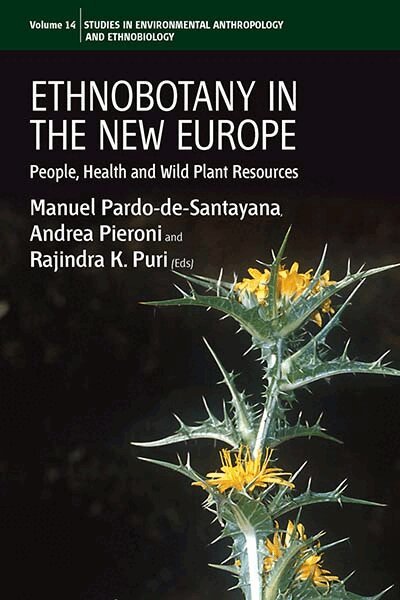
    Ethnobotany in the New Europe

    People, Health and Wild Plant Resources

    AvManuel Pardo-de-Santayana,Andrea Pieroni

    Häftad, Engelska, 2013

    Del i serien Environmental Anthropology and Ethnobiology

    648 kr

    Beställningsvara. Skickas inom 3-6 vardagar. Fri frakt över 249 kr.

    Beskrivning

    The study of European wild food plants and herbal medicines is an old discipline that has been invigorated by a new generation of researchers pursuing ethnobotanical studies in fresh contexts. Modern botanical and medical science itself was built on studies of Medieval Europeans’ use of food plants and medicinal herbs. In spite of monumental changes introduced in the Age of Discovery and Mercantile Capitalism, some communities, often of immigrants in foreign lands, continue to hold on to old recipes and traditions, while others have adopted and enculturated exotic plants and remedies into their diets and pharmacopoeia in new and creative ways. Now in the 21st century, in the age of the European Union and Globalization, European folk botany is once again dynamically responding to changing cultural, economic, and political contexts. The authors and studies presented in this book reflect work being conducted across Europe’s many regions. They tell the story of the on-going evolution of human-plant relations in one of the most bioculturally dynamic places on the planet, and explore new approaches that link the re-evaluation of plant-based cultural heritage with the conservation and use of biocultural diversity.

    Produktinformation

    • Utgivningsdatum:2013-03-01
    • Mått:152 x 229 x 22 mm
    • Vikt:549 g
    • Format:Häftad
    • Språk:Engelska
    • Serie:Environmental Anthropology and Ethnobiology
    • Antal sidor:408
    • Förlag:Berghahn Books
    • ISBN:9781782381242

    Utforska kategorier

    • Växtböcker inom Djur och Natur
    • Antropologi inom Samhälle och politik
    • Botanik inom Naturvetenskap och teknik

    Mer om författaren

    Manuel Pardo-de-Santayana is a Senior Lecturer of botany and ethnobotany at the Universidad Autónoma de Madrid. He has been researching contemporary and historical uses of Spanish medicinal and wild food plants, homegardens, and folk botanical taxonomies at the Royal Botanical Garden of Madrid (CSIC) and the School of Pharmacy (University of London) since 1995.

    Recensioner i media

    “The text itself is useful, entertaining, and informative. In addition, each chapter is a model for modern ethnobotanical studies. Rather than simply cataloguingplant use, each researcher analyzes the historical, societal, economic, or political aspects relevant to changes in human plant usage. Thus, the authors provide a true ethnobotanical resource that can be instructive to academic audiences" · Choice“This book bridges biological and social science disciplines and it is useful for all those with an interest in biocultural diversity issues. I believe that this book can be useful not only for scientists and scholars active in the field, but also for those engaged in environmental conservation and management.” · International Journal of Environmental Studies“The merit of the book is that it offers a glimpse in the cultural diversity of Europe as a reflection of its history and shows some of the trends in both local ecological knowledge and ethnobotanical research in the old continent…I recommend this book to any scholar interested in doing ethnobotanical research in Europe and to any student that wants to carry out ethnobotanical research in Europe.” · Economic Botany

    Innehållsförteckning

    • List of FiguresList of TablesList of AppendixesChapter 1. The Ethnobotany of Europe, Past and PresentManuel Pardo-de-Santayana, Andrea Pieroni and Rajindra K. PuriChapter 2. People and Plants in Lëpushë: Traditional Medicine, Local Foods and Post-communism in a Northern Albanian VillageAndrea PieroniChapter 3. The Cultural Significance of Wild-gathered Plant Species in Kartitsch (Eastern Tyrol, Austria) and the Influence of Socioeconomic Changes on Local Gathering PracticesAnja Christanell, Brigitte Vogl-Lukasser, Christian R. Vogl and Marianne GütlerChapter 4. Local Innovations to Folk Medical Conditions: Two Major Phytotherapeutic Treatments from the Maltese IslandsTimothy J. TaboneChapter 5. Local Awareness of Scarcity and Endangerment of Medicinal Plants in Roussenski Lom Natural Park in Northern BulgariaHugo J. de BoerChapter 6. ‘My Doctor Doesn’t Understand Why I Use Them’: Herbal and Food Medicines amongst the Bangladeshi Community in West Yorkshire, U.K.Andrea Pieroni, Hadar Zaman, Shamila Ayub and Bren TorryChapter 7. Persistence of Wild Food and Wild Medicinal Plant Knowledge in a Northeastern Region of PortugalAna Maria Carvalho and Ramón MoralesChapter 8. The Use of Wild Edible Plants in the Graecanic Area in Calabria, Southern ItalySabine Nebel and Michael HeinrichChapter 9. The Ecology and Use of Edible Thistles in Évora, Alentejo, Southeastern PortugalMaria José Barão and Alexandra Soveral DiasChapter 10. Spring is Coming: The Gathering and Consumption of Wild Vegetables in SpainJavier TardíoChapter 11. Plants as Symbols in Scotland TodayVeerle Van den EyndenChapter 12. The Botanical Identity and Cultural Significance of Lithuanian Jovaras: An Ethnobotanical RiddleDaiva Šeškauskaite and Bernd GliwaChapter 13. Norway’s Rosmarin(Rhododendron tomentosum) in Past and Present TraditionTorbjørn Alm and Marianne IversenChapter 14. Chamomiles in Spain: The Dynamics of Plant NomenclatureManuel Pardo-de-Santayana and Ramón MoralesChapter 15. A Preliminary Study of the Plant Knowledge and Grassland Management Practices of English Livestock Farmers, with Implications for Grassland ConservationJenny L. McCuneChapter 16. A Comparative Study of Rural and Urban Allotments in Gravesham, Kent, U.K.Christine WildhaberNotes on ContributorsIndex