• Fri frakt över 249 kr
  • •
  • Snabba leveranser
  • •
  • Billiga böcker
Kundservice

Du är på sajten för privatpersoner.

Företag, bibliotek eller offentlig verksamhet?

Du handlar på classic.bokus.com, där alla dina funktioner finns intakta.
Till classic.bokus.com
Bokus logotyp. Gå till startsidan.
  • Erbjudanden
  • Student
  • Topplistor
  • Barn & ungdom
  • Bokus Play
  • E-böcker
  • Ljudböcker
  • Pocketböcker
  • Spel och pussel

5% studentrabatt – använd koden KURSBOK27 →

Sidfot

Mina sidor

    Hjälp

    • Kundservice
    • Vanliga frågor och svar
    • Frakt och leverans
    • Retur vid ångerrätt
    • Reklamera vara
    • Betalning
    • Köpvillkor
    • Allmänna villkor
    • Information om webbplatsens tillgänglighet

    Om Bokus

    • Om oss
    • Pressrum
    • För studenter
    • För företag
    • För bibliotek och offentlig verksamhet
    • För leverantörer
    • Hållbarhet

    Populärt

    • Aktuella erbjudanden
    • Presentkort
    • Studentlitteratur
    • Nya böcker
    • Topplistor
    • Signerade böcker
    • Engelska böcker

    Inspiration

    • Boktips
    • BookTok
    • Barnbokskaraktärer
    • Populära författare
    Logotyp för Bokus
    Följ oss på Facebook (extern länk)Följ oss på Instagram (extern länk)Följ oss på YouTube (extern länk)Följ oss på TikTok (extern länk)
    bokus @ CookiesAnpassa cookiesIntegritetspolicyKöpvillkor
    Till Citymail hemsida (extern länk)Till Budbee hemsida (extern länk)Till Postnord hemsida (extern länk)Till Schenker hemsida (extern länk)Till Early Bird hemsida (extern länk)Till Walleys hemsida (extern länk)
    1. Data och IT
    2. Informationsteknik: allmänt

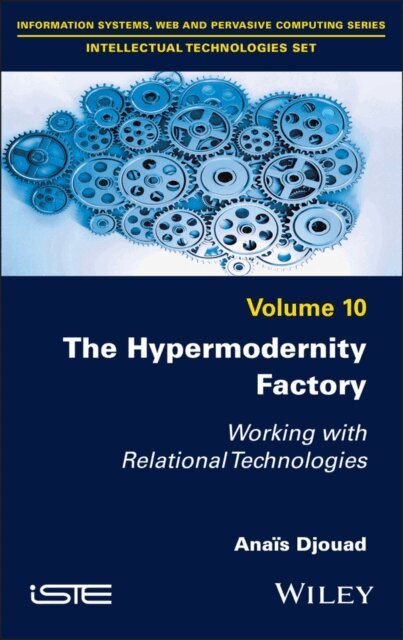
    Hypermodernity Factory

    Working with Relational Technologies

    AvAnais Djouad

    Inbunden, Engelska, 2025

    Del i serien ISTE Invoiced

    1 776 kr

    Beställningsvara. Skickas inom 5-8 vardagar. Fri frakt över 249 kr.

    Fler format och utgåvor

    E-bok

    2 048 kr

    E-bok

    2 048 kr

    Beskrivning

    The digital regime and its bio-anthropotechnology, characteristic of hypermodernity, are giving rise to unprecedented living and working conditions. Relational, inter-individual and exchange systems are being transformed. Technologies bring new ways of communicating, speaking, writing, organizing and controlling tasks. They are explicit, but their reticularities also operate invisibly, underground. However, they define powerful norms for work.Beyond the digital object, at the heart of the computerization process of the last fifty years in France, a progressive transformation of the work regime has taken place. As our social ecologies adapt, adopt, conform and metamorphose, conflict, polemics and sometimes creative resistance emerge.The Hypermodernity Factory is based on an investigation carried out within an administrative department of Inria (the French public institute for research into information technology and techniques) – then in the midst of a social crisis – to discern psychic and collective individuation processes, in a context of instability and specific communication difficulties. Immersed in these almost disruptive anthropotechnical conditions, and subject to unavoidable processes of subjectivation, the subject of office life, from manager to employee, finds themselves in a confused situation; they are constantly living a complex experience of their own in the hybrid, dynamic evolution of the digital regime.


    Produktinformation

    • Utgivningsdatum:2025-09-24
    • Mått:156 x 234 x 16 mm
    • Vikt:538 g
    • Format:Inbunden
    • Språk:Engelska
    • Serie:ISTE Invoiced
    • Antal sidor:256
    • Förlag:ISTE Ltd and John Wiley & Sons Inc
    • ISBN:9781786309167

    Utforska kategorier

    • Informationsteknik: allmänt inom Data och IT

    Mer om författaren

    Anaïs Djouad, after various assignments in the public and private sectors, became a game designer during the serious games boom. In 2022, she defended her sociology thesis at the EHESS; she is now a sociologist and teacher.

    Innehållsförteckning

    • Introduction ixChapter 1 Company, Employees, Society and Technology 11.1 Introduction 11.2 Competitive spirit and modern management 71.3 The information revolution 91.4 What about corporate spirit today? 121.5 Max Weber and neo-dogmatism 151.5.1 Adaptations and ecosocial constraints 151.5.2 Social strategies 171.5.3 Social and environmental responsibility 201.6 Digital transition and managerial ideology 301.6.1 The new corporate spirit: a myth 311.6.2 The actors, the network: when work becomes adjustment 36Chapter 2 Workplace Computerization Strategies and Neo-management 392.1 Introduction 392.2 From telematics to management information systems 462.2.1 Digital relational and communication systems as ideological drivers of hypermodern management 512.2.2 Sociology and telecommunications 622.2.3 Control and self-control, a culture of keeping track 672.3 Cognition and telecommunication 732.3.1 The actor at work, acting in a network 772.3.2 A new truth regime for work 802.4 Information and communication technologies, known as “ICT” 832.4.1 Neo-management 852.4.2 The employee and the manager 912.4.3 Institutionalization of management 922.4.4 Newspeak and information and communication technologies 92Chapter 3 Inria: Organizational and Structural Difficulties 953.1 Introduction 953.2 Access to Inria 993.2.1 Context of the survey 1013.2.2 Employees 1033.2.3 Ecosystem 1: the DGDT 1053.2.4 Ecosystem 2: Cvstene 1073.3 Eco-sociology, eco-sociality 1123.3.1 Dependencies between Cvstene and the DGDT 1123.3.2 Geography 1133.3.3 Presentation of the cohort for each ecosystem 1143.3.4 Relationship crises 1183.4 The DGDT: new organization, new geographies 1183.4.1 Collective identities 1183.4.2 Intermediate spaces of collective identities 1263.4.3 Individuality and the absence of groups 137Chapter 4 Struggling Ecosystems 1394.1 Conceptual approach from the perspective of hypermodernity 1394.1.1 Emphasis on the theory of actors and its limitations in the technological era 1434.1.2 Constructing a typology of our subjects 1444.1.3 Sociology of uses of the hypermodern worker 1454.2 Neomanagement and mechanical difficulties 1464.2.1 Crises and emergencies 1474.2.2 Management of the spirit of collaboration 1524.2.3 Change management and weaknesses 1524.3 Source subjects of the groups 1554.3.1 Individual personalities within groups 1564.3.2 Suffering and doubts 1604.4 Organizational apparatus: membership and implementation of the project 1614.5 Altered reality: managerial language and the subordination of meaning 163Conclusion 171References 183Index 211