• Fri frakt över 249 kr
  • •
  • Snabba leveranser
  • •
  • Billiga böcker
Kundservice

Du är på sajten för privatpersoner.

Företag, bibliotek eller offentlig verksamhet?

Du handlar på classic.bokus.com, där alla dina funktioner finns intakta.
Till classic.bokus.com
Bokus logotyp. Gå till startsidan.
  • Erbjudanden
  • Student
  • Topplistor
  • Barn & ungdom
  • Bokus Play
  • E-böcker
  • Ljudböcker
  • Pocketböcker
  • Spel och pussel

Pocketfynda! Hundratals böcker för 49 kr/st →

Sidfot

Mina sidor

    Hjälp

    • Kundservice
    • Vanliga frågor och svar
    • Frakt och leverans
    • Retur vid ångerrätt
    • Reklamera vara
    • Betalning
    • Köpvillkor
    • Allmänna villkor
    • Information om webbplatsens tillgänglighet

    Om Bokus

    • Om oss
    • Pressrum
    • För studenter
    • För företag
    • För bibliotek och offentlig verksamhet
    • För leverantörer
    • Hållbarhet

    Populärt

    • Aktuella erbjudanden
    • Presentkort
    • Studentlitteratur
    • Nya böcker
    • Topplistor
    • Signerade böcker
    • Engelska böcker

    Inspiration

    • Boktips
    • BookTok
    • Barnbokskaraktärer
    • Populära författare
    Logotyp för Bokus
    Följ oss på Facebook (extern länk)Följ oss på Instagram (extern länk)Följ oss på YouTube (extern länk)Följ oss på TikTok (extern länk)
    bokus @ CookiesAnpassa cookiesIntegritetspolicyKöpvillkor
    Till Citymail hemsida (extern länk)Till Budbee hemsida (extern länk)Till Postnord hemsida (extern länk)Till Schenker hemsida (extern länk)Till Early Bird hemsida (extern länk)Till Walleys hemsida (extern länk)
    1. Samhälle och politik
    2. Samhälle och kultur
    3. Kultur och medier
    4. Referensverk och tvärvetenskap

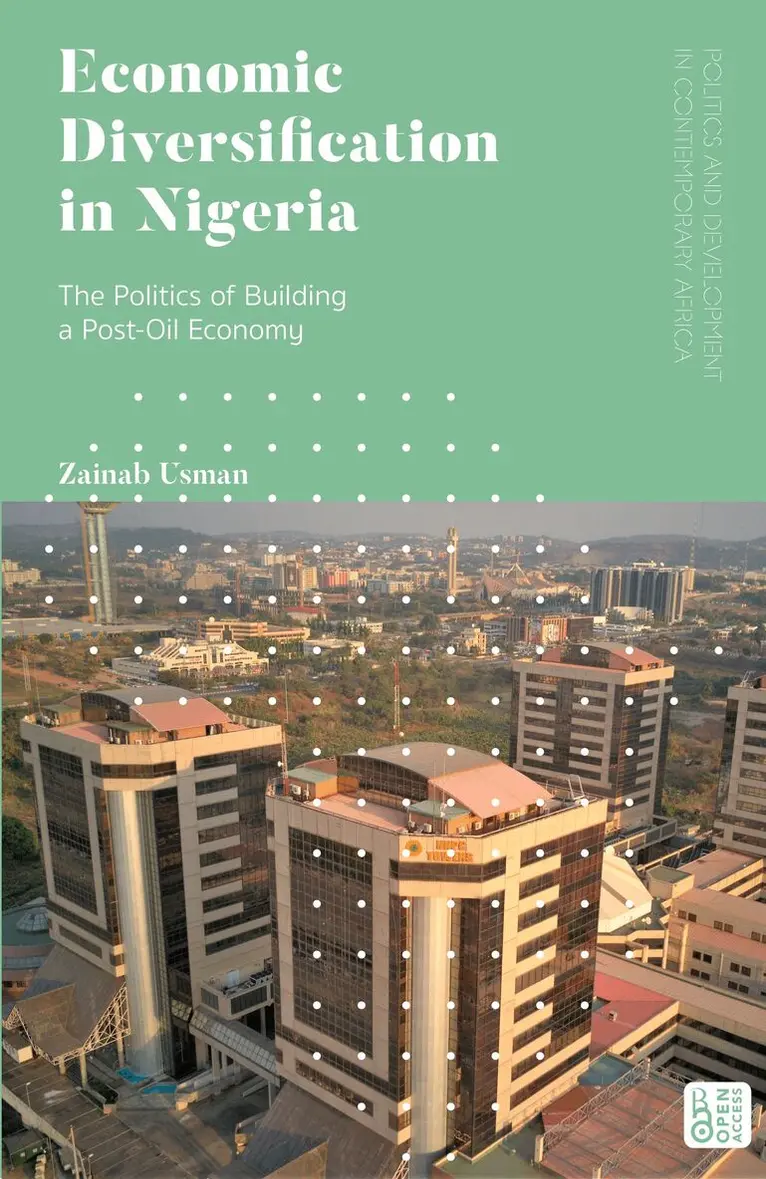
    Economic Diversification in Nigeria

    The Politics of Building a Post-Oil Economy

    AvZainab Usman

    Inbunden, Engelska, 2022

    Del i serien Politics and Development in Contemporary Africa

    1 388 kr

    Beställningsvara. Skickas inom 10-15 vardagar. Fri frakt över 249 kr.

    Fler format och utgåvor

    Häftad

    434 kr

    Beskrivning

    Nigeria has for long been regarded as the poster child for the ‘curse’ of oil wealth. Due to what is regarded as an African political culture of neopatrimonialism, irreconcilable ethno-religious divisions and predatory subversion of institutions, Nigeria is seen incapable of overcoming the economic deterioration of this ‘resource curse’. Yet, Nigeria achieved strong economic growth for over a decade in the twenty first century driven largely by policy reforms in non-oil sectors. The book argues that Nigeria’s major development challenge is not an ‘oil curse’, but one of achieving economic diversification beyond oil, subsistence agriculture, informal activities and across its subnational entities. Through analysis drawing on economic data, policy documents and interviews, the book argues that Nigeria’s challenge of economic diversification is situated within a political setting of an unstable distribution of power among individual, group and institutional actors.Nigeria’s ruling elites have lurched from one political crisis to another throughout the country’s history and especially in the last two decades of democratic rule. A perpetual state of crisis management orients economic policy to be episodic rather than the systematic and long-term focus necessary to drive the economic transformation Nigeria aspires for. Since the turn of the century, policymaking by successive Nigerian governments despite superficial partisan differences has been oriented towards short-term crisis management of macroeconomic stabilization, restoring growth and selective public sector reforms. To diversify Nigeria’s economy, successive governments must reorient towards a consistent focus on: pro-productivity and pro-poor policies, alongside comprehensive civil service and security sector overhaul. These policy priorities, Nigeria’s ruling elites are belatedly acknowledging, are crucial to achieving economic transformation. However, this policy shift requires tackling the roots of perpetual political crisis, especially stabilizing the balance of power towards equity and inclusion.

    Produktinformation

    • Utgivningsdatum:2022-01-27
    • Mått:140 x 222 x 25 mm
    • Vikt:620 g
    • Format:Inbunden
    • Språk:Engelska
    • Serie:Politics and Development in Contemporary Africa
    • Antal sidor:352
    • Förlag:Bloomsbury Publishing PLC
    • ISBN:9781786993946

    Utforska kategorier

    • Referensverk och tvärvetenskap inom Samhälle och politik
    • Internationell ekonomi inom Ekonomi och Ledarskap
    • Statsvetenskap och politisk teori inom Samhälle och politik

    Mer om författaren

    Zainab Usman is Director of the Africa Program at the Carnegie Endowment for International Peace. She has previously worked at the Economic Community of West African States (ECOWAS), the International Crisis Group, and the Blavatnik School of Government at the University of Oxford. She has also consulted for the World Economic Forum on Africa, the Department for International Development (DfID), and the Office of the Nigerian National Security Adviser (ONSA). She has written for CNN, Aljazeera English, The Washington Post, The Conversation, and other international media.

    Recensioner i media

    This book ably demonstrates that what is seemingly absurd and contradictory about Nigeria has to be traded carefully with the results an investigative and inquisitive mind may find. In a country of paradoxes only a few can offer us plausible and documented explanations as to why you can be the largest oil producer or economy of an entire continent and fail to convincingly diversify its economy. An exciting read for all those struggling to explain structural transformation slow pace in Africa.

    Innehållsförteckning

    • Part I: Introduction1. Nigeria’s Elusive Quest for ‘Economic Diversification’2. The Political Settlements and the Failure of Africa’s Industrial TransitionPart II: Historical Roots of Resource-Dependence in Nigeria3. The Historical and Institutional Foundation of Resource Dependence in Nigeria, 1914-1999Part III: Post-Military Nigeria4. Economic Diversification and Political Fragmentation in Nigeria’s Post-Military Political Settlement5. The Political Constraints for Governance, Telecomms and Oil Sector Reform in the Post-Military Political SettlementPart IV: Uncovering two of Nigeria’s Important Regional Economies6. The Institutional Foundation and Political Character of Economic Diversification in Lagos State7. The Institutional Foundation and Political Character of the Failed Industrial Transition in Kano State Part V: Conclusion8. Summary and Conclusion