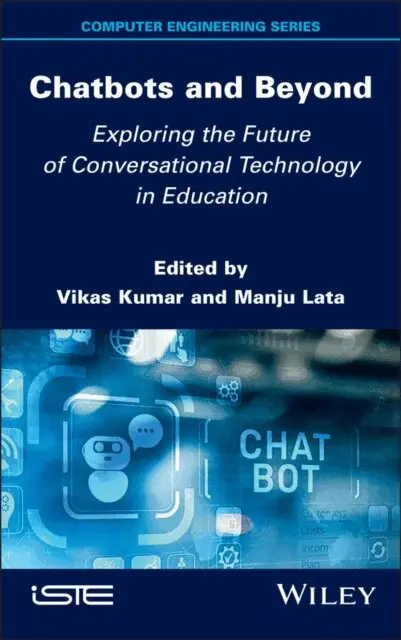
Chatbots and Beyond
Exploring the Future of Conversational Technology in Education
Del i serien ISTE Invoiced
1 577 kr
Beställningsvara. Skickas inom 7-10 vardagar. Fri frakt över 249 kr.
Beskrivning
Produktinformation
- Utgivningsdatum:2025-10-24
- Mått:166 x 241 x 22 mm
- Vikt:564 g
- Format:Inbunden
- Språk:Engelska
- Serie:ISTE Invoiced
- Antal sidor:304
- Förlag:ISTE Ltd
- ISBN:9781836690108
Utforska kategorier
Mer om författaren
Vikas Kumar works at the Central University of Haryana, India, and is Visiting Professor at the IIM Indore and University of Northern Iowa, USA.Manju Lata works as Associate Professor at Chandigarh University, Mohali, India. Her areas of research include artificial intelligence, cloud computing, Big Data analytics and Internet of Things (IoT).
Innehållsförteckning
- Foreword xiiiTuan Hung VUPreface xvVikas KUMAR and Manju LATAAcknowledgements xxiVikas KUMAR and Manju LATAChapter 1 Nurturing an Inquisitive Mind in the Era of All-Knowing Chatbots 1Ikbal MAULANA1.1 Introduction 11.2 Technological cognitive enhancement 31.3 From endless distraction to cognitive erosion 41.4 Fundamental differences between chatbots and humans 71.5 What we can know that chatbots cannot 111.6 Using chatbots to cultivate critical thinking 131.7 Conclusion 161.8 References 17Chapter 2 Artificial Intelligence (AI) in Education 23Tiara Nur ANISAH and Andika ANDIKA2.1 Introduction 232.2 Basic concepts of artificial intelligence in education 242.2.1 Definition of artificial intelligence in education 252.2.2 History and evolution of AI in education 252.2.3 Categories and types of AI used in education 262.3 Implementation of AI in education 272.3.1 AI in adaptive learning 272.3.2 AI in the writing of a scientific journal 282.3.3 AI in assessment 302.4 Opportunities and impact of AI in education 322.4.1 Opportunities and benefits of AI to improve the quality of education 322.4.2 Impact of AI in education 322.4.3 Digital divide and accessibility 342.5 Case studies of AI implementation in various educational institutions 352.6 Recommendations for AI development in education 362.7 Conclusion 372.8 References 38Chapter 3 AI and Higher Education 41Mandakini PARUTHI, Sonam RANI, Sailaja BOHARA, Gaurav GUPTA and Amitabh BHARGAVA3.1 Introduction 413.2 Defining AI 423.3 Need for AI in higher education 433.4 Research methodology 433.5 Discussion 543.6 Implications 543.7 Conclusion 553.8 References 56Chapter 4 Chatbot Technologies in Digital Entrepreneurship Education for Adults 61Thomas FOTIADIS, Ioanna THEOPHILOU, Evangelia VANEZI, Christos METTOURIS and George Angelos PAPADOPOULOS4.1 Introduction 614.2 Literature review 624.3 Development of a chatbot learning environment 664.3.1 Teachers 674.3.2 Learners 694.3.3 Multilingual 704.3.4 Learning modules 714.3.5 Courses content and quizzes 724.4 Methodology 744.4.1 Post-design phase and pilot implementation 744.4.2 Pilot study 744.4.3 Target group 754.4.4 Procedure 754.5 Results 754.5.1 Quantitative data 754.5.2 Qualitative data 774.6 Discussion 784.7 Conclusion 794.8 Future work 804.9 Acknowledgments 824.10 References 82Chapter 5 Role of Chatbots as Virtual Tutors in LMS 85Shilpi CHAKRAVARTY, Mahesh Chandra JOSHI and Iti GAUR5.1 Introduction 855.1.1 Virtual tutors 875.2 Definition and role of virtual tutors in modern education 885.3 Virtual tutors and learning management systems 905.4 Designing an effective chatbot tutor 925.4.1 Key features and capabilities of a chatbot tutor 935.5 Chatbot tutors versus human tutors 945.6 Challenges in implementing chatbots as virtual tutors 965.7 The future of chatbot tutors in LMSs 975.8 Conclusion 995.9 References 100Chapter 6 Pre-Class Learning in a Flipped Classroom and the Role of Chatbot 103Sandhya RAI and Vy Ngoc LE HO6.1 Introduction 1036.1.1 Pre-class learning 1056.2 Pre-class learning: importance, roles and methods 1066.3 Pre-class learning chatbots 1096.3.1 Types of chatbots 1096.3.2 Role of the chatbot in pre-class learning 1116.3.3 Examples of merger of chatbot and flipped classroom 1136.4 Challenges of integrating AI chatbots into flipped learning 1146.5 Conclusion 1156.6 References 116Chapter 7 Leveraging Chatbots in Management Education: Enhancing LMS Integration and Flipped Classroom Models 121Arunava DALAL and Subhajit BHATTACHARYA7.1 Introduction 1217.2 Literature review and hypothesis development 1237.2.1 Flipped classrooms 1237.2.2 Learning management system 1237.2.3 Institute readiness 1247.2.4 Students’ attitudes 1257.2.5 Pedagogical design 1257.2.6 Academic outcomes 1267.3 Theoretical framework 1267.4 Methodology 1277.5 Findings 1287.6 Discussion 1327.7 Conclusion 1347.7.1 Implications 1347.7.2 Limitations and future research directions 1357.8 References 135Chapter 8 An Analysis of the Quality of Technology Integration in Learning Management Systems and Its Impact on Teaching Performance 141FAISOL and Diah NURDIWATY8.1 Introduction 1428.2 Literature review and hypothesis 1438.2.1 The impact of PEU on enhancing academic performance 1438.2.2 The function of user engagement as a mediating factor 1438.2.3 The impact of TIQ on enhancing academic performance 1448.2.4 The function of user engagement as a mediating factor 1448.2.5 The impact of resource access on enhancing academic performance 1458.2.6 The mediating role of user engagement in academic performance 1468.3 Method 1488.4 Results 1498.4.1 The measurement model 1498.4.2 Results of convergent validity and reliability 1498.4.3 Discriminant validity 1518.4.4 The structural model 1538.5 Discussion 1578.5.1 PEU and academic performance 1578.5.2 User engagement as a mediator between PEU and academic performance 1598.5.3 Relationship between TIQ and academic performance improvement 1608.5.4 The role of user engagement in mediating TIQ and academic performance 1628.5.5 Access to resources and improvement in academic performance 1638.5.6 User engagement as a mediator between access to resources and academic performance 1648.6 References 165Chapter 9 The 4IR Paradox: Navigating Autonomy and Regulation in Higher Education 171Linda PAUL and Ravinder RENA9.1 Introduction 1719.2 Literature review 1759.2.1 Conceptual framework 1779.2.2 Emerging concepts 1779.2.3 Introducing relations between conceptions 1779.2.4 Critical evaluation 1789.3 Methodology 1799.3.1 Study population and sampling 1799.3.2 Data analyzed using NVivo 1809.4 Findings 1819.4.1 In what ways do academic institutions utilize their autonomy to leverage new innovative 4IR technologies? 1819.4.2 What are the main regulatory challenges about the adoption of 4IR technologies by HEI? 1829.4.3 When it comes to conflict between regulation and autonomy, which strategies do universities use? 1839.4.4 What virtuous and/or vicious circles does the 4IR paradox create for higher education institutions to transform society? 1849.5 Conclusion 1859.6 References 188Chapter 10 AI-Driven Chatbots: Enhancing Educational Experiences Through Data Analytics 193Jyoti ARORA, Charnpreet KAUR, Puneet KAUR, Anupam MITTAL and Manju LATA10.1 Introduction 19410.2 Literature review 19510.3 Understanding chatbot interactions: data collection 19810.4 Gaining insights from chatbot data 20110.5 Identifying trends, patterns and user segmentation 20210.6 Challenges and best practices 20310.7 Future trends and conclusions in chatbot analytics 20510.8 References 208Chapter 11 A Chatbot-integrated Deep Learning Approach for Rice Leaf Disease Detection in the Mekong Delta Region of Vietnam 211Huu-Hoa NGUYEN, Van-Kiet VO and Thai-Nghe NGUYEN11.1 Introduction 21111.2 Related work 21311.3 System architecture 21611.4 Rice leaf disease detection component 21711.4.1 Data collection 21711.4.2 Data preprocessing 21911.4.3 Deep learning model configurations 22011.5 Chatbot component 22211.5.1 Data collection and preprocessing 22211.5.2 Rasa framework 22411.6 Experimental analysis 22511.6.1 Computational environment and evaluation metrics 22511.6.2 Deep learning model performance 22511.6.3 Chatbot creation 23011.7 Conclusion and perspectives 23511.8 References 237Chapter 12 Opportunities, Limitations and Challenges of EDA Playground and ChatGPT Regarding Verification: A Case Study on Testbench Failures 241Joel Gonçalves DE OLIVEIRA and Marcio Eduardo KREUTZ12.1 Introduction 24112.2 Testbench and software testing 24212.3 The case of EDA Playground 24412.4 Using ChatGPT 25412.5 Comparative analysis 25612.6 Conclusion 25812.7 References 259List of Authors 261Index 265
Mer från samma författare
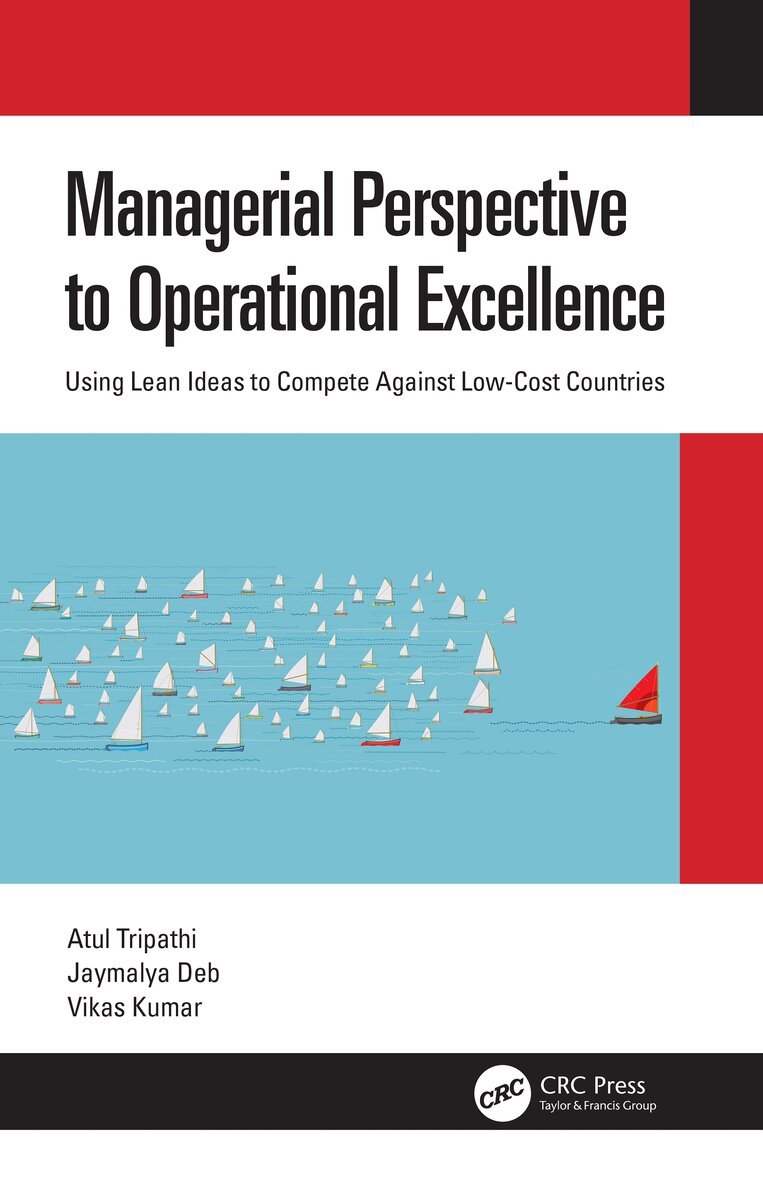
Managerial Perspective to Operational Excellence
Atul Tripathi, Jaymalya Deb, Vikas Kumar
1 298 kr
Managerial Perspective to Operational Excellence
Atul Tripathi, Jaymalya Deb, Vikas Kumar
659 kr
Environmental Metagenomics, Water Quality and Suggested Remediation Measures of Polluted Waters: A Combined Approach
Inderjeet Tyagi, Vikas Kumar, Rama Rao Karri
1 642 kr
- Nyhet
Wetlands: Biodiversity, Health and their Role in Ecosystem Services
Inderjeet Tyagi, Vikas Kumar, Kaomud Tyagi
1 632 kr
Mer från samma serie
Future of Sapiens and Verticality
Anne Dambricourt Malasse, Djillali Hadjouis, Sandra Joffroy, Bernard Autet
1 672 kr
Tourist Destinations According to Stakeholder Strategies
Pierre Louart, Jérôme Piriou, Philippe Violier
1 671 kr
Nanotechnologies and Nanomaterials Applied to Chemical Sensors and Biosensors
Pierre Camille Lacaze, Benoît Piro, Jean-Christophe Lacroix
1 623 kr
Smart Grids and Buildings for Energy and Societal Transition
Benoît Robyns, Laure Dobigny, Dhaker Abbes, Benoit Durillon, Hervé Barry, Christophe Saudemont
1 671 kr
Optimization in the Agri-Food Supply Chain
Mayssa Koubaa, Mayssa Koubaa, Mohamed Haykal Ammar, Diala Dhouib, Sirine Mnejja
1 623 kr
Advanced Studies in the Mathematical Theory of Scattering, Volume 3
Jean-Michel L. Bernard
1 709 kr
Du kanske också är intresserad av
Proceedings of the International Conference on Sustainable Computing
Nitin Goyal, Thai-Nghe Nguyen, Manju Lata, Gabriel A. Ogunmola
3 035 kr
- Nyhet
Arbete i förändring : globalisering, digitalisering, hållbarhet och arbetets organisering
Peter Gladoic Håkansson (red.), Klara Öberg (red.)
356 kr
- -22%
- Nyhet
- -30%
- Nyhet
- Signerad!
- Nyhet
Hjärnans akilleshälar : hur din hjärna lurar dig, och vad du kan göra åt det
Anders Hansen
289 kr
- Signerad!
- Nyhet