• Fri frakt över 249 kr
  • •
  • Snabba leveranser
  • •
  • Billiga böcker
Kundservice

Du är på sajten för privatpersoner.

Företag, bibliotek eller offentlig verksamhet?

Du handlar på classic.bokus.com, där alla dina funktioner finns intakta.
Till classic.bokus.com
Bokus logotyp. Gå till startsidan.
  • Erbjudanden
  • Student
  • Topplistor
  • Barn & ungdom
  • Bokus Play
  • E-böcker
  • Ljudböcker
  • Pocketböcker
  • Spel och pussel

Pocketfynda! Hundratals böcker för 49 kr/st →

Sidfot

Mina sidor

    Hjälp

    • Kundservice
    • Vanliga frågor och svar
    • Frakt och leverans
    • Retur vid ångerrätt
    • Reklamera vara
    • Betalning
    • Köpvillkor
    • Allmänna villkor
    • Information om webbplatsens tillgänglighet

    Om Bokus

    • Om oss
    • Pressrum
    • För studenter
    • För företag
    • För bibliotek och offentlig verksamhet
    • För leverantörer
    • Hållbarhet

    Populärt

    • Aktuella erbjudanden
    • Presentkort
    • Studentlitteratur
    • Nya böcker
    • Topplistor
    • Signerade böcker
    • Engelska böcker

    Inspiration

    • Boktips
    • BookTok
    • Barnbokskaraktärer
    • Populära författare
    Logotyp för Bokus
    Följ oss på Facebook (extern länk)Följ oss på Instagram (extern länk)Följ oss på YouTube (extern länk)Följ oss på TikTok (extern länk)
    bokus @ CookiesAnpassa cookiesIntegritetspolicyKöpvillkor
    Till Citymail hemsida (extern länk)Till Budbee hemsida (extern länk)Till Postnord hemsida (extern länk)Till Schenker hemsida (extern länk)Till Early Bird hemsida (extern länk)Till Walleys hemsida (extern länk)
    1. Samhälle och politik
    2. Social välfärd och brottslighet
    3. Brottslighet och kriminologi
    4. Kriminalvård och straff

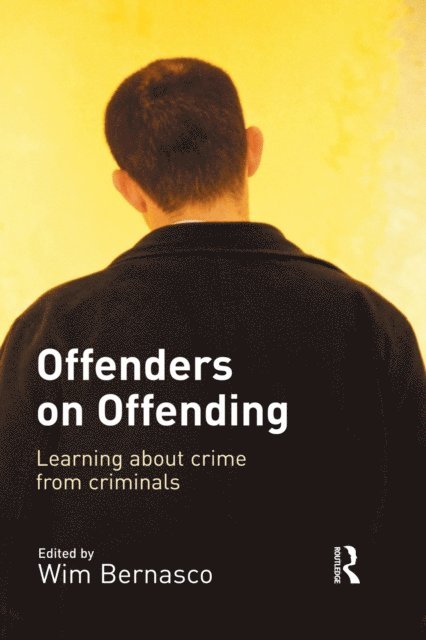
    Offenders on Offending

    Learning about Crime from Criminals

    AvWim Bernasco

    Inbunden, Engelska, 2010

    2 410 kr

    Beställningsvara. Skickas inom 10-15 vardagar. Fri frakt över 249 kr.

    Beskrivning

    Our knowledge of crime is based on three types of sources: the criminal justice system, victims, and offenders. For technological and other reasons the criminal justice system produces an increasing stream of information on crime. The rise of the victimization survey has given the victims a much larger role in our study of crime. There is, however, no concomitant development regarding offenders. This is unfortunate because offenders are the experts when it comes to offending.In order to understand criminal behavior, we need their perspective. This is not always a straightforward process, however, and information from offenders is often unreliable. This book is about what we can do to maximise the validity of what offenders tell us about their offending. Renowned experts from various countries present their experiences and insights, with a clear focus on methodological issues of fieldwork among various types of offender populations. Each contribution deals with with a few central issues: How can offenders be motivated to participate in research? How can offenders be motivated to tell the truth on their offending? How can the information that offenders provide be checked and validated? What can we learn from offenders that cannot be accessed from other sources? With the aim of obtaining valid and reliable information, how, where and under which conditions should we observe offenders and talk to them?

    Produktinformation

    • Utgivningsdatum:2010-04-01
    • Mått:156 x 234 x 23 mm
    • Vikt:800 g
    • Format:Inbunden
    • Språk:Engelska
    • Antal sidor:344
    • Förlag:Taylor & Francis Ltd
    • ISBN:9781843927778

    Utforska kategorier

    • Kriminalvård och straff inom Samhälle och politik

    Mer om författaren

    Wim Bernesco is a Senior Researcher within the NSCR Mobility and Distribution of Crime group. His current research interests include spatial aspects of criminal activities, including variations in crime and delinquency between neighbourhoods, offender travel behaviour and target selection, and crime displacement.Michael Tonry is Professor of Law at the University of Minnesota. He specializes in criminal law.

    Recensioner i media

    '...this is an extremely interesting and teeming book, with absorbing methodological details, which, at points, transmits the excitement that offender-based research generates. It is a very much alive text in which the authors, coming from or researching a variety of contexts (including Austria, the Czech Republic and the criminologically ‘exotic’ Sri Lanka), share their extensive knowledge on the topic as well as their own experiences and stories....''Offenders on Offending: Learning about Crime from Criminals offers a very comprehensive account of the possibilities, problems and solutions that exist in the context of conducting qualitative research with offenders. It is an important collection full of learning and latent common sense—a work that blows open debates on philosophical and practical aspects of research, and is a must-have to every fervent researcher conducting this kind of research, postgraduate students, as well as social research methods teachers. Readers who are not acquainted with relevant research-related literature will find the references section of every chapter a little treasure. All these groups will find it a compulsively readable work, which constantly pushes for re-assessment of ideas, and which highlights why the bulk of criminological research needs to return ‘back to basics’ and re-embrace the offender as the protagonist in the theatre of ‘crime’ and deviance.'-Georgios A. Antonopoulos, Teesside University, in The British Journal of Criminology, vol 52 iss 1

    Innehållsförteckning

    • Foreword PrefacePart 1: Setting the Stage 1. Learning About Crime from Criminals: Editor's Introduction 2. Misinformation, Misunderstanding and Misleading as Validity Threats to Offenders' Accounts of Offending 3. Apprehending Criminals: The Impact of Law on Offender-based ResearchPart 2: Prison Settings 4. Interviewing the Incarcerated: Pitfalls and Promises5. Interviewing and Validity Issues in Self-report Research with Incarcerated Offenders: The Quebec Inmate Survey6. Beyond the Interview: Complementing and Validating Accounts of Incarcerated Violent OffendersPart 3: Field Settings 7. Method, Actor and Context Triangulations: Knowing What Happened During Criminal Events and the Motivations for Getting Involved 8. Repeat, Triangulate and Reflect: Ethnographic Validity in a Study on Urban Minority Youth 9. Getting Good Data from People that Do Bad Things: Effective Methods and Techniques for Conducting Research with Hard-to-Reach and Hidden PopulationsPart 4: Social Categories of Offenders and Researchers 10. The Impact of Gender when Interviewing 'Offenders on Offending' 11. Talking to Snakeheads: Methodological Considerations for Research on Chinese Human Smuggling 12. Blue-collar, White-collar: Crimes and MistakesPart 5: Learning About the Actn 13. Research on Residential Burglary: Ways of Improving Validity and Participants' Recall when Gathering Data 14. The Use of Maps in Offender Interviewing 15. Interviewing Offenders in a Penitentiary Environment and the Use of Mental Maps During Interviews 16. Validating Offenders' Accounts: Learning from Offender Interviews with Bank Robbers in Austrian Prisons