95 kr
Beställningsvara. Skickas inom 11-20 vardagar. Fri frakt över 249 kr.
Produktinformation
- Utgivningsdatum:2003-09-01
- Mått:1 x 1 x 12 mm
- Vikt:186 g
- Format:Häftad
- Språk:Engelska
- Antal sidor:149
- Förlag:Parthian Books
- ISBN:9781902638362
Utforska kategorier
Recensioner i media
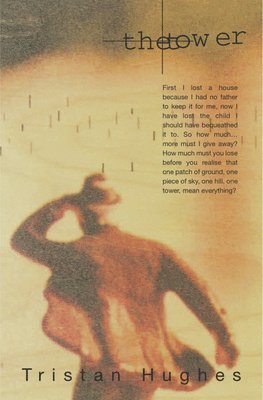
The Tower is a beautifully written, thoughtful collection of seven short stories. They dramatise different, overlapping visions of a small patch of land seen through the interlinked refracting prisms of different gazes, held together by their reference to the central motif of a ruined windmill they all call the Tower. The assured opening paragraph establishes the significance of this focus. The speaker describes his grandmother peering out of her window through a scuffed and ancient pair of binoculars whose battered surfaces record her husbands history in Burma and, through these scratches, testify to public and political histories, of armies, wars, continents, half a whole century. But Hughes is more interested in the detail, in how things appear set against each other, both stories and images. From this perspective, what the grandmother peers at is a microcosm of the wider world: today the world crowding within their lenses is not so vast and populous: no more than a small patch of ground, a hill, the tower that sits upon it, and the piece of sky that hangs above them. As the cover suggests there are many spectral towers in this collection. The most vivid, lyrical image is that of the first story, the wonderfully named, Gods Breath, where it appears as a vision of a working windmill: painted the brightest of white, which, on sunny days, shone with an almost luminescent quality, as though all the surrounding light were drawn towards it and condensed into its shimmering surfaces; set against the pale blue of a spring sky it flickered and dazzled like some inland lighthouse . its four great wings an airy constellation spread out across the heavens. But the mill falls into disrepair and the rest of the stories demonstrate the loss of purpose that accompanies the loss of this celestial vision. The new owner of the tower, a scouser given the soubriquet of Derrick Dallas wants to turn it into a drinking den. Nain dismisses him as one of those Sais moneybags who like to play at being lord of the bloody manor; thats what they want to be: the lords of all they survey. When we reach Derricks story however we find it as painful and moving as the others and especially in its powerful, shocking conclusion. Each of these stories deals with a yearning for an attainable vision. In the wonderfully acerbic Ley Lines, two hippies live in misery in a rusty caravan on a sodden field. Having lost faith her increasingly paranoid boyfriend, Skinner, Gemma wonders hopelessly how she got there. The central story, The Importance of Elsewhere, both evokes the experience of taking hallucinogenic mushrooms and the desperation that drives the central protagonist to want to be elsewhere. In Persistence the central figure is Jack Cucu, a farmer whom weve encountered in several of the other stories as a peripheral figure, now suddenly characterised by an unexpected, deep grief a persistent mourning for a lost love. And in Of Rocks and Stones the central figure is a vicar who has always lived where he was born and who sporadically writes letters that he never sends to his estranged brother, teaching geography in America. This storys delicate, sensitive conclusion simultaneously explores the pain of self-discovery and impossible movement. The young man of the last story (Ynys) feels stranded and lost in London. His comment early on in the story illuminates each of the stories full of homesickness for a space that isnt even there: I laughed and told her where I came from you were homesick even when you were at home . . . My first thought on picking up this collection of linked stories was that, like all Parthian books, a great deal of attention had been placed on design. Peter Bodenhams striking cover foregrounds a strange, motionless figure, seen from behind, slightly grainy, floating as if only half there, straining to look at a scattering of inexplicable sticks or poles in a vague distance. The title suggests that these may be towers, multiplying in front of the faceless viewers gaze. The impression is slightly eerie and rather beautiful, apparently realist but, on closer inspection revealing itself to be as strange as dream or nostalgia for something only half remembered. Such packaging is not an optional extra. Good design affects the way that you pick up, handle and enter a book and in this case sets up expectations perfectly borne out in the finely crafted text itself.