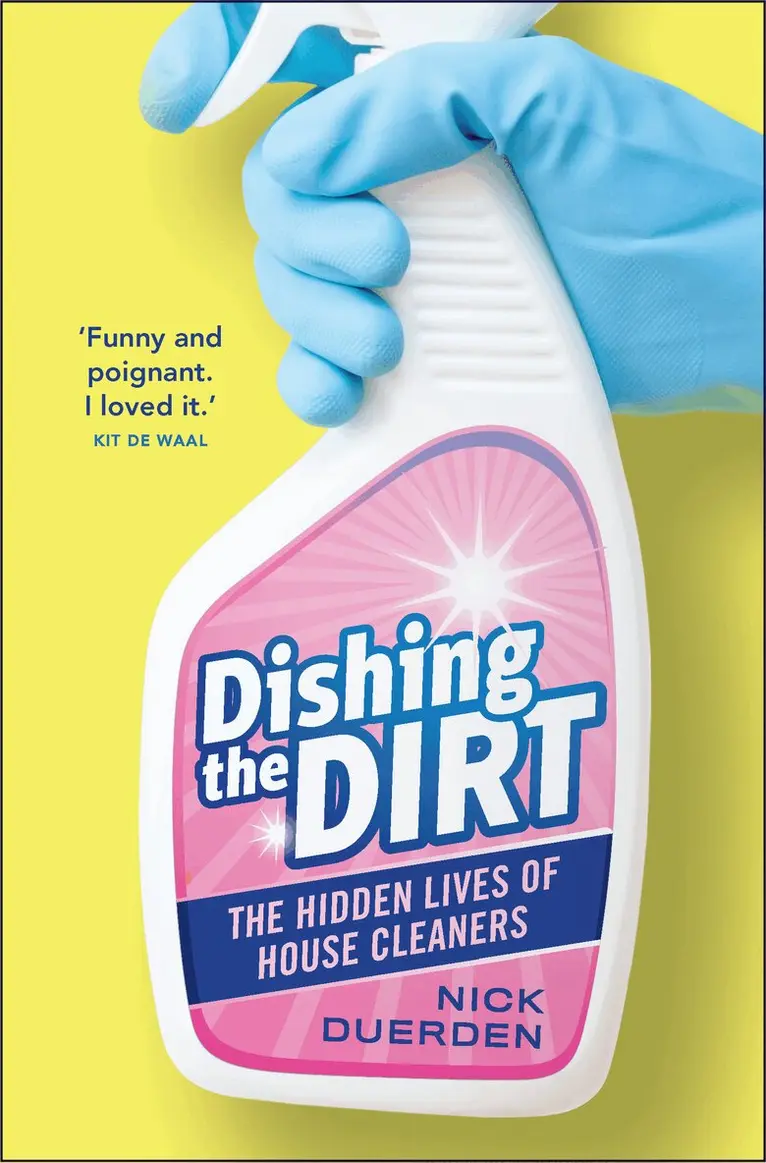
Häftad, Engelska, 2020
Dishing the Dirt
Av Nick Duerden
137 kr
Beställningsvara. Skickas inom 11-20 vardagar. Fri frakt över 249 kr.
Beskrivning
Dishing the Dirt pulls back the polished surfaces of modern London to reveal the people who make our homes, offices and Airbnb rentals sparkle – and the secrets they’re expected to swallow while doing it. In the prologue, a cleaner quietly clears away the evidence of an affair in the marital bed. Nobody apologises. Nobody even really looks at her. She’s “just the cleaner” – present in the most intimate spaces, yet treated as if she doesn’t count. From that moment on, journalist Nick Duerden follows the trail into a hidden, booming industry where class, money, migration and modern work collide behind closed doors. Because here’s the uncomfortable truth: cleaners are everywhere, yet we know almost nothing about them. We hand over keys, alarm codes and private routines – then avert our eyes. We talk about the “service” but rarely about the worker. Over 15 months, Nick Duerden interviewed dozens of cleaners from all over the world who have settled in London, capturing a series of vivid, eye-opening snapshots of what it’s really like to clean up after other people in a country that’s often far from home – where cultural misunderstandings loom large, standards can be punishingly exact, and the line between “cleaning” and “everything else” is constantly pushed. You’ll discover how this shadow workforce actually functions: the ads in shop windows and online listings; the WhatsApp groups where jobs are swapped like favours; the haggling over hourly rates; the agency placements that promise security and deliver anxiety; the travel costs that quietly eat up wages; and the small humiliations that can come with being simultaneously essential and invisible. You’ll meet: The businesswoman training cleaners to satisfy demanding clients (and defuse the panic when something “goes missing”) An actress balancing auditions with vacuuming Workers trapped in exploitation and slave labour, trying to rebuild a life A trade unionist helping newcomers learn their rights, find community, and escape abuse The lesser-spotted male cleaner and the judgments he faces Crime scene cleaners dealing with the aftermath the rest of us can’t bear to see Housekeepers serving the super-rich in Mayfair mansions, where “domestic cleaner” becomes “house manager” and discretion is everything The naked cleaner offering dusting, banter and blurred boundaries A modern butler navigating hierarchy, etiquette and “New Money” And the clients who treat their cleaner as confidante, therapist… or furniture These stories are sometimes shocking, sometimes hilarious, and often heartbreaking – but never abstract. Duerden writes with warmth and wit, letting cleaners speak for themselves as they describe pride in their work, loneliness in an expensive city, the pressure to please, and the dreams they’re saving for: education, stability, a home of their own, a future back with family. Dishing the Dirt is narrative nonfiction that reads like a page-turner: social history, investigative journalism and human drama rolled into one. It’s a compelling look at domestic labour, migrant stories, the gig economy and the modern British class system – told through the dirt we leave behind and the people we pay to remove it. If you’ve ever hired a cleaner, thought about hiring one, or wondered what happens when you hand your keys to a stranger, this book will change the way you see your home – and the people who quietly carry its weight. Perfect for fans of contemporary British nonfiction, social commentary and true-life stories of work – and for anyone fascinated by what really happens behind the closed doors of London’s homes. Reviews'A jaw-dropping investigation' – The Bookseller 'A great book, well researched, funny and poignant. I loved it.' – Kit De Waal 'Succeeds brilliantly in dismantling casual assumptions about the drudgery of cleaning' – The Guardian About the Author Nick Duerden is a writer and journalist whose work has appeared in The Guardian, the Sunday Times, the Daily Telegraph, the i paper, and GQ. His books include Exit Stage Left, Get Well Soon: Adventures in Alternative Healthcare, A Life Less Lonely, and The Smallest Things. He lives in London with his wife and two daughters. Extract Prologue. Clocking On It was as if she were invisible, like she wasn’t even there. Or, perhaps more accurately, like she didn’t really count, not in any tangible sense, this mostly silent domestic cleaner with the broken English whose back was perpetually stooped over the vacuum cleaner, the dustpan and brush, the damp mop; someone who likely knew her way around the utility room better than the homeowners themselves. Today, the wife was away on business, as she frequently was, but the husband wasn’t here alone. The marital bed was not empty. ‘A different woman,’ she says. ‘Younger.’ And he didn’t hide this from you, wasn’t embarrassed, ashamed of parading his affair so brazenly under your nose? She shakes her head, and smiles tightly. ‘No,’ she says. ‘No.’ She was seemingly in his confidence, then, but not through any prior agreement, a finger to the side of the nose, and nor was he paying her for her silence, her implicit complicity. ‘I don’t think he even considered me,’ she says. ‘Or my reaction.’ She was merely part of the furniture, a once-weekly presence in the house who mutely got on with her work as she always did, over three floors, three bedrooms and two bathrooms: the vacuuming, the polishing, the dusting... ... Domestic help, now so common, such a factor of everyday life, was once a comparative rarity in the UK, the preserve of the upper classes, those who lived upstairs and employed those who dwelt downstairs. By the early 1900s, the middle classes had begun to enjoy the benefits of cleaners, too, not merely because they also craved tidy homes that they did not have to toil over, but because employing domestic staff had become an indicator of status... After World War Two, and the introduction of the welfare state in 1948, money was scarce and demand for cleaners evaporated. Throughout the 1950s and beyond, they became, once again, largely the preserve of the wealthy. But the 1980s saw another shift. Increasingly, both husbands and wives were now required to go out to work, to pursue careers. This left little time for domestic upkeep, and if wives— traditionally the housekeepers—were too tired to vacuum after a long day at the office, their husbands were unlikely to step into the breach... Previously out-of-work women began to advertise themselves as cleaners. They brought their friends with them, their mothers and daughters. There was no shortage of willing char ladies. They advertised in the windows of local newsagents, and relied upon word-of-mouth. Business grew. A generation on, cleaners began utilising the internet. Now anyone can find one at the click of a mouse, and many of us have done just that. Type ‘cleaners London’ into a search engine, and over 39 million results come up. In the 21st Century, we are willing to delegate more, specifically to pay others to do the work we’d rather not do ourselves, even if we cannot really afford it. A wave of cheap immigrant labour entered the UK between 2000 and 2020, especially from the new EU member states in eastern Europe. Better to pay a Magda from Poland, say, £30 a week to run the Hoover around the house for a few hours than to save the money for a rainy day. ... Those that clean for Londoners are a silent army. They bring order to our lives, they put out the bins, and relieve us of at least some of the myriad pressures of modern life. They are privy to our indiscretions, our peculiarities, our curious habits. They put up with us, which isn’t always easy because some of us are complicated souls. But who are the members of these well-drilled regiments? What are their stories? Do they know that we talk about them when we are among ourselves—at dinner parties, at coffee mornings, at the school gates—and how much do we care that they, too, talk about us? If we are the prism through which they view their host nation, what conclusions do they draw? Do we make for decent employers, fair and kind, perhaps even generous? And if we are sometimes cruel, and talk down at them, why do we do that? Do we treat them fairly—or are they being taken advantage of? If we asked them, what would they say?
Produktinformation
- Utgivningsdatum: 2020-09-17
- Mått: 129 x 198 x 25 mm
- Vikt: 230 g
- Format: Häftad
- Språk: Engelska
- Antal sidor: 256
- Förlag: Canbury Press
- ISBN: 9781912454464
Utforska kategorier
Betyg & recensioner
0 recensioner
Inga recensioner tillgängliga.