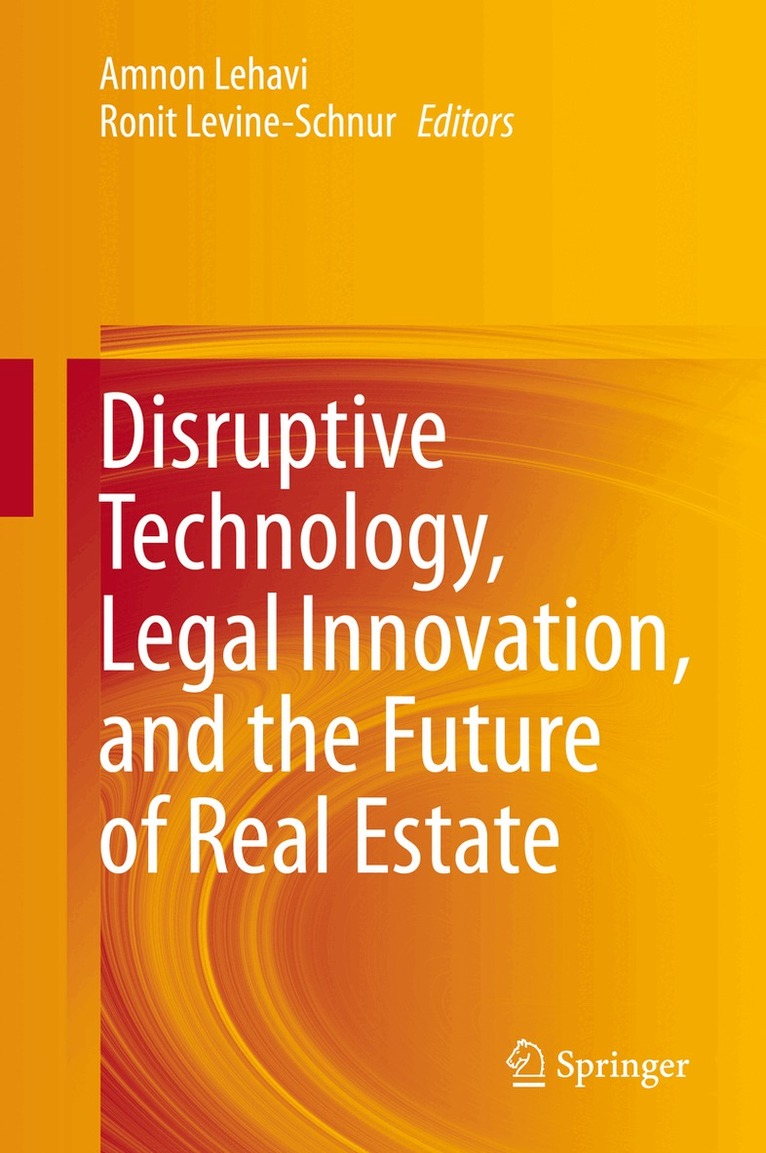
Inbunden, Engelska, 2020
Disruptive Technology, Legal Innovation, and the Future of Real Estate
Av Amnon Lehavi, Ronit Levine-Schnur
1111 kr
Beställningsvara. Skickas inom 10-15 vardagar. Fri frakt över 249 kr.
Beskrivning
This book addresses challenges that new technologies and the big data revolution pose to existing regulatory and legal frameworks. The volume discusses issues such as blockchain and its implications for property transactions and taxes, three (or four) dimensional title registration, land use and urban planning in the age of big data, and the future of property rights in light of these changes. The book brings together an interdisciplinary collection of chapters that revolve around the potential influence of disruptive technologies on existing legal norms and the future development of real estate markets.The book is divided into five parts. Part I presents a survey of the current available research on blockchain and real estate. Part II provides a background on property law for the volume, grounding it in fundamental theory. Part III discusses the changing landscapes of property rights while Part IV debates the potential effects of blockchain on land registration. Finally the book concludes with Part V, which is devoted to new technological applications relevant to real estate. Providing an interdisciplinary perspective on emerging technologies that have the potential to disrupt the real estate industry and the regulation of it, this book will appeal to a broad audience, consisting of scholars, policy-makers, practitioners, and students, interested in real estate, law, economics, blockchain, and technology policy.
Produktinformation
- Utgivningsdatum: 2020-10-01
- Mått: 155 x 235 x 17 mm
- Vikt: 413 g
- Format: Inbunden
- Språk: Engelska
- Antal sidor: 181
- Förlag: Springer Nature Switzerland AG
- ISBN: 9783030523862
Utforska kategorier
Betyg & recensioner
0 recensioner
Inga recensioner tillgängliga.