Inbunden, Engelska, 2022
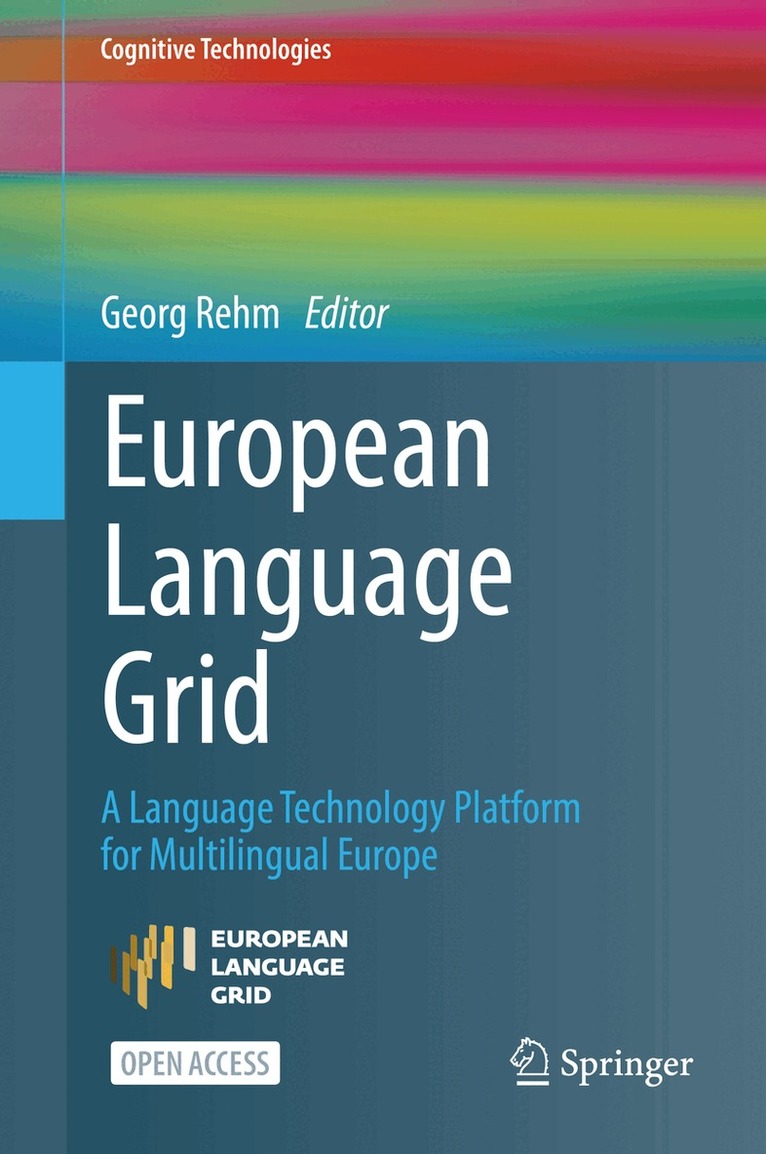
European Language Grid
Av Georg Rehm
567 kr
Beställningsvara. Skickas inom 10-15 vardagar. Fri frakt över 249 kr.
Beskrivning
This open access book provides an in-depth description of the EU project European Language Grid (ELG). Its motivation lies in the fact that Europe is a multilingual society with 24 official European Union Member State languages and dozens of additional languages including regional and minority languages. The only meaningful way to enable multilingualism and to benefit from this rich linguistic heritage is through Language Technologies (LT) including Natural Language Processing (NLP), Natural Language Understanding (NLU), Speech Technologies and language-centric Artificial Intelligence (AI) applications. The European Language Grid provides a single umbrella platform for the European LT community, including research and industry, effectively functioning as a virtual home, marketplace, showroom, and deployment centre for all services, tools, resources, products and organisations active in the field. Today the ELG cloud platform already offers access to more than 13,000 language processing tools and language resources. It enables all stakeholders to deposit, upload and deploy their technologies and datasets. The platform also supports the long-term objective of establishing digital language equality in Europe by 2030 – to create a situation in which all European languages enjoy equal technological support. This is the very first book dedicated to Language Technology and NLP platforms. Cloud technology has only recently matured enough to make the development of a platform like ELG feasible on a larger scale. The book comprehensively describes the results of the ELG project. Following an introduction, the content is divided into four main parts: (I) ELG Cloud Platform; (II) ELG Inventory of Technologies and Resources; (III) ELG Community and Initiative; and (IV) ELG Open Calls and Pilot Projects.
Produktinformation
- Utgivningsdatum: 2022-11-02
- Mått: 155 x 235 x 27 mm
- Vikt: 700 g
- Format: Inbunden
- Språk: Engelska
- Serie: Cognitive Technologies
- Antal sidor: 360
- Upplaga: 22001
- Förlag: Springer International Publishing AG
- ISBN: 9783031172571
Utforska kategorier
Betyg & recensioner
0 recensioner
Inga recensioner tillgängliga.