Beställningsvara. Skickas inom 10-15 vardagar. Fri frakt över 249 kr.
Beskrivning
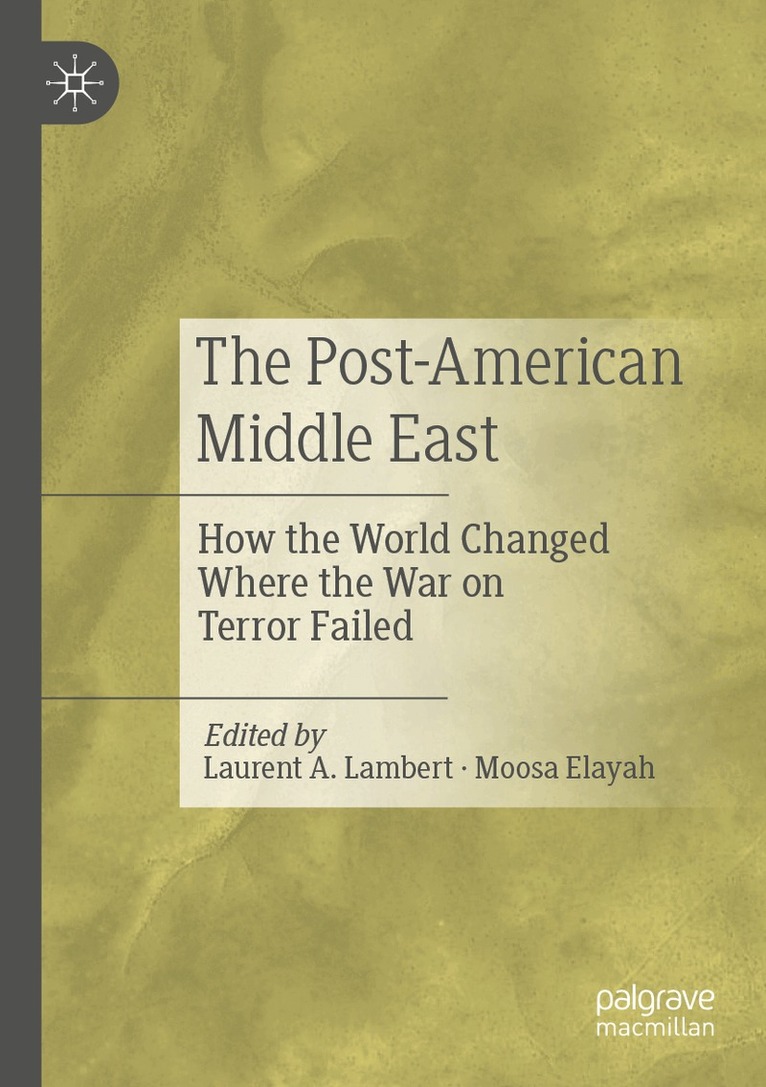
After two decades of War on Terror, it is particularly important, for both academic and policy purposes, to clearly understand why the US formidable mobilization of means and might has transformed into a such a blatant geostrategic defeat of the US and its allies in the broad Middle East.
Prof. Laurent A. Lambert teaches energy policy and geopolitics, as well as climate change diplomacy and hydropolitics at the Doha Institute for Graduate Studies and previously taught at Sciences Po Paris and Qatar University.Prof. Moosa Elayah specializes in Conflict Studies, Peacebuilding, and International Development. He has pioneered teaching and research in governance, community-based initiatives, alternative and cooperative services delivery during conflicts in Yemen and beyond.
Innehållsförteckning
Chapter 1. Introduction.- Part I – War, Expanding Chaos & Failed State-Building Across the Middle East.- Chapter 2. Afghanistan since 2001: US Geostrategic Ambitions, a Failed State, and the Return of the Taliban.- Chapter 3. Iraq 2003-2007, Geopolitics of an Imperial Democratization.- Chapter 4. Rebel Governance of Oil: The Case of the Houthis in Yemen.- Chapter 5. Wars on Terror in Arab Oil Lands, Russian Interventions, and Chinese Energy Policies: The Case of Northern Iraq and Syria.- Part II – Indirect Consequences of the War on Terror and Legacy.- Chapter 6. Political Instabilities and large-scale migrations in the MENA region: Libyan, Syrian, and Yemeni cases in regional perspective.- Chapter 7. Overcoming Jihadism in Arabia: Tight Counter-Terrorism Policies in the Gulf Monarchies.- Chapter 8. Trump and Netanyahu’s Failed Palestine Sell-out: ‘A hate plan, not a peace plan’.- Chapter 9. Natural Gas and Regional Energy Dis-integration in the Middle East.- Chapter 10. Conclusions.