Häftad, Engelska, 2025
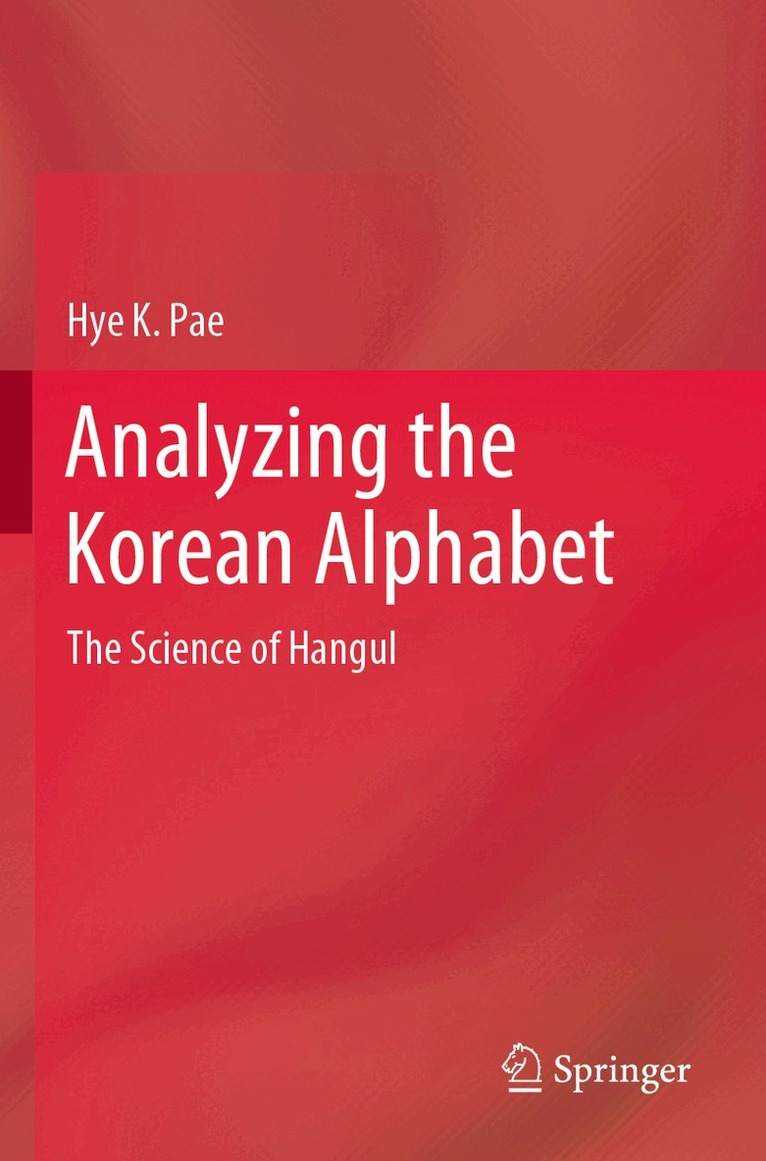
Analyzing the Korean Alphabet
Av Hye K. Pae
1361 kr
Skickas inom 10-15 vardagar
Beskrivning
This book provides comprehensive coverage of the Korean alphabet, Hangul, and includes a synthesis of research findings relating to reading in the non-Roman alphabet. This, in turn, contributes to the science of reading through an understanding of reading mechanisms that are essential for all writing systems, and that are particular for a given writing system. Hangul has been recognized as “the world’s best alphabet,” “one of the great intellectual achievements of Mankind,” and “alphabet’s epitome, a star among alphabets” by international linguists and historians. It is known that writing systems have evolved based on the ecological principle that visual signs are culturally selected to match objects found in natural scenes through selection pressures for optimal visual processing. However, Hangul is an exception. It was purposely invented by King Sejong in the 15th century to combat the illiteracy prevalent at the time. The chapters excavate the historical background of Hangul, and the unique characteristics of Hangul that contribute to learnability for emergent readers and efficiency for skilled readers. The author presents empirical evidence of psycholinguistic research into reading Hangul, building theories and presenting implications for the science of reading (psycholinguistics) and the science of writing (grapholinguistics). This book is relevant to students, researchers, and practitioners in applied linguistics, psycholinguistics, language studies, reading studies, and grammatology, with a particular focus on the Korean alphabet.
Produktinformation
- Utgivningsdatum: 2025-03-01
- Mått: 155 x 235 x 17 mm
- Vikt: 458 g
- Format: Häftad
- Språk: Engelska
- Antal sidor: 276
- Förlag: Springer International Publishing AG
- ISBN: 9783031496356
Utforska kategorier
Betyg & recensioner
0 recensioner
Inga recensioner tillgängliga.