HARDCOVER, 2024
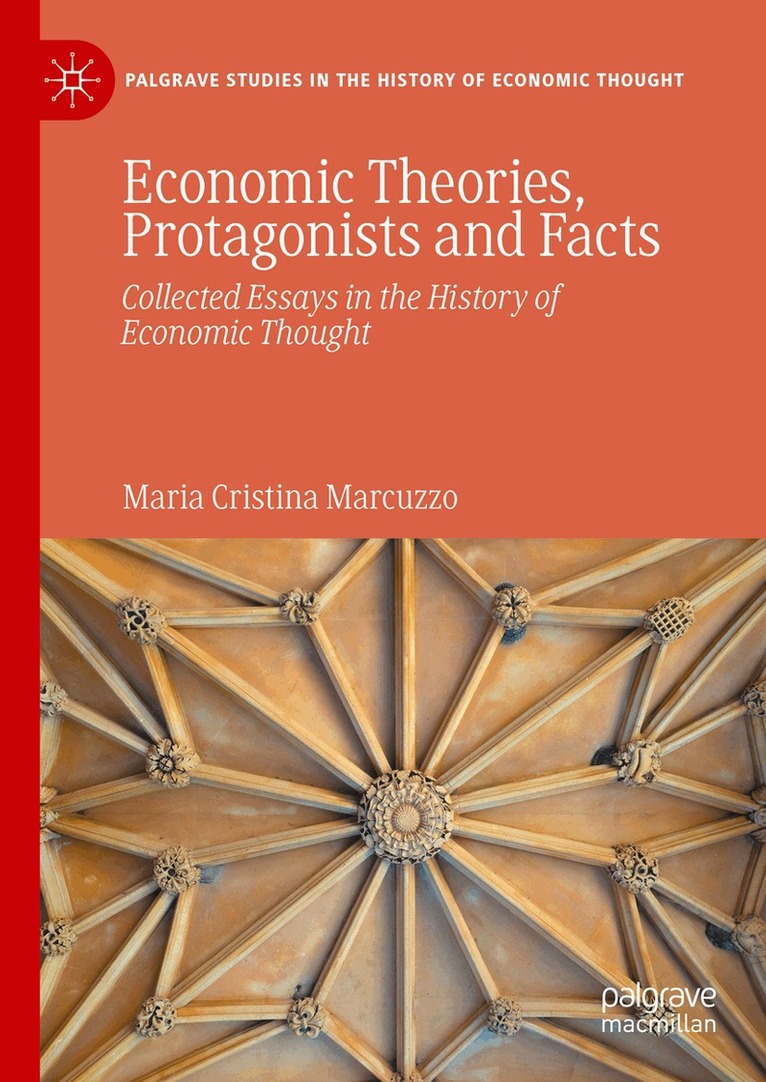
Economic Theories, Protagonists and Facts
1479 kr
Skickas inom 10-15 vardagar
Beskrivning
This book brings together the work of Maria Cristina Marcuzzo and highlights her investigations into the history of economic thought and her quest for an alternative economic thinking. Following an extended introduction that contextualised her ideas and highlights consistent themes throughout the volume, it discusses the theoretical and methodological approaches that have come to define the history of economic thought as a discipline. The work of David Ricardo is then debated, alongside ideas of money and monetary systems. Finally, the impact of the Cambridge economists is presented, with a particular focus on Luigi Pasinetti, Joan Robinson, Piero Sraffa, and John Maynard Keynes.This book combines theoretical discussions with historical analysis, biographical narratives, and original archival researcher to provide rich insights into the history and impact of economics. It will be of interest to students and researchers working within the political economy and the history of economic thought.
Produktinformation
- Utgivningsdatum: 2024-12-20
- Format: HARDCOVER
- Antal sidor: 333
- Förlag: Springer International Publishing AG
- ISBN: 9783031639487
Utforska kategorier
Betyg & recensioner
0 recensioner
Inga recensioner tillgängliga.