Inbunden, Engelska, 2024
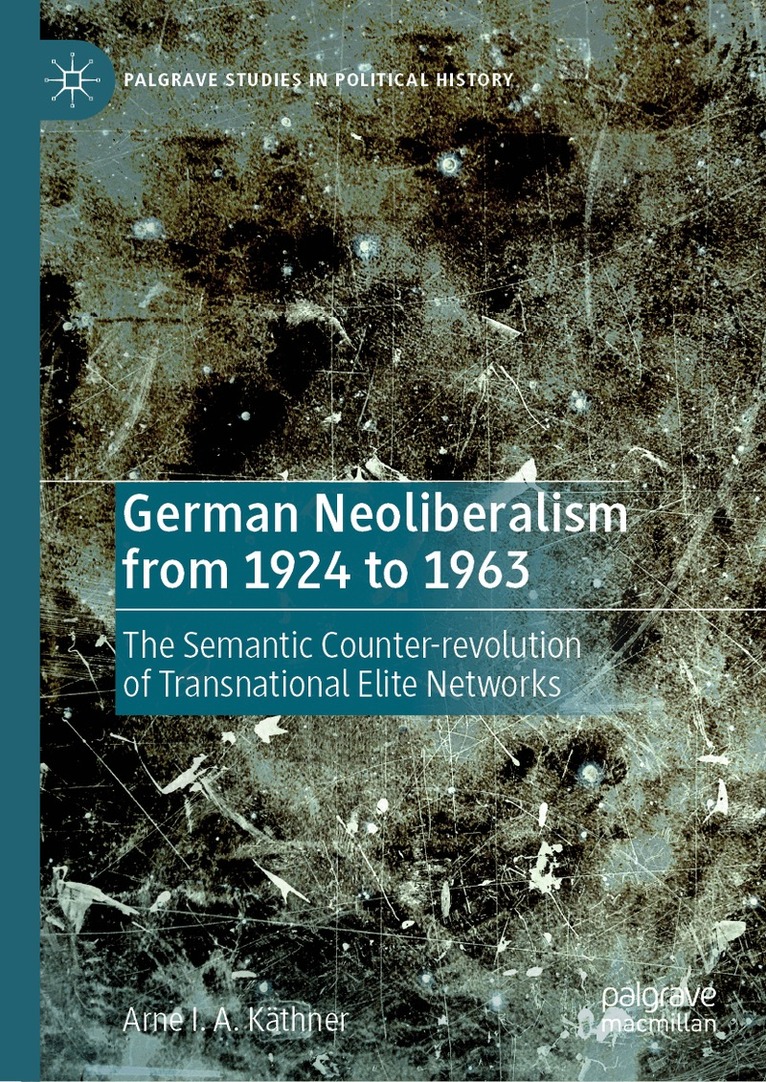
German Neoliberalism from 1924 to 1963
1685 kr
Beställningsvara. Skickas inom 10-15 vardagar. Fri frakt över 249 kr.
Beskrivning
This book offers an in-depth study of German neoliberalism between 1924 and 1963, arguing that a neoliberal network was established in the interwar period, decades before elite networks in Great Britain and the United States fostered the ‘neoliberal revolution’ of the Thatcher and Reagan administrations. The author shows how this network strongly influenced societal developments in the 1950s and set a precedent for neoliberal projects in other countries. This success was largely due to the deliberate and strategic reorganisation of the semantic field: abandoning or reacquiring ‘abused’ concepts, challenging existing meanings, or introducing new concepts to the political scene. The book examines the Aktionsgemeinschaft Soziale Marktwirtschaft (ASM), an early neoliberal Think Tank founded in 1953 and led by Alexander Rüstow, which became an influential political actor in post-war West Germany. The author adopts a decidedly transnational approach linking and contrasting inner-German debates with those taking place transnationally among neoliberal proponents in the Mont Pèlerin Society. More than just a political study of ideologies, this book provides a historical account of the conceptual struggles over neoliberalism, the actors who engaged in them, the spheres in which they took place, and the semantic means and conceptual strategies employed, providing useful insights for scholars of German and political history, as well as political science more generally.
Produktinformation
- Utgivningsdatum: 2024-09-19
- Mått: 148 x 210 x 30 mm
- Vikt: 674 g
- Format: Inbunden
- Språk: Engelska
- Serie: Palgrave Studies in Political History
- Antal sidor: 451
- Förlag: Springer International Publishing AG
- ISBN: 9783031654664
Utforska kategorier
Betyg & recensioner
0 recensioner
Inga recensioner tillgängliga.