E-bok, Engelska, 2025
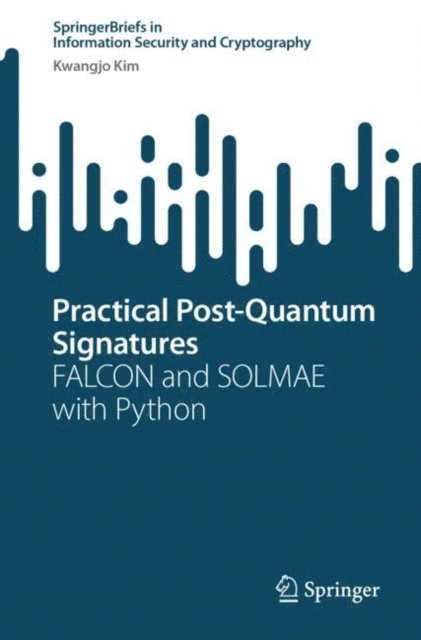
Practical Post-Quantum Signatures
Av Kwangjo Kim
797 kr
Läs direkt i Bokus Reader – eller ladda ned till din enhet (PDF kräver ofta zoom och scroll på små skärmar).
Beskrivning
The current digital signature methods like RSA, DSA, and ECDSA are relatively simple to understand, and their signing and verification processes operate in comparable time frames. However, in the quantum computing era, cryptographic methods must be designed to withstand both classical and quantum attacks. This requires an in-depth understanding of advanced mathematical concepts like algebraic geometry, lattice theory, Gaussian sampling, and efficient polynomial computation techniques such as FFT and NTT, which are essential for lattice-based cryptosystems.
The FALCON algorithm, chosen as a finalist in the NIST Post-Quantum Cryptography (PQC) standardization project, is a lattice-based, hash-and-sign digital signature scheme known for its efficiency and compactness compared to other quantum-resistant signatures like Dilithium and SPHINCS+. Following FALCON’s development, the SOLMAE algorithm was introduced in 2021, offering a simplified signing process within the same GPV framework and also implemented in Python for easier accessibility.
This monograph provides a practical and educational introduction to post-quantum digital signatures, focusing on the FALCON and SOLMAE algorithms. The material aims to bridge the gap between theory and practice, offering hands-on knowledge of post-quantum cryptographic techniques. With a focus on clear, practical examples using Python, this book is a valuable resource for anyone looking to understand or implement quantum-secure digital signatures.
Produktinformation
- Utgivningsdatum: 2025-02-15
- Språk: Engelska
- Filformat: PDF
- Kopieringsskydd: LCP
- ISBN: 9783031812507
- Förlag: Springer Nature Switzerland
Utforska kategorier
Betyg & recensioner
0 recensioner
Inga recensioner tillgängliga.