Inbunden, Engelska, 2025
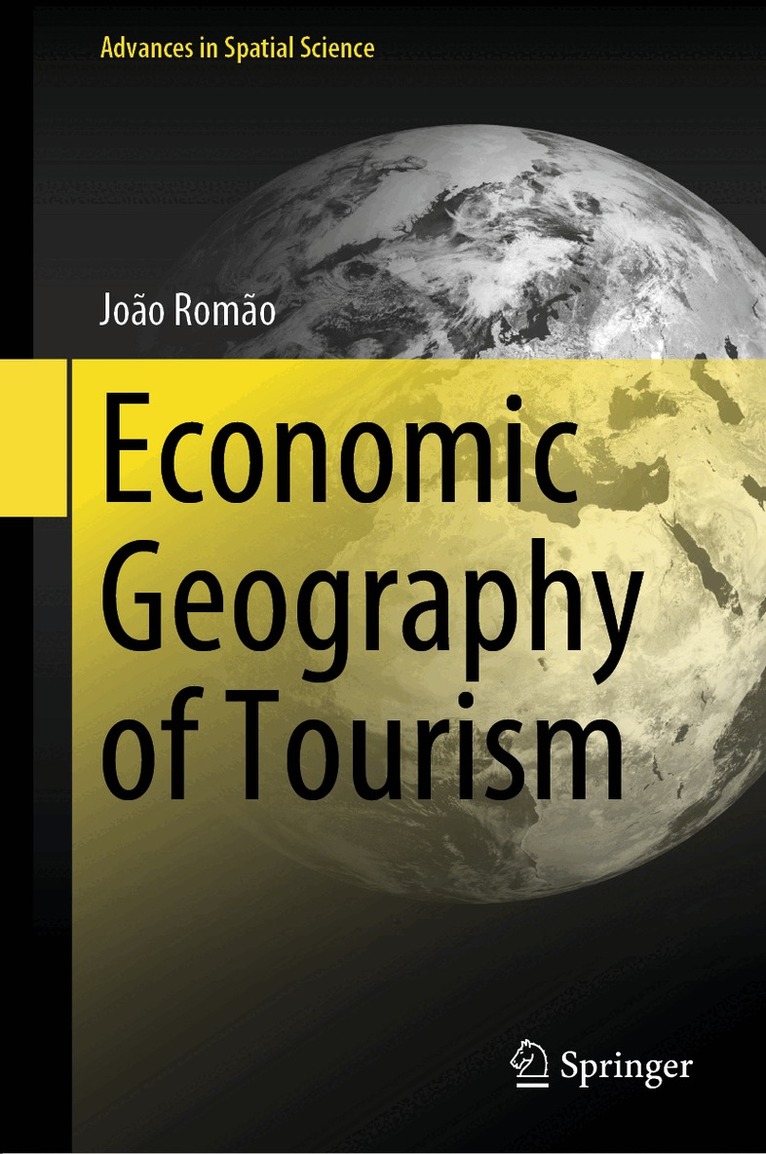
Economic Geography of Tourism
Av João Romão
1644 kr
Beställningsvara. Skickas inom 5-8 vardagar. Fri frakt över 249 kr.
Beskrivning
This book provides an in-depth exploration of the dynamic intersections between economic geography and tourism, highlighting how spatial, economic, and social processes shape tourism development—and how tourism, in turn, transforms economic spaces. Combining theoretical insights with real-world case studies, it offers a comprehensive understanding of tourism’s evolving role within economic geography.The first part lays a strong theoretical foundation, introducing key concepts such as the Tourism Area Life Cycle, path dependence, agglomeration economies, smart specialization, and regional resilience within the context of tourism research. It explores spatial and temporal patterns in tourism development, the growing influence of digitalization and smart tourism, and the roles of innovation and competitiveness in shaping destination dynamics.The second part shifts focus to tourism’s broader economic and social implications. It critically assesses urban tourism’s links to gentrification, circular economies, and social conflicts while exploring strategies to address spatial enclaves and foster integrated tourism networks in low-density and fragile regions. Environmental challenges, including the impact of tourism mobility on local communities and ecosystems, are also examined.The book concludes by addressing the tensions and future trajectories of tourism development, questioning whether sustainable or regenerative tourism can thrive within market-driven economies where decision-making prioritizes individual preferences over collective well-being. It calls for a reassessment of contemporary policy and regulatory frameworks to align tourism with broader economic and environmental goals.By bridging economic geography and tourism studies, this book equips scholars, policymakers, and practitioners with analytical tools to rethink tourism development and advocate for strategies that are economically viable and effectively sustainable, inclusive and resilient.
Produktinformation
- Utgivningsdatum: 2025-05-14
- Mått: 155 x 235 x 21 mm
- Vikt: 519 g
- Format: Inbunden
- Språk: Engelska
- Serie: Advances in Spatial Science
- Antal sidor: 249
- Förlag: Springer International Publishing AG
- ISBN: 9783031886256
Utforska kategorier
Betyg & recensioner
0 recensioner
Inga recensioner tillgängliga.