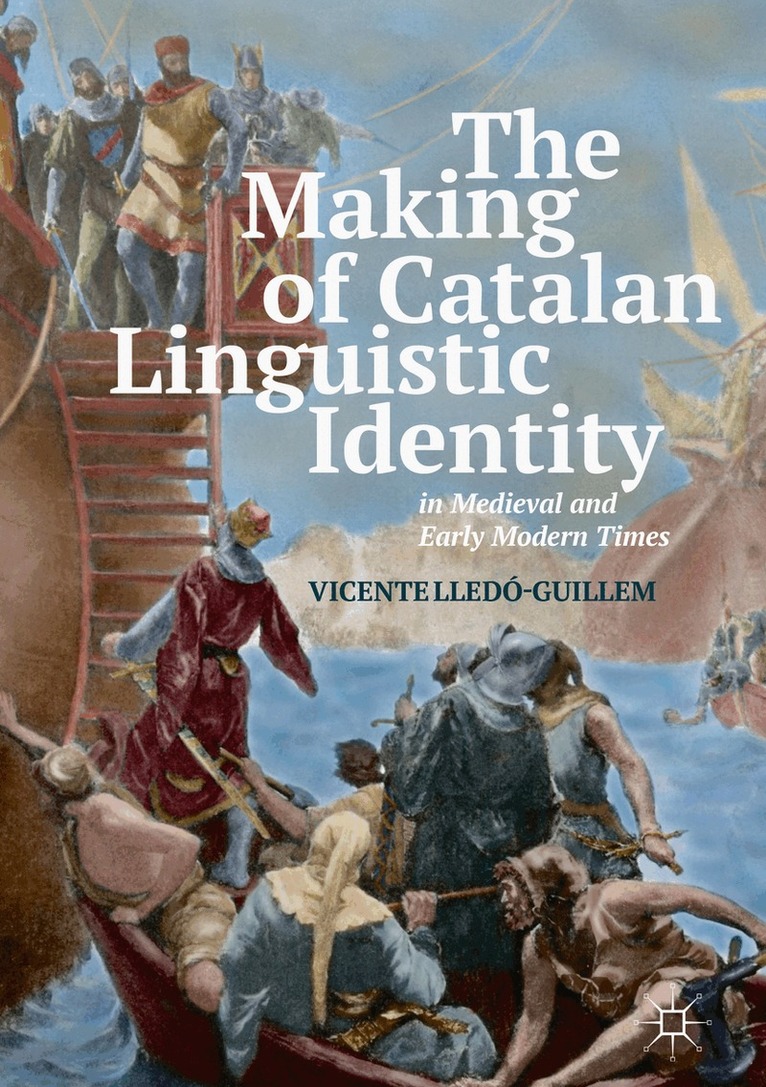
This book will appeal to students and scholars of historical linguistics, sociolinguistics, Hispanic linguistics, Catalan language and linguistics, anthropological linguistics, Early Modern literature and culture, and the history of the Mediterranean.
Vicente Lledó-Guillem is Professor of Spanish and Catalan at Hofstra University, New York. His primary field of research is the political, ideological, and cultural history of the Spanish and Catalan languages. He is the author of Literatura o imperio: la construcción de las lenguas castellana y catalana en la España renacentista (2008).
Recensioner i media
“I find Lledó-Guillem‘s monograph to be brilliant, innovative, and groundbreaking. … this book is a must-have to both students and scholars in Medieval and Early Modern political, cultural, and intellectual history, European studies, Romance languages, historical sociolinguistics, and linguistic anthropology. It is a work that will be referenced and cited for years to come.” (Josef Fioretta, Scripta, Issue 11, June, 2018)
Innehållsförteckning
Chapter 1: Introduction.- Part I: The political use of the Occitan language by the Catalan-Aragonese monarchy; Chapter 2: The Rise of Catalan as a Royal Language: Bernat Desclot’s account of the Battle of Castellammare in response to Bernat d’Auriac’s sirventés; Chapter 3: The politics of the linguistic discontinuity of Occitan versus the continuity of Catalan: the Sermó by Ramon Muntaner.- Chapter 4: Catalan and Occitan versus Aragonese: the poetic ceremony following the Coronation of Alfonso the Benign in Muntaner’s Crònica.- Part II: The interpretation of the Catalan-Occitan relationship in the construction of the Spanish Empire.- Chapter 5: The historical (dis)continuity of the Catalan language and the linguistic creation of the Spanish Empire: Ausiàs March in the Early Modern Period.- Chapter 6: A unitary Catalan-Occitan language in the Early Modern Period: the exaltation of Apitxat Valencian.- Chapter 7: Conclusion.