Inbunden, Engelska, 2018
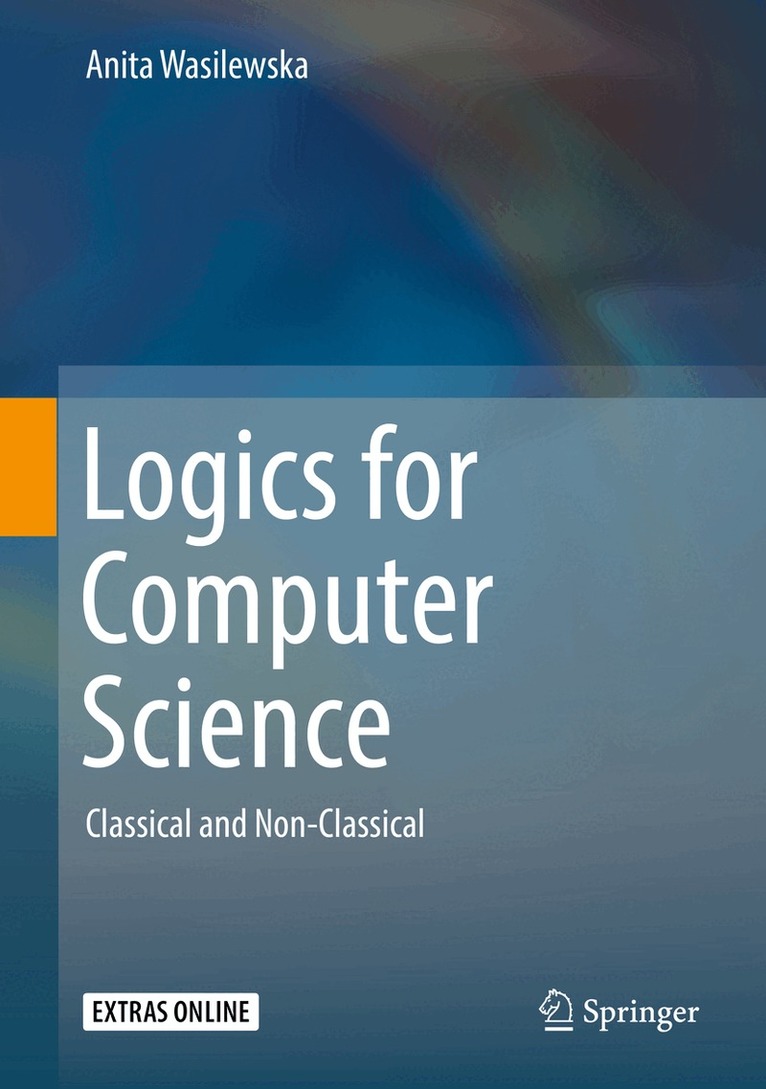
Logics for Computer Science
1423 kr
Beställningsvara. Skickas inom 10-15 vardagar. Fri frakt över 249 kr.
Beskrivning
Providing an in-depth introduction to fundamental classical and non-classical logics, this textbook offers a comprehensive survey of logics for computer scientists. Logics for Computer Science contains intuitive introductory chapters explaining the need for logical investigations, motivations for different types of logics and some of their history. They are followed by strict formal approach chapters. All chapters contain many detailed examples explaining each of the introduced notions and definitions, well chosen sets of exercises with carefully written solutions, and sets of homework. While many logic books are available, they were written by logicians for logicians, not for computer scientists. They usually choose one particular way of presenting the material and use a specialized language. Logics for Computer Science discusses Gentzen as well as Hilbert formalizations, first order theories, the Hilbert Program, Godel's first and second incompleteness theorems and their proofs. It also introduces and discusses some many valued logics, modal logics and introduces algebraic models for classical, intuitionistic, and modal S4 and S5 logics.The theory of computation is based on concepts defined by logicians and mathematicians. Logic plays a fundamental role in computer science, and this book explains the basic theorems, as well as different techniques of proving them in classical and some non-classical logics. Important applications derived from concepts of logic for computer technology include Artificial Intelligence and Software Engineering. In addition to Computer Science, this book may also find an audience in mathematics and philosophy courses, and some of the chapters are also useful for a course in Artificial Intelligence.
Produktinformation
- Utgivningsdatum: 2018-11-13
- Mått: 178 x 254 x 33 mm
- Vikt: 1 198 g
- Format: Inbunden
- Språk: Engelska
- Antal sidor: 535
- Förlag: Springer International Publishing AG
- ISBN: 9783319925905
Utforska kategorier
Betyg & recensioner
0 recensioner
Inga recensioner tillgängliga.