Häftad, Engelska, 2026
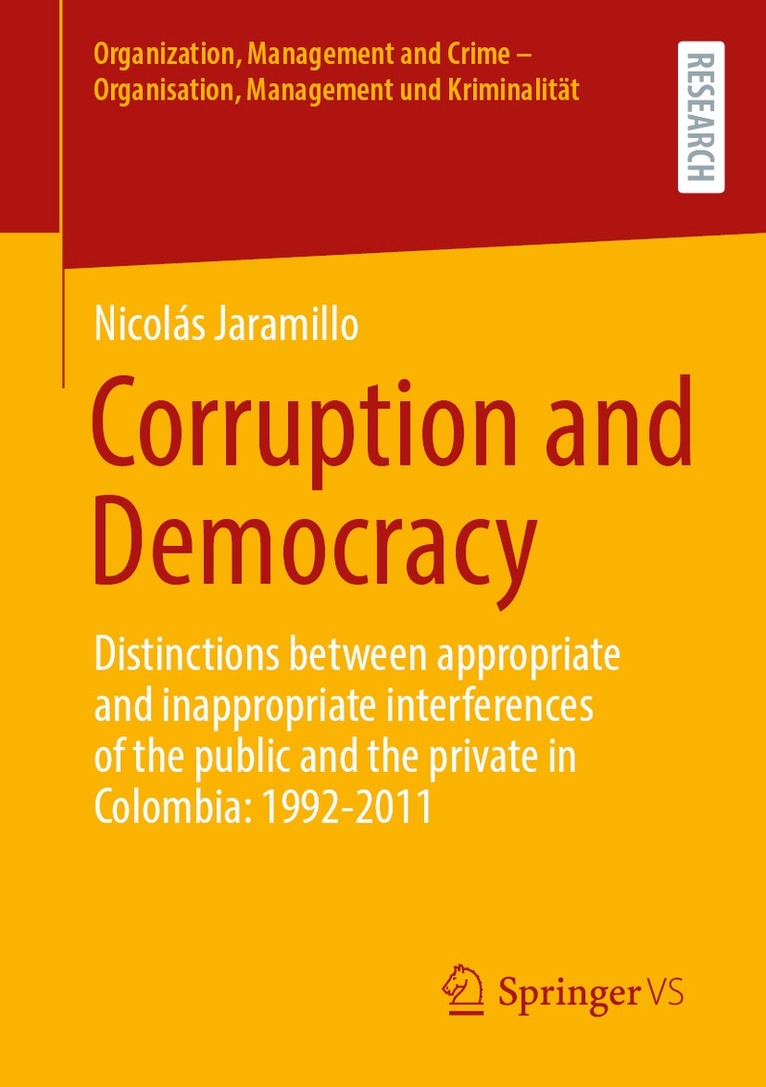
Corruption and Democracy
1204 kr
Beställningsvara. Skickas inom 10-15 vardagar. Fri frakt över 249 kr.
Beskrivning
The literature has highlighted the tensions between democracy and anti-corruption efforts, considering their changing meanings over time. These debates have been traversed by understandings of how to ensure appropriate connections between the public and the private, bearing in mind some of their alternative meanings (e.g., for the public as the state, the commons, manifest or impersonal- reasonable interests). Colombia faced these debates at two critical junctures, which led Congress to pass party and anti-corruption laws in both time periods. To contribute to the understanding of these puzzling tensions, the research aimed to solve the following question: Why did Colombian legislators understand some public-private relations as adequate for Colombian democracy, while others as corrupt in the approval of the 1992-1995 and 2010-2011 party and anti-corruption laws, and why did these understandings change? Solving this question required consulting the literature that has addressed the discussion points on democratization, corruption and the public-private. This, in order to guide the diachronic comparison. The sampling material was composed by the transcription of the debates in Congress that ended in the approval of the mentioned laws, following a qualitative content analysis. It was observed that the congresspeople tended to modify their emphasis of the democratic and non-corrupt: from the protection of the common to the impersonal-reasonable interests.
Produktinformation
- Utgivningsdatum: 2026-08-13
- Mått: 148 x 210 x 34 mm
- Vikt: 810 g
- Format: Häftad
- Språk: Engelska
- Serie: Organization, Management and Crime - Organisation, Management und Kriminalität
- Antal sidor: 615
- Förlag: Springer Fachmedien Wiesbaden
- ISBN: 9783658520113
Utforska kategorier
Betyg & recensioner
0 recensioner
Inga recensioner tillgängliga.