• Fri frakt över 249 kr
  • •
  • Snabba leveranser
  • •
  • Billiga böcker
Kundservice

Du är på sajten för privatpersoner.

Företag, bibliotek eller offentlig verksamhet?

Du handlar på classic.bokus.com, där alla dina funktioner finns intakta.
Till classic.bokus.com
Bokus logotyp. Gå till startsidan.
  • Erbjudanden
  • Student
  • Topplistor
  • Barn & ungdom
  • Bokus Play
  • E-böcker
  • Ljudböcker
  • Pocketböcker
  • Spel och pussel

Pocketfynda! Hundratals böcker för 49 kr/st →

Sidfot

Mina sidor

    Hjälp

    • Kundservice
    • Vanliga frågor och svar
    • Frakt och leverans
    • Retur vid ångerrätt
    • Reklamera vara
    • Betalning
    • Köpvillkor
    • Allmänna villkor
    • Information om webbplatsens tillgänglighet

    Om Bokus

    • Om oss
    • Pressrum
    • För studenter
    • För företag
    • För bibliotek och offentlig verksamhet
    • För leverantörer
    • Hållbarhet

    Populärt

    • Aktuella erbjudanden
    • Presentkort
    • Studentlitteratur
    • Nya böcker
    • Topplistor
    • Signerade böcker
    • Engelska böcker

    Inspiration

    • Boktips
    • BookTok
    • Barnbokskaraktärer
    • Populära författare
    Logotyp för Bokus
    Följ oss på Facebook (extern länk)Följ oss på Instagram (extern länk)Följ oss på YouTube (extern länk)Följ oss på TikTok (extern länk)
    bokus @ CookiesAnpassa cookiesIntegritetspolicyKöpvillkor
    Till Citymail hemsida (extern länk)Till Budbee hemsida (extern länk)Till Postnord hemsida (extern länk)Till Schenker hemsida (extern länk)Till Early Bird hemsida (extern länk)Till Walleys hemsida (extern länk)
    1. Samhälle och politik
    2. Samhälle och kultur
    3. Kultur och medier
    4. Referensverk och tvärvetenskap

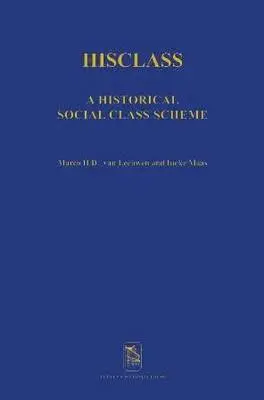
    HISCLASS

    A Historical International Social Class Scheme

    AvMarco H. D. van Leeuwen,Ineke Maas

    Inbunden, Engelska, 2011

    507 kr

    Tillfälligt slut

    Beskrivning

    Social class schemes, contemporary as well as historical, always involve something of a mystery. While this book does not claim to have solved that mystery completely, it does shed significant light on it. For the sake of comparability, it is advisable not to develop new class schemes but to use old ones. Yet presenting a new class scheme - HISCLASS - is exactly what this book does. Unlike existing historical schemes, HISCLASS is international, created for the purpose of making comparisons across different periods, countries and languages. Furthermore, it is linked to an international standard classification scheme for occupations - HISCO. The chapters in the book show how historical occupational titles classified in HISCO can form the building blocks of a social class scheme for past populations. The dimensions underlying classes are discussed. How, for instance, can manual work be distinguished from non-manual work? Skilled from non-skilled? And what did ‘supervision' really mean? A rich source of detailed occupational information is used to measure those dimensions. The result is an instrument that can be used to systematically compare social class positions, distilled from a dazzling variety of occupational titles, around the world and over a range of periods. This publication is GPRC-labeled (Guaranteed Peer-Reviewed Content).

    Produktinformation

    • Utgivningsdatum:2011-03-14
    • Mått:178 x 267 x 14 mm
    • Vikt:907 g
    • Format:Inbunden
    • Språk:Engelska
    • Antal sidor:184
    • Förlag:Leuven University Press
    • ISBN:9789058678577

    Utforska kategorier

    • Referensverk och tvärvetenskap inom Samhälle och politik
    • Sociala grupper och identitet inom Samhälle och politik
    • Historia: teori och metod inom Historia och arkeologi

    Mer om författaren

    Marco H.D. van Leeuwen is Professor of Historical Sociology at the Department of Sociology/ICS, Utrecht University, and Honorary Research Fellow of the International Institute for Social History, Amsterdam. Ineke Maas is Associate Professor of Sociology at the Department of Sociology/ICS, Utrecht University.

    Recensioner i media

    Notwithstanding these observations, HISCLASS is an important tool that will make a significant contribution to historical stratification and mobility research in the fields of social and economic history, historical sociology, and historical demography. The book's documentation of HISCLASS' construction, which permits identification of the scheme's weaknesses and strengths, together with the actual experiences of HISCLASS users, may well lead to the improvement of this research tool in the future. Peter Tammes, The Netherlands, The Journal of Interdisciplinary History, XLIII:3 (Winter 2013)

    Innehållsförteckning

    • List of tables Preface 1. Occupations, Class and Rank in Past Societies1.1 Introduction1.2 Occupations and their classifi cation in HISCO1.3 Constructing the class scheme1.4 Dimensions of social class1.5 Conclusion2. Dictionary of Occupational Titles (DOT)2.1 Introduction2.2 The nature of DOT2.3 The content of DOT2.4 Conclusion3. From HISCO to DOT3.1 Introduction3.2 Linking HISCO to DOT3.3 Conclusion 4. From DOT to a Social Class Scheme for Past Populations4.1 Introduction4.2 Manual and non-manual4.3 Skill levels4.4 Supervision4.5 Economic sector4.6 From class dimensions to HISCLASS4.7 The use of the HISCO variables Status and Relation4.8 Conclusion5. Validation5.1 Introduction5.2 Expert judgement5.3 Results of the expert validation5.4 Consequences of the results of the validation for HISCLASS5.5 Conclusion6. ConclusionBibliography AppendicesAppendix 4.1: Exceptions to the general rules with respect to the manual /non-manual distinctionAppendix 4.2: Exceptions to the general rules with respect to skill levelsAppendix 4.3: Exceptions to the general rules with respect to supervisionAppendix 5.1: Instructions for validation by the expertsAppendix 5.2: The two test fi les for the expert validation (first 10 of 299 occupational groups)Appendix 5.3: Overview of experts' placement of occupational groups into classes, compared with the placement using DOTAppendix 5.4: Overview of experts' scoring of occupational groups on class dimensionsAppendix 5.5: Changes made based on the expert validationAppendix 5.6: Crosswalk HISCO - HISCLASSList of tablesTable 2.1: Values of the occupational characteristics Data, People and Things in the Dictionary of Occupational Titles (DOT)Table 2.2: Example of a DOT qualifi cation profileTable 3.1: An overview of links between HISCO and DOT by typeTable 3.2: An illustration of choosing the most common DOT code within the unit group in order to establish a HISCO-DOT link for a general HISCO groupTable 3.3: An illustration of choosing the most similar DOT code within the unit group in order to establish a HISCO-DOT link for a general HISCO groupTable 3.4: HISCO occupational groups that could not be linked to DOT, and their presence in ISCO68Table 4.1: Distinguishing between manual and non-manual work using DOTTable 4.2: HISCO occupational groups not covered by DOT, and their directly assigned class characteristicsTable 4.3: Distinguishing skill levels using DOTTable 4.4: Distinguishing supervision using DOTTable 4.5: A cross-classifi cation of the dimensions of classTable 4.6: The 12 HISCLASS classes and their characteristicsTable 4.7: Categories of the variable Status in HISCO and rules for assigning occupations to classesTable 4.8: Categories of the variable Relation in HISCO and rules for assigning occupations to classesTable 5.1: Results of the expert validation of supervisionTable 5.2: Results of the expert validation of manual / non-manualTable 5.3: Results of the expert validation of primary as opposed to other sectorsTable 5.4: Results of the expert validation of skillTable 5.5: Results of the expert validation of classTable 5.6: Cross-classifi cation of DOT-based class and alternatives proposed by a majority of experts