Inbunden, Engelska, 2020
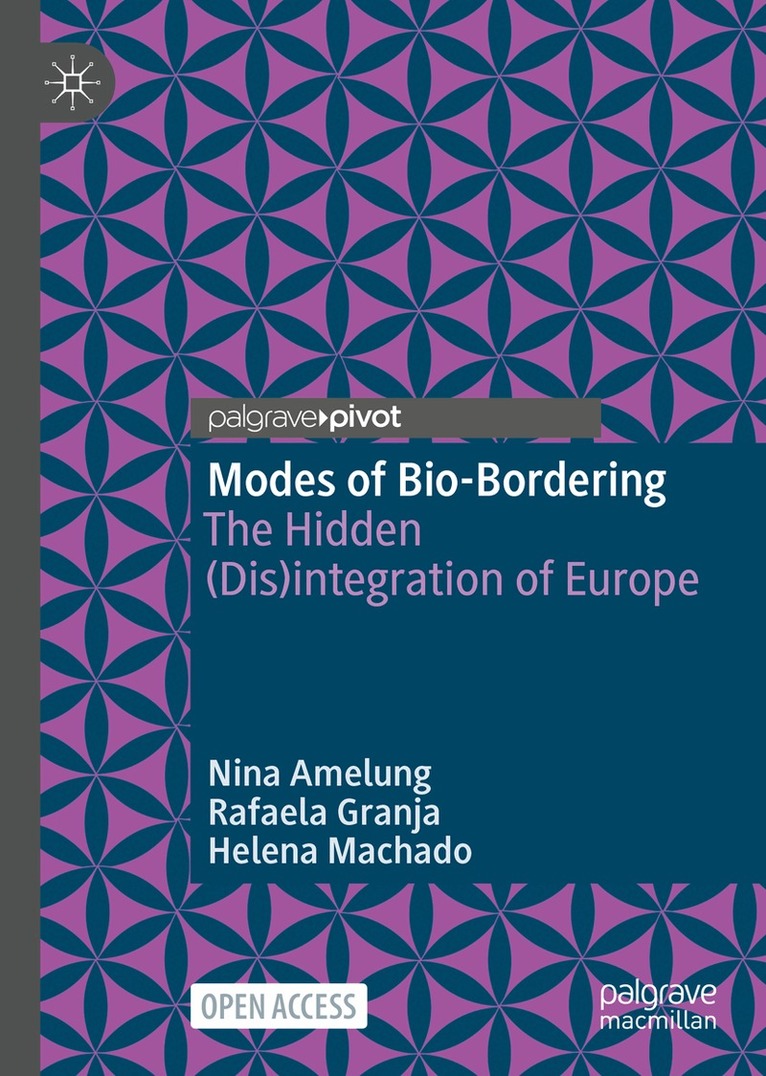
Modes of Bio-Bordering
Av Nina Amelung, Rafaela Granja, Helena Machado
550 kr
Beställningsvara. Skickas inom 10-15 vardagar. Fri frakt över 249 kr.
Beskrivning
This open access book explores how biometric data is increasingly flowing across borders in order to limit, control and contain the mobility of selected people, namely criminalized populations. It introduces the concept of bio-bordering, using it to capture reverse patterns of bordering and ordering practices linked to transnational biometric data exchange regimes. The concept is useful to reconstruct how the territorial foundations of national state autonomy are partially reclaimed and, at the same time, partially purposefully suspended. The book focuses on the Prüm system, which facilitates the mandatory exchange of forensic DNA data amongst EU Member States. The Prüm system is an underexplored phenomenon, representing diverse instances of bio-bordering and providing a complex picture of the hidden (dis)integration of Europe. Particular legal, scientific, technical and political dimensions related to the governance and uses of biometric technologies in Germany, the Netherlands,Poland, Portugal and the United Kingdom are specifically explored to demonstrate both similar and distinct patterns.
Produktinformation
- Utgivningsdatum: 2020-10-31
- Mått: 148 x 210 x 14 mm
- Vikt: 294 g
- Format: Inbunden
- Språk: Engelska
- Antal sidor: 151
- Förlag: Springer Verlag, Singapore
- ISBN: 9789811581823
Utforska kategorier
Betyg & recensioner
0 recensioner
Inga recensioner tillgängliga.