Inbunden, Engelska, 2022
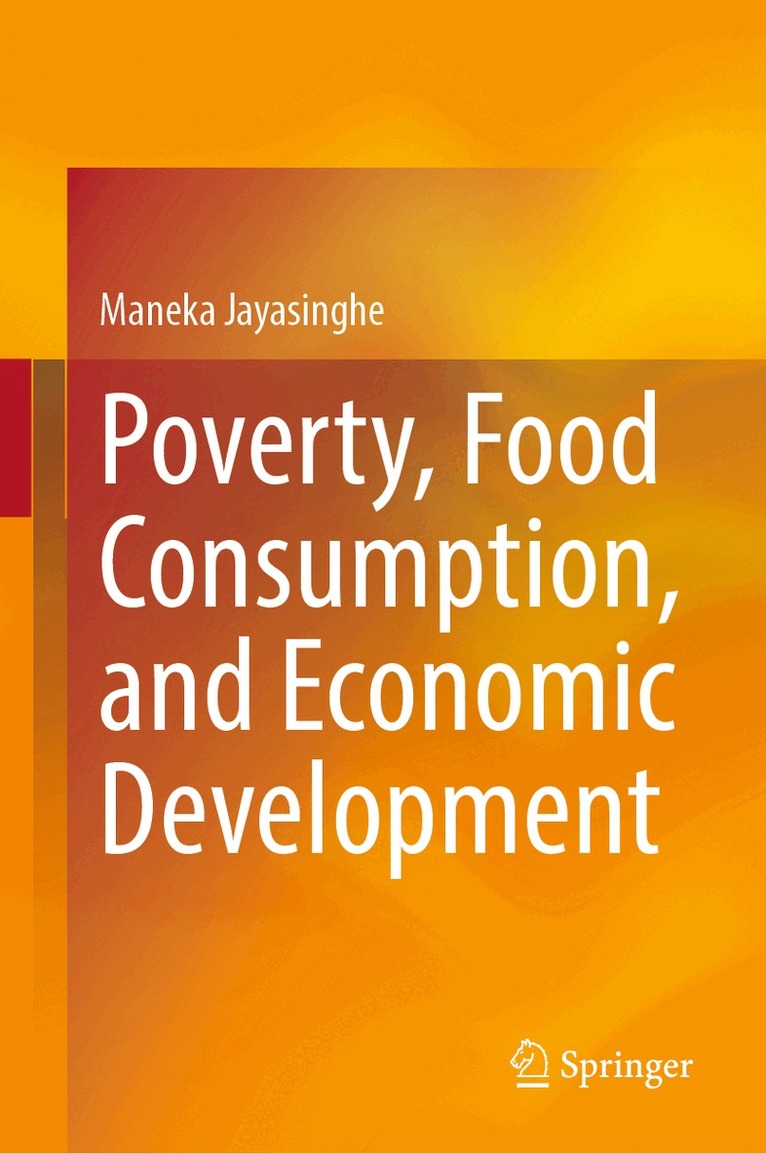
Poverty, Food Consumption, and Economic Development
1249 kr
Skickas inom 10-15 vardagar
Beskrivning
This book investigates the relationships between economies of scale in food consumption and a number of socio-economic and demographic characteristics of households and household behavioural choices since food is the major share of household expenditure for poor households. The characteristics considered comprise household size, location, income, and gender of the head of household while the behavioural choices considered comprise the decision to consume home-grown food and the decision to adopt domestic technology to aid food preparation and consumption. The book proposes two theoretical models to rationalize the role of the consumption of home-grown food and the adoption of domestic technology in enhancing economies of scale in food consumption. Econometric models are also used to empirically test the validity of the two theoretical models while adjusted poverty estimations are derived numerically using the estimated equivalence scales. Although data used inapplying these techniques are based on four Household Income and Expenditure Surveys conducted by the Department of Census and Statistics (DCS) in Sri Lanka, the methodology can be used for similar analysis in relation to any other country.
Produktinformation
- Utgivningsdatum: 2022-01-12
- Mått: 155 x 235 x 13 mm
- Vikt: 371 g
- Format: Inbunden
- Språk: Engelska
- Antal sidor: 110
- Förlag: Springer Verlag, Singapore
- ISBN: 9789811687426
Utforska kategorier
Betyg & recensioner
0 recensioner
Inga recensioner tillgängliga.