
Andrew Monk - Böcker
Visar alla böcker från författaren Andrew Monk. Handla med fri frakt och snabb leverans.
5 produkter
5 produkter
1 095 kr
Skickas inom 10-15 vardagar
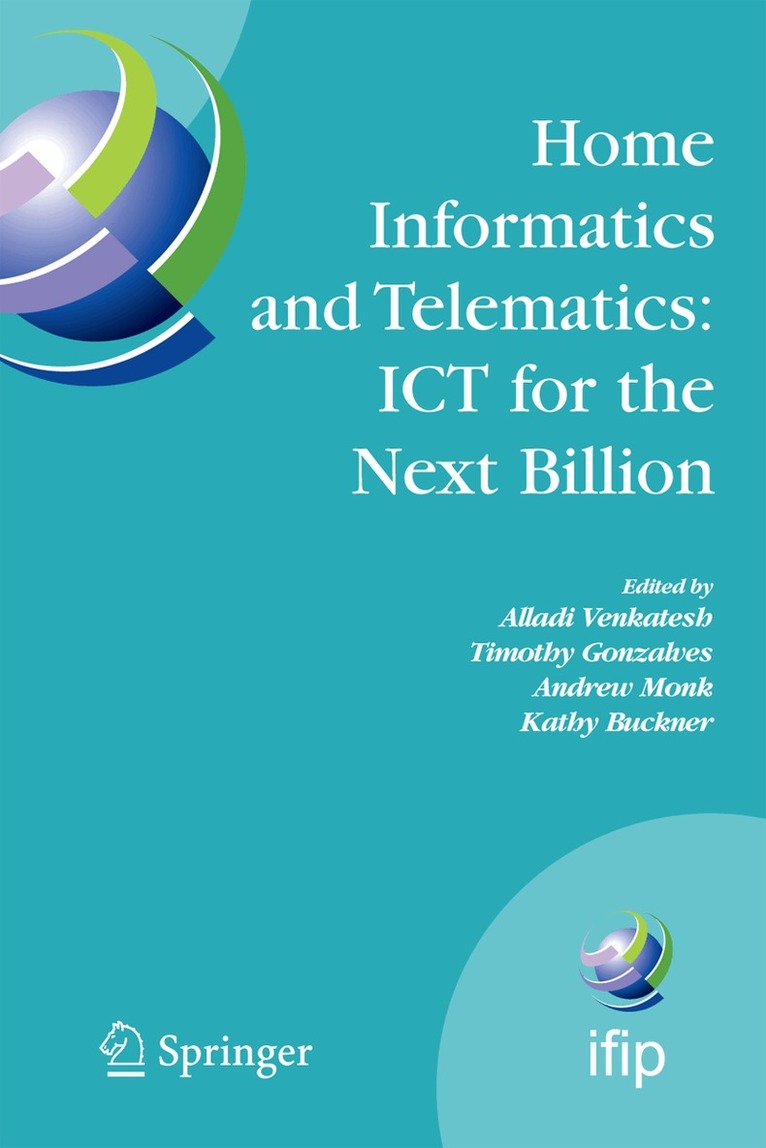
This volume represents the papers reviewed and accepted for the HOIT2007 conference held at the Indian Institute of Technology Madras (IIT-M) in the city of Chennai, India, in August 2007. The conference, entitled "Home/Community Oriented ICT for the Next Billion," addressed many major themes of current interest in this field. In particular, the focus was on community-based technologies. The conference was organized by IFIP working Group 9. 3-Home Oriented Informatics and Telematics (HOIT), in association with the TeNeT Group of the Indian Institute of Technology, Madras. The conference papers cover a wide range of topics that transcend local/national themes and engage us in global issues. This was the first time the HOIT conference was held outside Europe or North America, testifying to the growth and development of other regions of the world. The conference included paper sessions, panel discussions, special keynote speaker presentations, and poster sessions. The topics were grouped under different themes. Following are the five basic themes of the conference and a brief description of the papers that appear under each theme. Empowerment and Digital Divide In their comparative analysis of South Africa and India, Joseph and Andrew show how ICTs can have dramatic impact in two key areas—alleviating poverty for rural women and achieving socio-economic development goals. In the next piece, Malhotra and co authors discuss "DesiCrew" as a unique business process outsourcing (BPO) initiative in the context of rural areas in India.
1 095 kr
Skickas inom 10-15 vardagar
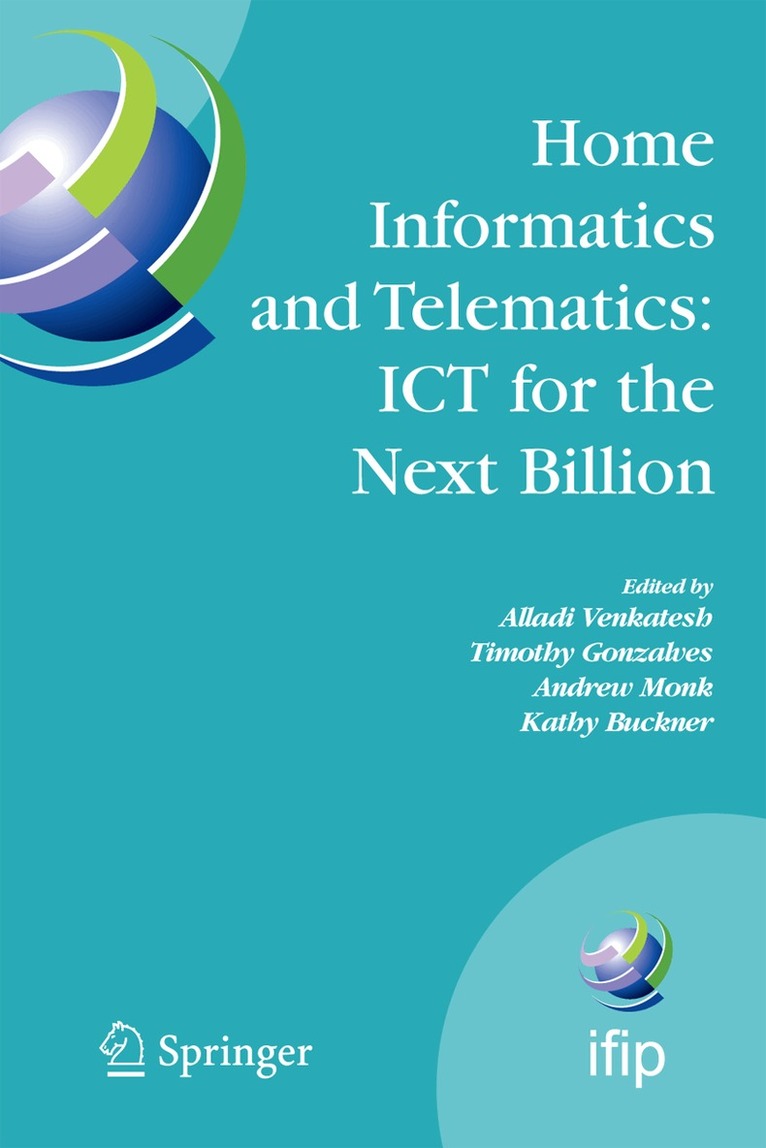
This volume represents the papers reviewed and accepted for the HOIT2007 conference held at the Indian Institute of Technology Madras (IIT-M) in the city of Chennai, India, in August 2007. The conference, entitled "Home/Community Oriented ICT for the Next Billion," addressed many major themes of current interest in this field. In particular, the focus was on community-based technologies. The conference was organized by IFIP working Group 9. 3-Home Oriented Informatics and Telematics (HOIT), in association with the TeNeT Group of the Indian Institute of Technology, Madras. The conference papers cover a wide range of topics that transcend local/national themes and engage us in global issues. This was the first time the HOIT conference was held outside Europe or North America, testifying to the growth and development of other regions of the world. The conference included paper sessions, panel discussions, special keynote speaker presentations, and poster sessions. The topics were grouped under different themes. Following are the five basic themes of the conference and a brief description of the papers that appear under each theme. Empowerment and Digital Divide In their comparative analysis of South Africa and India, Joseph and Andrew show how ICTs can have dramatic impact in two key areas—alleviating poverty for rural women and achieving socio-economic development goals. In the next piece, Malhotra and co authors discuss "DesiCrew" as a unique business process outsourcing (BPO) initiative in the context of rural areas in India.

606 kr
Skickas inom 10-15 vardagar
New chapter topics include: online dating, interactive rides, wellbeing, somaesthetics, design fiction, critical design and participatory design methods. The first edition chapters are also reprinted, with new notes by their authors setting the context in which the 2003 chapter was written and explaining the developments since then.
225 kr
Skickas inom 10-15 vardagar
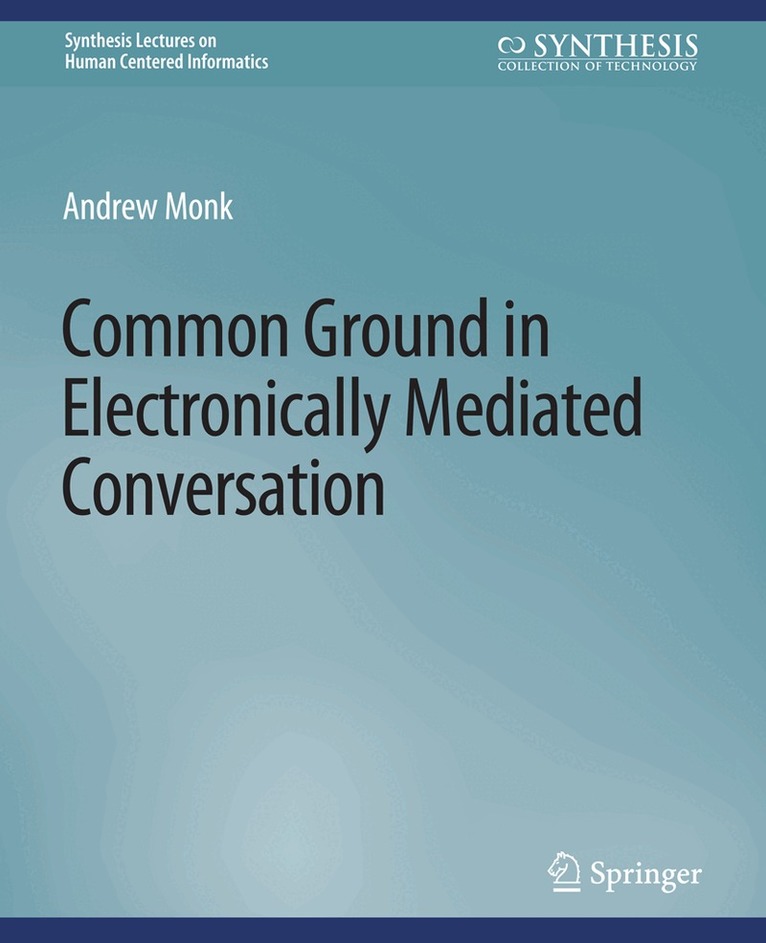
Table of Contents: Motivation - Conversation as a Collaborative Activity / Overview - Developing Common Ground, An Example / Scientific Foundations / The Theory in More Detail / Case Studies - Applying the Theory to Electronically Mediated Communication / Current Status

606 kr
Skickas inom 10-15 vardagar
New chapter topics include: online dating, interactive rides, wellbeing, somaesthetics, design fiction, critical design and participatory design methods. The first edition chapters are also reprinted, with new notes by their authors setting the context in which the 2003 chapter was written and explaining the developments since then.