
Charles M. Crisafulli - Böcker
Visar alla böcker från författaren Charles M. Crisafulli. Handla med fri frakt och snabb leverans.
4 produkter
4 produkter
492 kr
Skickas inom 10-15 vardagar
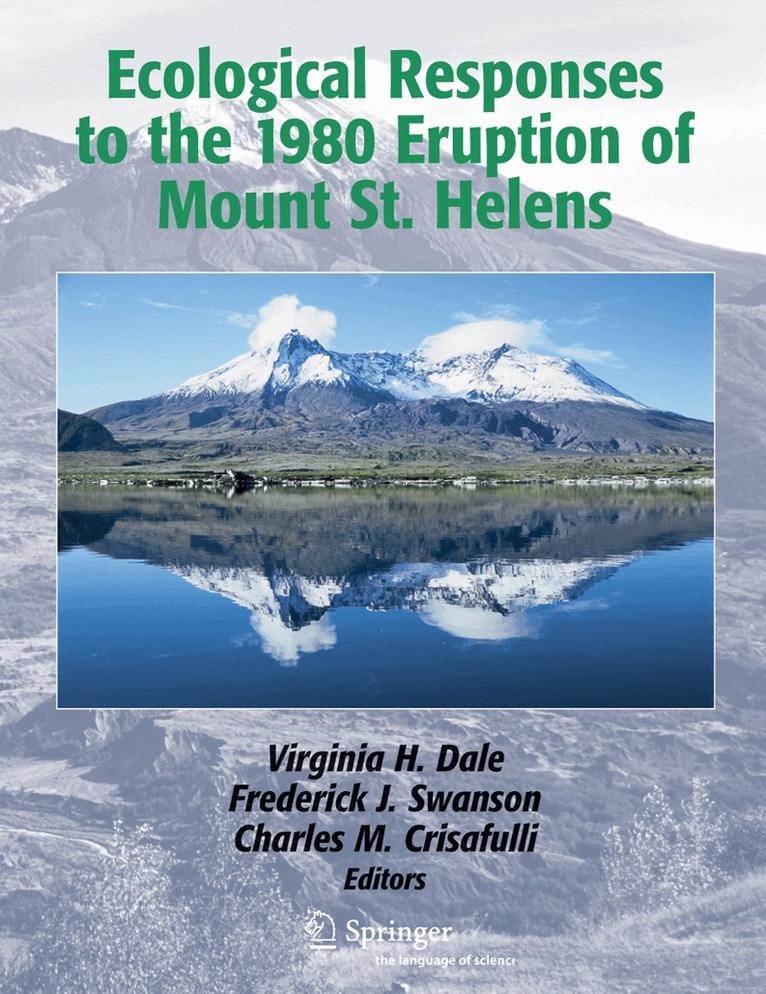
The eruption of Mount St. Helens on May 18, 1980, had a momentous impact on the fungal, plant, animal, and human life from the mountain to the far reaches of the explosion's ash cloud and mudflows. Although this intense natural event caused loss of substantial life and property, it also created a unique opportunity to examine a huge disturbance of natural systems and their subsequent responses. Based on one of the most studied areas of volcanic activity, this book synthesizes the ecological research that has been conducted for twenty-five years since the eruption.Research from geology as well as plant and animal ecology has been integrated in this unprecedented look at the complex interactions of biological and physical systems in the response of the volcanic landscape. Lessons from the volcano inform our larger understanding of ecosystem disturbances, natural processes, and the impact of land-use practices. Included are results of significant and long-term research on vegetation, mycorrhizae, plant and animal interactions, arthropods, amphibians, mammals, fish, lakes, nutrient cycling, geomorphology, and environmental management.This comprehensive account will be of value to those interested in natural history, ecology, disturbance, conservation biology, limnology, geoscience, and land management. Questions about what actually happens when a volcano erupts, what the immediate and long-term dangers are, and how life reasserts itself in the environment are discussed in full detail.
492 kr
Skickas inom 10-15 vardagar
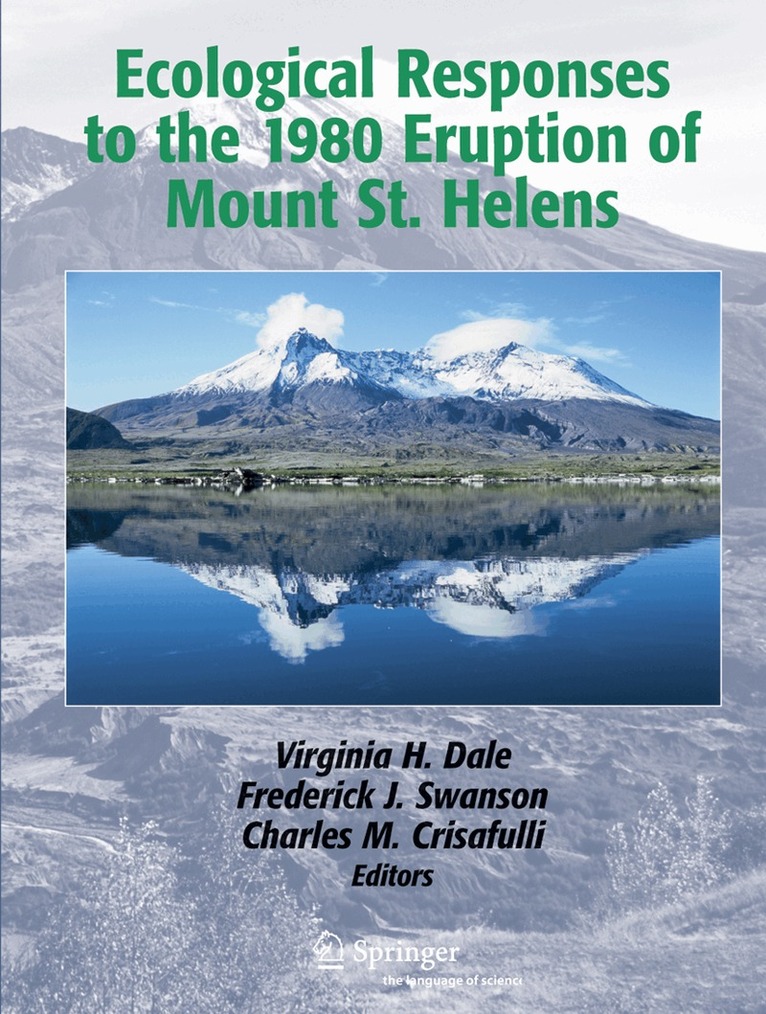
The eruption of Mount St. Helens on May 18, 1980, had a momentous impact on the fungal, plant, animal, and human life from the mountain to the far reaches of the explosion's ash cloud and mudflows. Although this intense natural event caused loss of substantial life and property, it also created a unique opportunity to examine a huge disturbance of natural systems and their subsequent responses. Based on one of the most studied areas of volcanic activity, this book synthesizes the ecological research that has been conducted for twenty-five years since the eruption. Research from geology as well as plant and animal ecology has been integrated in this unprecedented look at the complex interactions of biological and physical systems in the response of the volcanic landscape. Lessons from the volcano inform our larger understanding of ecosystem disturbances, natural processes, and the impact of land-use practices. Included are results of significant and long-term research on vegetation, mycorrhizae, plant and animal interactions, arthropods, amphibians, mammals, fish, lakes, nutrient cycling, geomorphology, and environmental management.This comprehensive account will be of value to those interested in natural history, ecology, disturbance, conservation biology, limnology, geoscience, and land management. Questions about what actually happens when a volcano erupts, what the immediate and long-term dangers are, and how life reasserts itself in the environment are discussed in full detail.
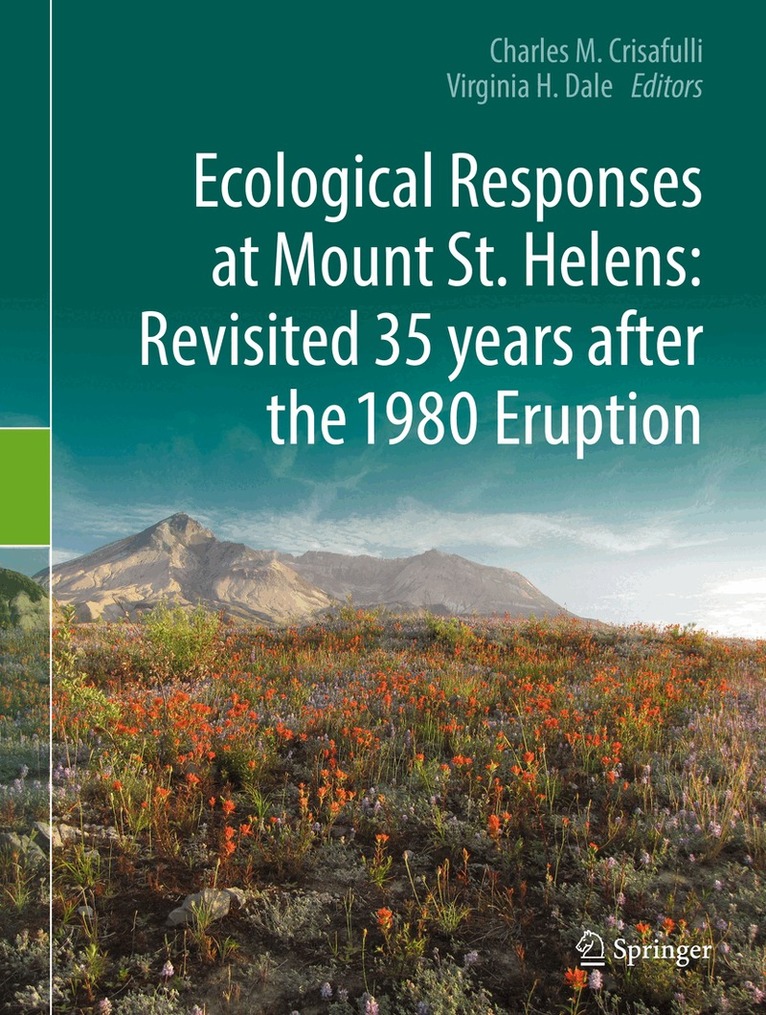
Ecological Responses at Mount St. Helens: Revisited 35 years after the 1980 Eruption
Inbunden, Engelska, 2018
958 kr
Skickas inom 10-15 vardagar
This book builds on existing work exploring succession, disturbance ecology, and the interface between geophysical and biological systems in the aftermath of the 1980 eruptions of Mount St. Helens. The eruption was dramatic both in the spatial extent of impacts and the range of volcanic disturbance types and intensities. Complex geophysical forces created unparalleled opportunities to study initial ecological responses and long-term succession processes that occur in response to a major contemporary eruption across a great diversity of ecosystems—lowland to alpine forests, meadows, lakes, streams, and rivers. These factors make Mount St. Helens an extremely rich environment for learning about the ecology of volcanic areas and, more generally, about ecosystem response to major disturbance of many types, including land management. Lessons about ecological recovery at Mount St. Helens are shaping thought about succession, disturbance ecology, ecosystem management, and landscape ecology. In the first five years after the eruption several syntheses documented the numerous, intensive studies of ecological recovery. The 2005 volume “Ecological Responses to the 1980 Eruption of Mount St. Helens” (Springer Publishing) was the first ecological synthesis since 1987 of the scores of ecological studies underway in the area. More than half of the world’s published studies on plant and animal responses to volcanic eruptions have taken place at Mount St. Helens. The 25-year synthesis, which generally included investigations (i.e., data) from 1980-2000, made it possible to more thoroughly analyze initial stages of ecological responses and to test the validity of early interpretations and the duration of early phenomena. And 35 years after the eruption, it is time for many of the scientists working in the first three-decade, post-eruption period to pass the science baton to the next generation of scientists to work at Mount St. Helens, anda synthesis at this time of transfer of responsibility to a younger cohort of scientists will be an enormous asset to the continuation of work at the volcano.
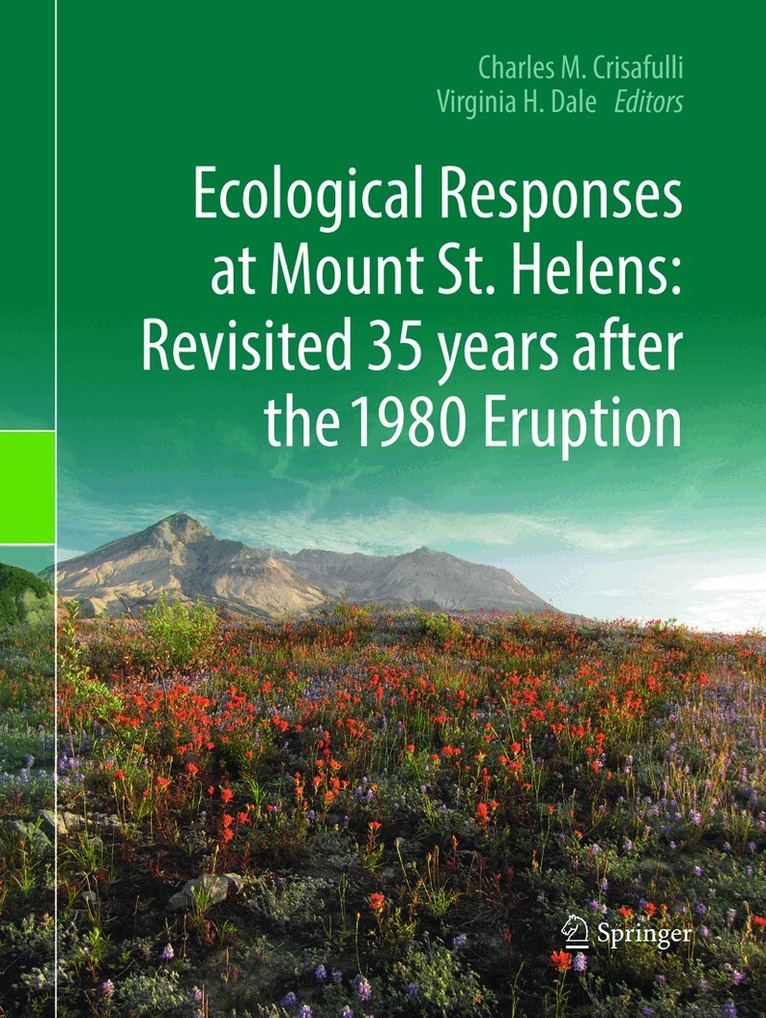
Ecological Responses at Mount St. Helens: Revisited 35 years after the 1980 Eruption
Häftad, Engelska, 2019
958 kr
Skickas inom 10-15 vardagar
This book builds on existing work exploring succession, disturbance ecology, and the interface between geophysical and biological systems in the aftermath of the 1980 eruptions of Mount St. Helens. The eruption was dramatic both in the spatial extent of impacts and the range of volcanic disturbance types and intensities. Complex geophysical forces created unparalleled opportunities to study initial ecological responses and long-term succession processes that occur in response to a major contemporary eruption across a great diversity of ecosystems—lowland to alpine forests, meadows, lakes, streams, and rivers. These factors make Mount St. Helens an extremely rich environment for learning about the ecology of volcanic areas and, more generally, about ecosystem response to major disturbance of many types, including land management. Lessons about ecological recovery at Mount St. Helens are shaping thought about succession, disturbance ecology, ecosystem management, and landscape ecology. In the first five years after the eruption several syntheses documented the numerous, intensive studies of ecological recovery. The 2005 volume “Ecological Responses to the 1980 Eruption of Mount St. Helens” (Springer Publishing) was the first ecological synthesis since 1987 of the scores of ecological studies underway in the area. More than half of the world’s published studies on plant and animal responses to volcanic eruptions have taken place at Mount St. Helens. The 25-year synthesis, which generally included investigations (i.e., data) from 1980-2000, made it possible to more thoroughly analyze initial stages of ecological responses and to test the validity of early interpretations and the duration of early phenomena. And 35 years after the eruption, it is time for many of the scientists working in the first three-decade, post-eruption period to pass the science baton to the next generation of scientists to work at Mount St. Helens, anda synthesis at this time of transfer of responsibility to a younger cohort of scientists will be an enormous asset to the continuation of work at the volcano.