
INCOSE - Böcker
Visar alla böcker från författaren INCOSE. Handla med fri frakt och snabb leverans.
3 produkter
3 produkter
890 kr
Skickas inom 7-10 vardagar
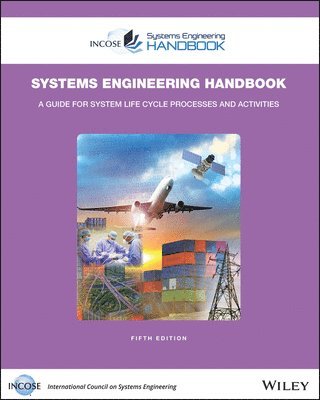
SYSTEMS ENGINEERING HANDBOOK A comprehensive reference on the discipline and practice of systems engineeringSystems engineering practitioners provide a wide range of vital functions, conceiving, developing, and supporting complex engineered systems with many interacting elements.The International Council on Systems Engineering (INCOSE) Systems Engineering Handbook describes the state-of-the-good-practice of systems engineering. The result is a comprehensive guide to systems engineering activities across any number of possible projects. From automotive to defense to healthcare to infrastructure, systems engineering practitioners are at the heart of any project built on complex systems.INCOSE Systems Engineering Handbook readers will find: Elaboration on the key systems life cycle processes described in ISO/IEC/IEEE 15288:2023;Chapters covering key systems engineering concepts, system life cycle processes and methods, tailoring and application considerations, systems engineering in practice, and more; andAppendices, including an N2 diagram of the systems engineering processes and a detailed topical index.The INCOSE Systems Engineering Handbook is a vital reference for systems engineering practitioners and engineers in other disciplines looking to perform or understand the discipline of systems engineering.
1 369 kr
Skickas inom 7-10 vardagar
Systems EngineeringCompilation of 37 competencies needed for systems engineering, with information for individuals and organizations on how to identify and assess competenceThis book provides guidance on how to evaluate proficiency in the competencies defined in the systems engineering competency framework and how to differentiate between proficiency at each of the five levels of proficiency defined within that document. Readers will learn how to create a benchmark standard for each level of proficiency within each competence area, define a set of standardized terminology for competency indicators to promote like-for-like comparison, and provide typical non-domain-specific indicators of evidence which may be used to confirm experience in each competency area.Sample topics covered by the three highly qualified authors include: The five proficiency levels: awareness, supervised practitioner, practitioner, lead practitioner, and expertThe numerous knowledge, skills, abilities, and behavior indicators of each proficiency levelWhat an individual needs to know and be able to do in order to behave as an effective systems engineerHow to develop training courses, education curricula, job advertisements, job descriptions, and job performance evaluation criteria for system engineering positionsFor organizations, companies, and individual practitioners of systems engineering, this book is a one-stop resource for considering the competencies defined in the systems engineering competency framework and judging individuals based off them.
INCOSE Needs and Requirements Manual
Needs, Requirements, Verification, Validation Across the Lifecycle
Inbunden, Engelska, 2024
971 kr
Skickas inom 7-10 vardagar
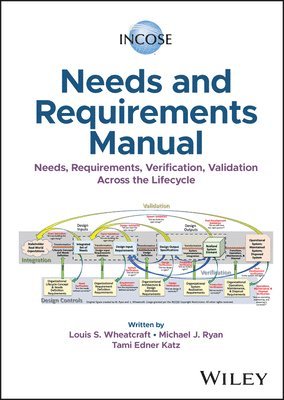
Complete and comprehensive manual for eliciting, defining, and managing needs and requirements, integration, verification, and validation across the lifecycle The INCOSE Needs and Requirements Manual presents product development and systems engineering practices, activities, and artifacts from the perspective of needs, requirements, verification, and validation across the system lifecycle. Composed of 16 chapters, this book provides practical guidance to help organizations understand the importance of lifecycle concepts, needs, requirements, verification, and validation activities, enabling them to successfully and effectively implement these activities during product development, systems engineering, and project management. The parent handbook published by Wiley, INCOSE Systems Engineering Handbook, divides the system lifecycle into a series of processes, with each process described in terms of a series of activities. This Manual provides more detail needed by practitioners to successfully implement these activities, with guidance and lessons learned from hundreds of years of collective experience of the authors, contributors, and reviewers. For example, while the Handbook mentions the need to define the problem statement, mission, goals, and objectives for a system, the Manual provides detailed guidance on doing so. Sample topics covered in the INCOSE Needs and Requirements Manual include: Defining the problem, opportunity, or threat and defining a mission statement, goals, objectives, and measures.Identifying external and internal stakeholders, eliciting stakeholder needs and requirements, defining drivers and constraints, and assessing risk.Performing lifecycle concept analysis and maturation and defining an integrated set of needs that represents the scope of the project.Transforming the integrated set of needs into well-formed design input requirements.Using attributes to manage needs and requirements across the lifecycle.Continuous integration, verification, and validation across the lifecycle.Moving between levels of the architecture, flow down and allocation of requirements, and budgeting performance, resource, and quality requirements.Defining the system verification and system validation success criteria, method, strategy, and responsible organizations.Planning and executing successful system verification and validation programs.Managing needs, requirements, verification, and validation across the lifecycle.Understanding the importance of an integrated, collaborative project team and effective communication between team membersThe INCOSE Needs and Requirements Manual is an essential accompanying reference to the INCOSE Systems Engineering Handbook for novice and seasoned system engineers, software engineers, project managers, product developers, tool vendors, course developers, educators, trainers, customers, suppliers, non-SE stakeholders , as well as researchers and students studying systems engineering and systems design.