Michael J. Ryan – författare
297 kr
Skickas inom 5-8 vardagar
239 kr
Skickas inom 5-8 vardagar
977 kr
Skickas inom 5-8 vardagar
1 147 kr
Läs direkt efter köp
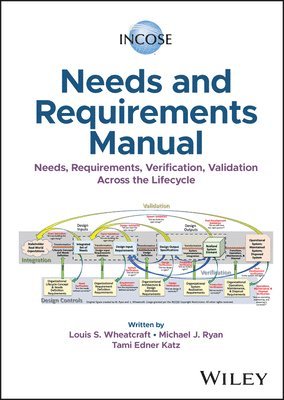
Complete and comprehensive manual for eliciting, defining, and managing needs and requirements, integration, verification, and validation across the lifecycle
The INCOSE Needs and Requirements Manual presents product development and systems engineering practices, activities, and artifacts from the perspective of needs, requirements, verification, and validation across the system lifecycle. Composed of 16 chapters, this book provides practical guidance to help organizations understand the importance of lifecycle concepts, needs, requirements, verification, and validation activities, enabling them to successfully and effectively implement these activities during product development, systems engineering, and project management.
The parent handbook published by Wiley, INCOSE Systems Engineering Handbook, divides the system lifecycle into a series of processes, with each process described in terms of a series of activities. This Manual provides more detail needed by practitioners to successfully implement these activities, with guidance and lessons learned from hundreds of years of collective experience of the authors, contributors, and reviewers. For example, while the Handbook mentions the need to define the problem statement, mission, goals, and objectives for a system, the Manual provides detailed guidance on doing so.
Sample topics covered in the INCOSE Needs and Requirements Manual include:
Defining the problem, opportunity, or threat and defining a mission statement, goals, objectives, and measures.Identifying external and internal stakeholders, eliciting stakeholder needs and requirements, defining drivers and constraints, and assessing risk.Performing lifecycle concept analysis and maturation and defining an integrated set of needs that represents the scope of the project.Transforming the integrated set of needs into well-formed design input requirements.Using attributes to manage needs and requirements across the lifecycle.Continuous integration, verification, and validation across the lifecycle.Moving between levels of the architecture, flow down and allocation of requirements, and budgeting performance, resource, and quality requirements.Defining the system verification and system validation success criteria, method, strategy, and responsible organizations.Planning and executing successful system verification and validation programs.Managing needs, requirements, verification, and validation across the lifecycle.Understanding the importance of an integrated, collaborative project team and effective communication between team membersThe INCOSE Needs and Requirements Manual is an essential accompanying reference to the INCOSE Systems Engineering Handbook for novice and seasoned system engineers, software engineers, project managers, product developers, tool vendors, course developers, educators, trainers, customers, suppliers, non-SE stakeholders , as well as researchers and students studying systems engineering and systems design.
1 107 kr
Läs direkt efter köp
Complete and comprehensive manual for eliciting, defining, and managing needs and requirements, integration, verification, and validation across the lifecycle
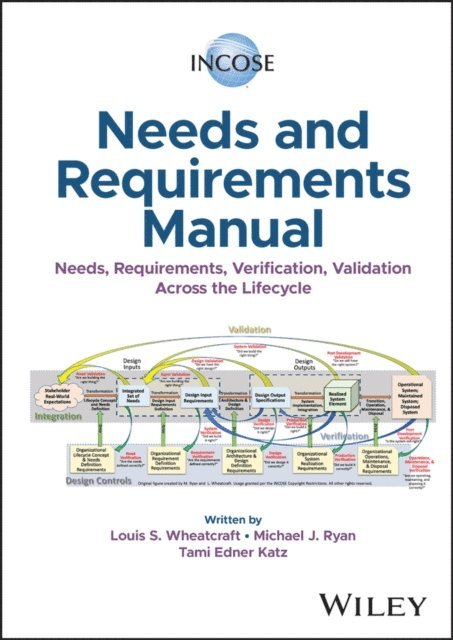
The INCOSE Needs and Requirements Manual presents product development and systems engineering practices, activities, and artifacts from the perspective of needs, requirements, verification, and validation across the system lifecycle. Composed of 16 chapters, this book provides practical guidance to help organizations understand the importance of lifecycle concepts, needs, requirements, verification, and validation activities, enabling them to successfully and effectively implement these activities during product development, systems engineering, and project management.
The parent handbook published by Wiley, INCOSE Systems Engineering Handbook, divides the system lifecycle into a series of processes, with each process described in terms of a series of activities. This Manual provides more detail needed by practitioners to successfully implement these activities, with guidance and lessons learned from hundreds of years of collective experience of the authors, contributors, and reviewers. For example, while the Handbook mentions the need to define the problem statement, mission, goals, and objectives for a system, the Manual provides detailed guidance on doing so.
Sample topics covered in the INCOSE Needs and Requirements Manual include:
Defining the problem, opportunity, or threat and defining a mission statement, goals, objectives, and measures.Identifying external and internal stakeholders, eliciting stakeholder needs and requirements, defining drivers and constraints, and assessing risk.Performing lifecycle concept analysis and maturation and defining an integrated set of needs that represents the scope of the project.Transforming the integrated set of needs into well-formed design input requirements.Using attributes to manage needs and requirements across the lifecycle.Continuous integration, verification, and validation across the lifecycle.Moving between levels of the architecture, flow down and allocation of requirements, and budgeting performance, resource, and quality requirements.Defining the system verification and system validation success criteria, method, strategy, and responsible organizations.Planning and executing successful system verification and validation programs.Managing needs, requirements, verification, and validation across the lifecycle.Understanding the importance of an integrated, collaborative project team and effective communication between team membersThe INCOSE Needs and Requirements Manual is an essential accompanying reference to the INCOSE Systems Engineering Handbook for novice and seasoned system engineers, software engineers, project managers, product developers, tool vendors, course developers, educators, trainers, customers, suppliers, non-SE stakeholders , as well as researchers and students studying systems engineering and systems design.
194 kr
Läs direkt efter köp
From one of the world''s leading authorities on animal behavior, the astonishing story of how the female brain drives the evolution of beauty in animals and humansDarwin developed the theory of sexual selection to explain why the animal world abounds in stunning beauty, from the brilliant colors of butterflies and fishes to the songs of birds and frogs. He argued that animals have “a taste for the beautiful” that drives their potential mates to evolve features that make them more sexually attractive and reproductively successful. But if Darwin explained why sexual beauty evolved in animals, he struggled to understand how. In A Taste for the Beautiful, Michael Ryan, one of the world’s leading authorities on animal behavior, tells the remarkable story of how he and other scientists have taken up where Darwin left off and transformed our understanding of sexual selection, shedding new light on human behavior in the process.Drawing on cutting-edge work in neuroscience and evolutionary biology, as well as his own important studies of the tiny Túngara frog deep in the jungles of Panama, Ryan explores the key questions: Why do animals perceive certain traits as beautiful and others not? Do animals have an inherent sexual aesthetic and, if so, where is it rooted? Ryan argues that the answers to these questions lie in the brain—particularly of females, who act as biological puppeteers, spurring the development of beautiful traits in males. This theory of how sexual beauty evolves explains its astonishing diversity and provides new insights about the degree to which our own perception of beauty resembles that of other animals.Vividly written and filled with fascinating stories, A Taste for the Beautiful will change how you think about beauty and attraction.
1 120 kr
Skickas inom 10-15 vardagar
1 898 kr
Skickas inom 5-8 vardagar
913 kr
Skickas inom 5-8 vardagar