
Justin D. Edwards - Böcker
Visar alla böcker från författaren Justin D. Edwards. Handla med fri frakt och snabb leverans.
17 produkter
17 produkter
1 391 kr
Skickas inom 10-15 vardagar
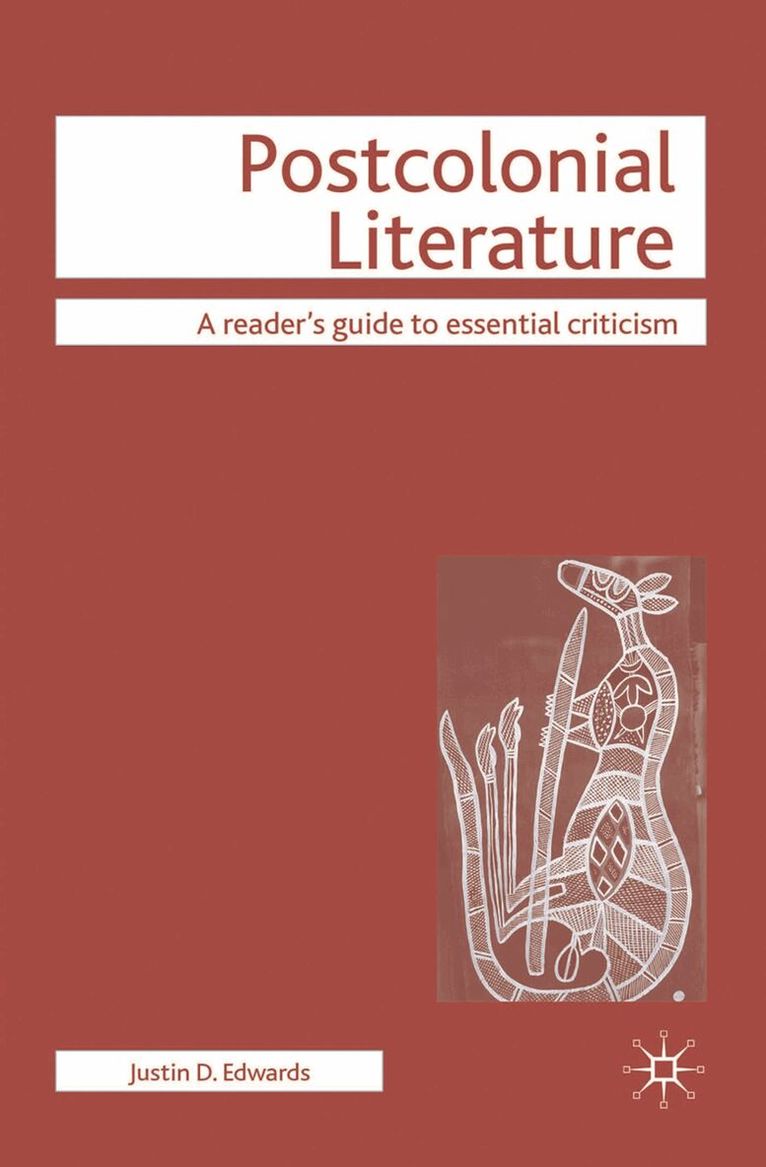
This Guide analyses the criticism of English-language literature from the major regions of the postcolonial world. Criticism on works by writers such as Jean Rhys, V.S. Naipaul and Salman Rushdie, is discussed to illustrate the themes and concepts essential to an understanding of postcolonial literature and the development of criticism in the field
438 kr
Skickas inom 10-15 vardagar
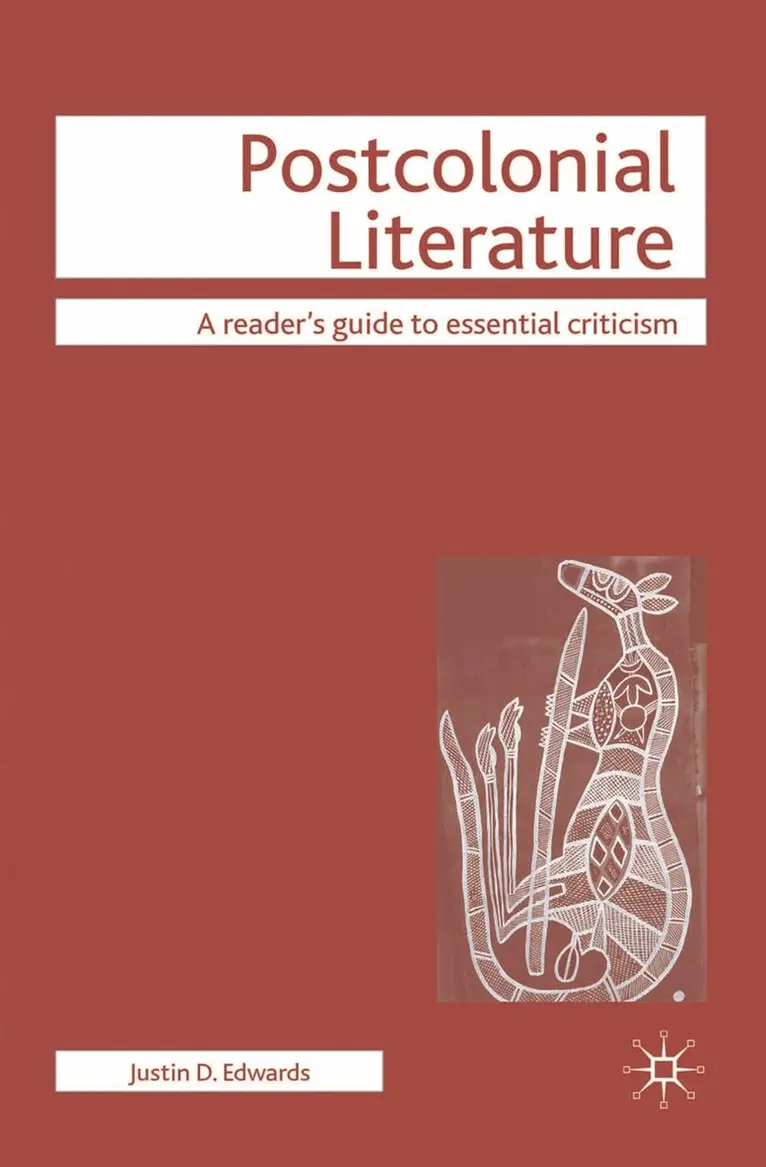
This Guide analyses the criticism of English-language literature from the major regions of the postcolonial world. Criticism on works by writers such as Jean Rhys, V.S. Naipaul and Salman Rushdie, is discussed to illustrate the themes and concepts essential to an understanding of postcolonial literature and the development of criticism in the field
268 kr
Skickas inom 10-15 vardagar
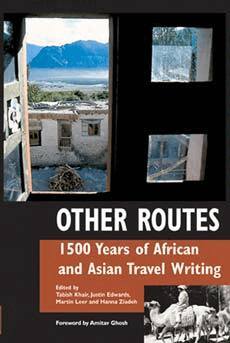
". . . brings new insights into the colonial relationship while challenging the unspoken temptation that this was a distinctly European period." —Simon GikandiOther Routes collects important primary work by travel writers from Asia and Africa in English translation. An introduction by Tabish Khair discusses travel literature as a genre, the perception of travel and writing about travel as a European privilege, and the emergence of new writings that show that travel has been a human occupation that crosses time and culture. This original and significant book will interest armchair travelers and others in views of people and places away from the European traveler's gaze.Selections include "The Travels of a Japanese Monk" (c. 838), "Al-Abdari, the Disgruntled Traveller" (c. 1290), "A Korean Official's Account of China" (1488), "The Poetry of Basho's Road" (1689), "Malabari: A Love-Hate Affair with the British" (1890).
725 kr
Skickas inom 10-15 vardagar
This volume, a collection with contributions from some of the major scholars of the Gothic in literature and culture, reflects on how recent Gothic studies have foregrounded a plethora of technologies associated with Gothic literary and cultural production. The engaging essays look into the links between technologies and the proliferation of the Gothic seen in an excess of Gothic texts and tropes: Frankensteinesque experiments, the manufacture of synthetic (true?) blood, Moreauesque hybrids, the power of the Borg, Dr Jekyll’s chemical experimentations, the machinery of Steampunk, or the corporeal modifications of Edward Scissorhands. Further, they explore how techno-science has contributed to the proliferation of the Gothic: Gothic in social media, digital technologies, the on-line gaming and virtual Goth/ic communities, the special effects of Gothic-horror cinema. Contributors address how Gothic technologies have, in a general sense, produced and perpetuated ideologies and influenced the politics of cultural practice, asking significant questions: How has the technology of the Gothic contributed to the writing of self and other? How have Gothic technologies been gendered, sexualized, encrypted, coded or de-coded? How has the Gothic manifested itself in new technologies across diverse geographical locations? This volume explores how Gothic technologies textualize identities and construct communities within a complex network of power relations in local, national, transnational, and global contexts. It will be of interest to scholars of the literary Gothic, extending beyond to include fascinating interventions into the areas of cultural studies, popular culture, science fiction, film, and TV.
725 kr
Skickas inom 10-15 vardagar
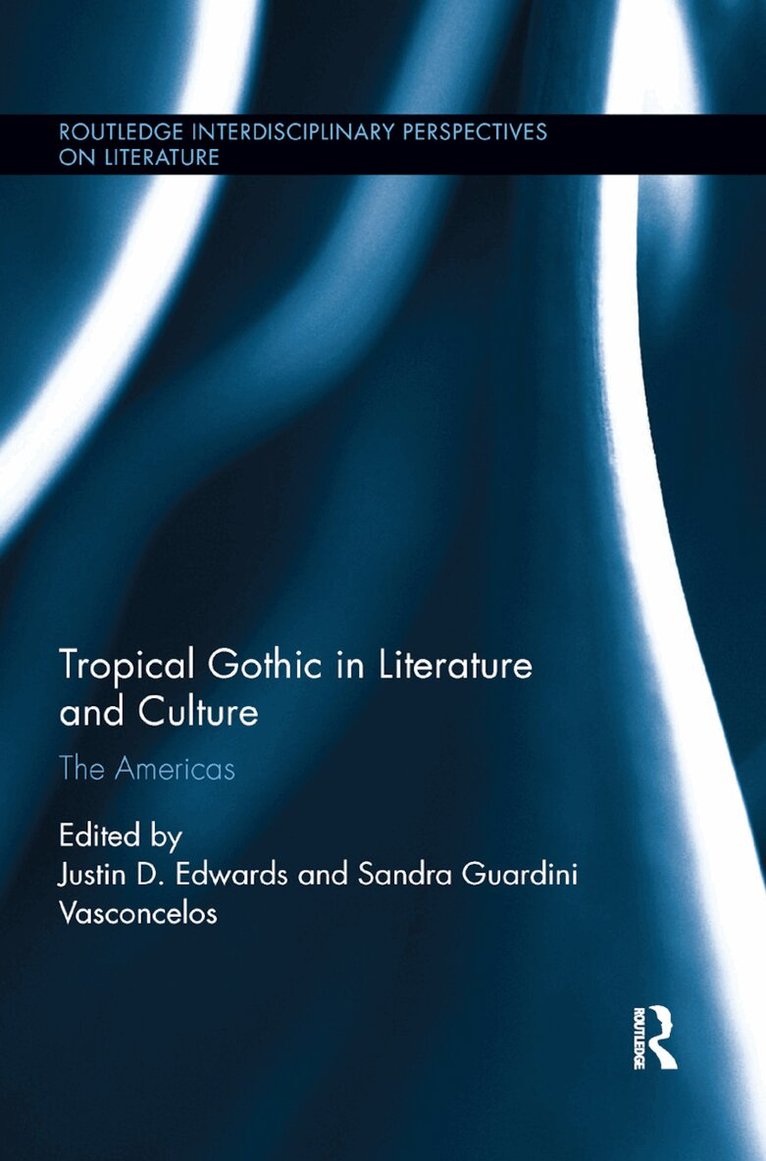
Tropical Gothic examines Gothic within a specific geographical area of ‘the South’ of the Americas. In so doing, we structure the book around geographical coordinates (from North to South) and move between various national traditions of the gothic (Mexico, Argentina, Brazil, etc) alongside regional manifestations of the Gothic (the US south and the Caribbean) as well as transnational movements of the Gothic within the Americas. The reflections on national traditions of the Gothic in this volume add to the critical body of literature on specific languages or particular nations, such as Scottish Gothic, American Gothic, Canadian Gothic, German Gothic, Kiwi Gothic, etc. This is significant because, while the Southern Gothic in the US has been thoroughly explored, there is a gap in the critical literature about the Gothic in the larger context of region of ‘the South’ in the Americas. This volume does not pretend to be a comprehensive examination of tropical Gothic in the Americas; rather, it pinpoints a variety of locations where this form of the Gothic emerges. In so doing, the transnational interventions of the Gothic in this book read the flows of Gothic forms across borders and geographical regions to tease out the complexities of Gothic cultural production within cultural and linguistic translations. Tropical Gothic includes, but is by no means limited to, a reflection on a region where European colonial powers fought intensively against indigenous populations and against each other for control of land and resources. In other cases, the vast populations of African slaves were transported, endowing these regions with a cultural inheritance that all the nations involved are still trying to comprehend. The volume reflects on how these histories influence the Gothic in this region.
1 784 kr
Skickas inom 10-15 vardagar
Grotesque provides an invaluable and accessible guide to the use (and abuse) of this complex literary term. Justin D. Edwards and Rune Graulund explore the influence of the grotesque on cultural forms throughout history, with particular focus on its representation in literature, visual art and film.The book:presents a history of the literary grotesque from Classical writing to the presentexamines theoretical debates around the term in their historical and cultural contextsintroduce readers to key writers and artists of the grotesque, from Homer to Rabelais, Shakespeare, Carson McCullers and David Cronenberganalyses key terms such as disharmony, deformed and distorted bodies, misfits and freaksexplores the grotesque in relation to queer theory, post-colonialism and the carnivalesque.Grotesque presents readers with an original and distinctive overview of this vital genre and is an essential guide for students of literature, art history and film studies.
413 kr
Skickas inom 10-15 vardagar
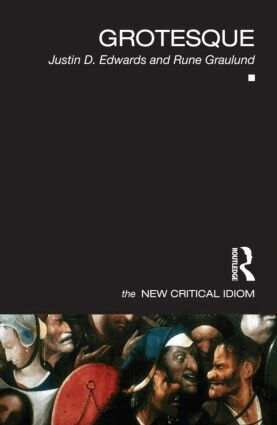
Grotesque provides an invaluable and accessible guide to the use (and abuse) of this complex literary term. Justin D. Edwards and Rune Graulund explore the influence of the grotesque on cultural forms throughout history, with particular focus on its representation in literature, visual art and film.The book:presents a history of the literary grotesque from Classical writing to the presentexamines theoretical debates around the term in their historical and cultural contextsintroduce readers to key writers and artists of the grotesque, from Homer to Rabelais, Shakespeare, Carson McCullers and David Cronenberganalyses key terms such as disharmony, deformed and distorted bodies, misfits and freaksexplores the grotesque in relation to queer theory, post-colonialism and the carnivalesque.Grotesque presents readers with an original and distinctive overview of this vital genre and is an essential guide for students of literature, art history and film studies.
885 kr
Skickas inom 7-10 vardagar
The vast majority of Canadians live in cities, yet for the most part, discussions of Canadian literature have failed to actively engage with the country's urban experience. Canada's prevalent myths continue to be about nordicity and the wilderness, and, stereotypically at least, its literature is often perceived as being about small towns, rural areas, and 'roughing it in the bush.' Downtown Canada is a collection of essays that addresses Canada as an urban place. The contributors focus their attention on the writing of Canada's cities - including Toronto, Montreal, Vancouver, Ottawa, and Halifax - and call attention to the centrality of the city in Canadian literature. They examine how characters are affected by the urban experience in works by a group of authors as diverse as the country itself: Hugh MacLennan, Jovette Marchessault, Michael Ondaatje, Austin Clarke, and Gerald Lynch, to name just a few. Editors Justin D. Edwards and Douglas Ivison have brought together an esteemed group of international Canadian literary scholars, and together they have created a book that is timely and unique, questioning conventional assumptions about Canadian literature, and Canadian culture more generally.
473 kr
Tillfälligt slut
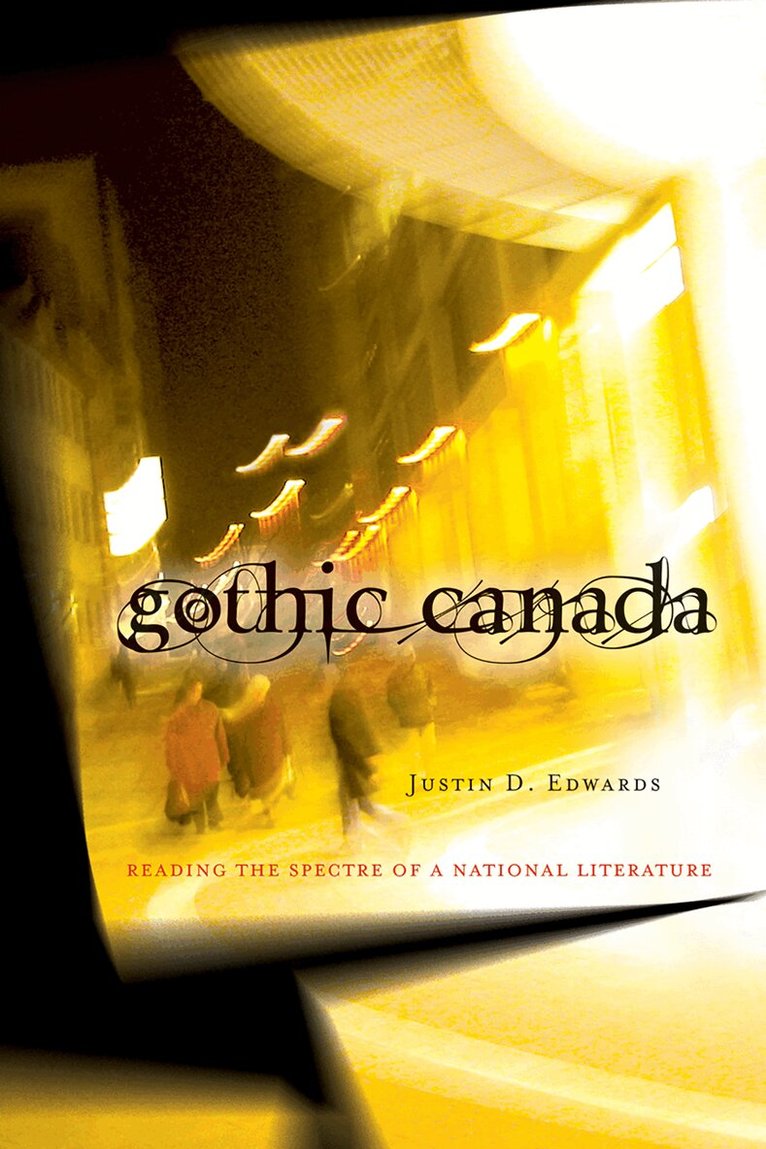
Canadians have always been obsessed with the idea of their own identities. Stories that tell us who we are provide a reassuring sense of identity for the individual and the nation. Hockey. Maple Leaves. Beavers. But collective stories tend to be haunted by a fear that a shared narrative might be nothing more than an elaborate artifice. This fear has long been a source of gothic inspiration for Canadian writers. A haunted Canadian self returns again and again. Polite. Friendly. Not American. With examples of gothic discourse from Canadian fiction, autobiography, film, poetry, and drama, Justin Edwards analyzes the ghost at the heart of the nation. A major contribution to cultural and literary studies, Gothic Canada unearths two centuries of Canadian gothic writings to reveal uncanny traditions of trauma, repression, and monstrosity.
- Nyhet
1 461 kr
Kommande
The new edition of the bestselling Grotesque offers an accessible introduction to the use (and abuse) of this complex literary term. Justin D. Edwards and Rune Graulund explore the influence of the grotesque on cultural forms throughout history, with particular focus on its representation in literature, visual art and film.The book presents a history of the literary grotesque from Classical writing to the present, examining theoretical debates around the term in their historical and cultural contexts and introduces readers to key writers, artists and film makers of the grotesque, including Homer, Rabelais, Shakespeare, Carson McCullers, David Cronenberg, Ottessa Moshfegh and Bong Joon Ho. It analyses key terms such as discord and transgression, deformed and distorted bodies, misfits and freaks, and explores the grotesque in relation to queer theory, post-colonialism and the carnivalesque. Updated and expanded throughout, the second edition reveals how grotesque is always on the move, pushing against the boundaries of shifting standards of what is and is not normal. It includes insightful new chapters on the absurd and ecocriticism. It also features fresh insight into fat studies, sophistication and the grotesque, decolonial grotesque, planetary grotesque, the New Weird and Ecogothic.This invaluable guide offers an original and distinctive overview of this vital genre. It is essential reading for students of literature, art history and film studies.
- Nyhet
342 kr
Kommande
The new edition of the bestselling Grotesque offers an accessible introduction to the use (and abuse) of this complex literary term. Justin D. Edwards and Rune Graulund explore the influence of the grotesque on cultural forms throughout history, with particular focus on its representation in literature, visual art and film.The book presents a history of the literary grotesque from Classical writing to the present, examining theoretical debates around the term in their historical and cultural contexts and introduces readers to key writers, artists and film makers of the grotesque, including Homer, Rabelais, Shakespeare, Carson McCullers, David Cronenberg, Ottessa Moshfegh and Bong Joon Ho. It analyses key terms such as discord and transgression, deformed and distorted bodies, misfits and freaks, and explores the grotesque in relation to queer theory, post-colonialism and the carnivalesque. Updated and expanded throughout, the second edition reveals how grotesque is always on the move, pushing against the boundaries of shifting standards of what is and is not normal. It includes insightful new chapters on the absurd and ecocriticism. It also features fresh insight into fat studies, sophistication and the grotesque, decolonial grotesque, planetary grotesque, the New Weird and Ecogothic.This invaluable guide offers an original and distinctive overview of this vital genre. It is essential reading for students of literature, art history and film studies.
2 479 kr
Skickas inom 10-15 vardagar
This volume, a collection with contributions from some of the major scholars of the Gothic in literature and culture, reflects on how recent Gothic studies have foregrounded a plethora of technologies associated with Gothic literary and cultural production. The engaging essays look into the links between technologies and the proliferation of the Gothic seen in an excess of Gothic texts and tropes: Frankensteinesque experiments, the manufacture of synthetic (true?) blood, Moreauesque hybrids, the power of the Borg, Dr Jekyll’s chemical experimentations, the machinery of Steampunk, or the corporeal modifications of Edward Scissorhands. Further, they explore how techno-science has contributed to the proliferation of the Gothic: Gothic in social media, digital technologies, the on-line gaming and virtual Goth/ic communities, the special effects of Gothic-horror cinema. Contributors address how Gothic technologies have, in a general sense, produced and perpetuated ideologies and influenced the politics of cultural practice, asking significant questions: How has the technology of the Gothic contributed to the writing of self and other? How have Gothic technologies been gendered, sexualized, encrypted, coded or de-coded? How has the Gothic manifested itself in new technologies across diverse geographical locations? This volume explores how Gothic technologies textualize identities and construct communities within a complex network of power relations in local, national, transnational, and global contexts. It will be of interest to scholars of the literary Gothic, extending beyond to include fascinating interventions into the areas of cultural studies, popular culture, science fiction, film, and TV.
2 633 kr
Skickas inom 10-15 vardagar
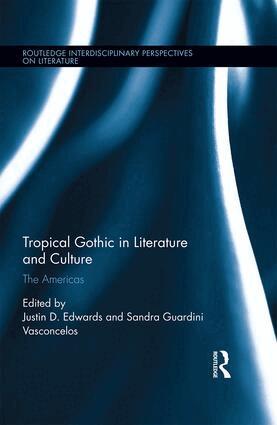
Tropical Gothic examines Gothic within a specific geographical area of ‘the South’ of the Americas. In so doing, we structure the book around geographical coordinates (from North to South) and move between various national traditions of the gothic (Mexico, Argentina, Brazil, etc) alongside regional manifestations of the Gothic (the US south and the Caribbean) as well as transnational movements of the Gothic within the Americas. The reflections on national traditions of the Gothic in this volume add to the critical body of literature on specific languages or particular nations, such as Scottish Gothic, American Gothic, Canadian Gothic, German Gothic, Kiwi Gothic, etc. This is significant because, while the Southern Gothic in the US has been thoroughly explored, there is a gap in the critical literature about the Gothic in the larger context of region of ‘the South’ in the Americas. This volume does not pretend to be a comprehensive examination of tropical Gothic in the Americas; rather, it pinpoints a variety of locations where this form of the Gothic emerges. In so doing, the transnational interventions of the Gothic in this book read the flows of Gothic forms across borders and geographical regions to tease out the complexities of Gothic cultural production within cultural and linguistic translations. Tropical Gothic includes, but is by no means limited to, a reflection on a region where European colonial powers fought intensively against indigenous populations and against each other for control of land and resources. In other cases, the vast populations of African slaves were transported, endowing these regions with a cultural inheritance that all the nations involved are still trying to comprehend. The volume reflects on how these histories influence the Gothic in this region.
1 460 kr
Skickas inom 7-10 vardagar
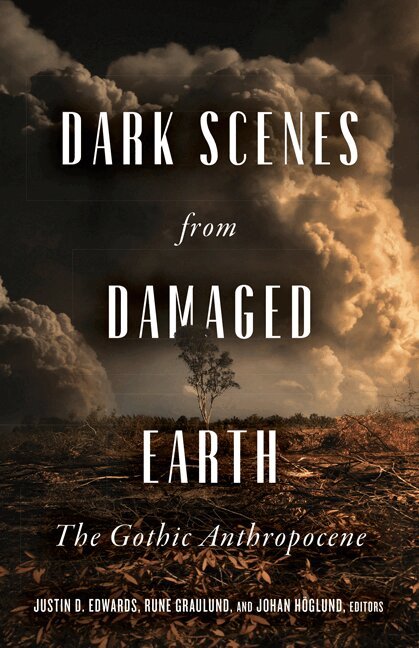
An urgent volume of essays engages the Gothic to advance important perspectives on our geological era What can the Gothic teach us about our current geological era? More than just spooky, moonlit castles and morbid graveyards, the Gothic represents a vibrant, emergent perspective on the Anthropocene. In this volume, more than a dozen scholars move beyond longstanding perspectives on the Anthropocene-such as science fiction and apocalyptic narratives-to show that the Gothic offers a unique (and dark) interpretation of events like climate change, diminished ecosystems, and mass extinction.Embracing pop cultural phenomena like True Detective, Jaws, and Twin Peaks, as well as topics from the New Weird and prehistoric shark fiction to ruin porn and the “monstroscene,” Dark Scenes from Damaged Earth demonstrates the continuing vitality of the Gothic while opening important new paths of inquiry. These essays map a genealogy of the Gothic while providing fresh perspectives on the ongoing climate chaos, the North/South divide, issues of racialization, dark ecology, questions surrounding environmental justice, and much more.Contributors: Fred Botting, Kingston U; Timothy Clark, U of Durham; Rebecca Duncan, Linnaeus U; Michael Fuchs, U of Oldenburg, Germany; Esthie Hugo, U of Warwick; Dawn Keetley, Lehigh U; Laura R. Kremmel, South Dakota School of Mines and Technology; Timothy Morton, Rice U; Barry Murnane, U of Oxford; Jennifer Schell, U of Alaska Fairbanks; Lisa M. Vetere, Monmouth U; Sara Wasson, Lancaster U; Jeffrey Andrew Weinstock, Central Michigan U.
356 kr
Skickas inom 7-10 vardagar
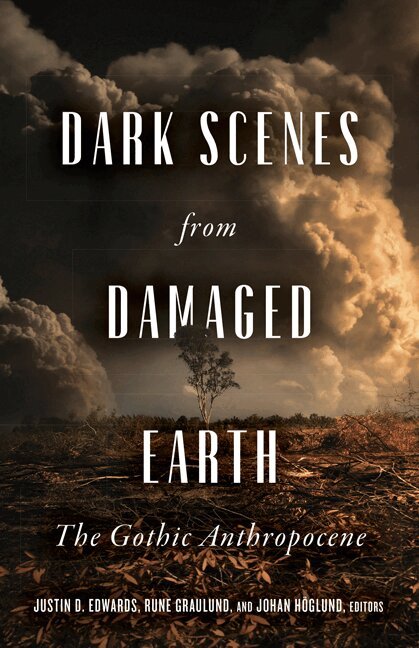
An urgent volume of essays engages the Gothic to advance important perspectives on our geological era What can the Gothic teach us about our current geological era? More than just spooky, moonlit castles and morbid graveyards, the Gothic represents a vibrant, emergent perspective on the Anthropocene. In this volume, more than a dozen scholars move beyond longstanding perspectives on the Anthropocene-such as science fiction and apocalyptic narratives-to show that the Gothic offers a unique (and dark) interpretation of events like climate change, diminished ecosystems, and mass extinction.Embracing pop cultural phenomena like True Detective, Jaws, and Twin Peaks, as well as topics from the New Weird and prehistoric shark fiction to ruin porn and the “monstroscene,” Dark Scenes from Damaged Earth demonstrates the continuing vitality of the Gothic while opening important new paths of inquiry. These essays map a genealogy of the Gothic while providing fresh perspectives on the ongoing climate chaos, the North/South divide, issues of racialization, dark ecology, questions surrounding environmental justice, and much more.Contributors: Fred Botting, Kingston U; Timothy Clark, U of Durham; Rebecca Duncan, Linnaeus U; Michael Fuchs, U of Oldenburg, Germany; Esthie Hugo, U of Warwick; Dawn Keetley, Lehigh U; Laura R. Kremmel, South Dakota School of Mines and Technology; Timothy Morton, Rice U; Barry Murnane, U of Oxford; Jennifer Schell, U of Alaska Fairbanks; Lisa M. Vetere, Monmouth U; Sara Wasson, Lancaster U; Jeffrey Andrew Weinstock, Central Michigan U.

553 kr
Skickas inom 7-10 vardagar
Understanding Jamaica Kincaid introduces readers to the prizewinning author best known for the novels ""Annie John"", ""Lucy"", and ""The Autobiography of My Mother"". Justin D. Edwards surveys Jamaica Kincaid's life, career, and major works of fiction and nonfiction to identify and discuss her recurring interests in familial relations, Caribbean culture, and the aftermath of colonialism and exploitation. In addition to examining the haunting prose, rich detail, and personal insight that have brought Kincaid widespread praise, Edwards also identifies and analyzes the novelist's primary thematic concerns - the flow of power and the injustices faced by people undergoing social, economic, and political change. Edwards chronicles Kincaid's childhood in ""Antigua"", her development as a writer, and her early journalistic work as published in the ""New Yorker"" and other magazines. In separate chapters he provides critical appraisals of Kincaid's early novels; her works of nonfiction, including ""My Brother"" and ""A Small Place""; and her more recent novels, including ""Mr. Potter"". Edwards discusses the way in which Kincaid both exposes the problems of colonization and neocolonization and warns her readers about the dire consequences of inequality in the era of globalization.
2 119 kr
Skickas inom 7-10 vardagar
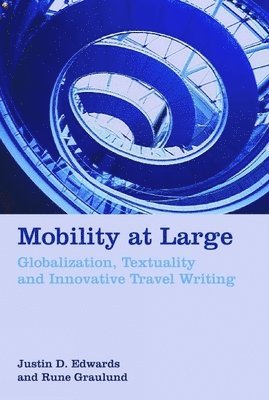
Mobility at Large explores a unique trajectory of travel writing. Instead of focussing on best-selling travel texts by Paul Theroux, Bill Bryson, Michael Palin, Alain de Botton and others, this book examines a strand of innovative contemporary travel writing wherein the authors experiment with form, content and the politics of representation. In this, innovative travel texts by a range of writers – from Michael Ondaatje and Caryl Phillips to Daphne Marlatt and Sam Miller – transform the genre by inscribing travel, migration, mobility and displacement within a variety of experimental textual strategies to work through questions of movement and the politics of personal identity in relation to the complex interlocutions of space, place and subjectivity. As a result, Mobility at Large challenges those critics who dismiss the genre as inherently conservative and inextricably bound up in a colonial, Eurocentric tradition. The book also documents a long and rich tradition of travel writing that existed well beyond the influence of Europe.