
Subcommittee on Interpretation and Uses of Dietary Reference Intakes - Böcker
Visar alla böcker från författaren Subcommittee on Interpretation and Uses of Dietary Reference Intakes. Handla med fri frakt och snabb leverans.
7 produkter
7 produkter
737 kr
Skickas
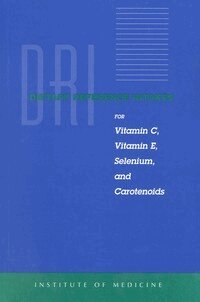
This volume is the newest release in the authoritative series of quantitative estimates of nutrient intakes to be used for planning and assessing diets for healthy people. Dietary Reference Intakes (DRIs) is the newest framework for an expanded approach developed by U.S. and Canadian scientists. This book discusses in detail the role of vitamin C, vitamin E, selenium, and the carotenoids in human physiology and health. For each nutrient the committee presents what is known about how it functions in the human body, which factors may affect how it works, and how the nutrient may be related to chronic disease. Dietary Reference Intakes provides reference intakes, such as Recommended Dietary Allowances (RDAs), for use in planning nutritionally adequate diets for different groups based on age and gender, along with a new reference intake, the Tolerable Upper Intake Level (UL), designed to assist an individual in knowing how much is "too much" of a nutrient.
Dietary Reference Intakes for Vitamin C, Vitamin E, Selenium, and Carotenoids
Inbunden, Engelska, 2000
904 kr
Tillfälligt slut
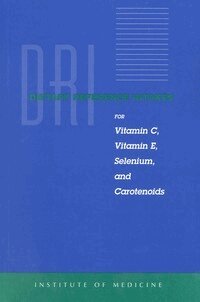
This volume is the newest release in the authoritative series of quantitative estimates of nutrient intakes to be used for planning and assessing diets for healthy people. Dietary Reference Intakes (DRIs) is the newest framework for an expanded approach developed by U.S. and Canadian scientists. This book discusses in detail the role of vitamin C, vitamin E, selenium, and the carotenoids in human physiology and health. For each nutrient the committee presents what is known about how it functions in the human body, which factors may affect how it works, and how the nutrient may be related to chronic disease. Dietary Reference Intakes provides reference intakes, such as Recommended Dietary Allowances (RDAs), for use in planning nutritionally adequate diets for different groups based on age and gender, along with a new reference intake, the Tolerable Upper Intake Level (UL), designed to assist an individual in knowing how much is "too much" of a nutrient.
545 kr
Skickas
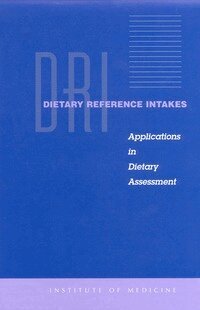
Since 1994 the Institute of Medicine's Food and Nutrition Board has been involved in developing an expanded approach to developing dietary reference standards. This approach, the Dietary Reference Intakes (DRIs), provides a set of four nutrient-based reference values designed to replace the Recommended Dietary Allowances (RDAs) in the United States and the Recommended Nutrient Intakes (RNIs) in Canada. These reference values include Estimated Average Requirement (EAR), Recommended Dietary Allowance (RDA), Adequate Intake (AI), and Tolerable Upper Intake Level (UL). To date, several volumes in this series have been published. This new book, Applications in Dietary Assessment, provides guidance to nutrition and health research professionals on the application of the new DRIs. It represents both a "how to" manual and a "why" manual. Specific examples of both appropriate and inappropriate uses of the DRIs in assessing nutrient adequacy of groups and of individuals are provided, along with detailed statistical approaches for the methods described. In addition, a clear distinction is made between assessing individuals and assessing groups as the approaches used are quite different.Applications in Dietary Assessment will be an essential companion to any-or all-of the DRI volumes.
1 192 kr
Tillfälligt slut
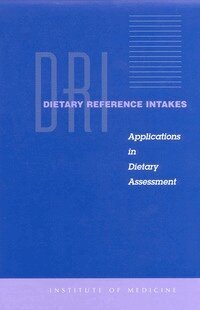
Since 1994 the Institute of Medicine's Food and Nutrition Board has been involved in developing an expanded approach to developing dietary reference standards. This approach, the Dietary Reference Intakes (DRIs), provides a set of four nutrient-based reference values designed to replace the Recommended Dietary Allowances (RDAs) in the United States and the Recommended Nutrient Intakes (RNIs) in Canada. These reference values include Estimated Average Requirement (EAR), Recommended Dietary Allowance (RDA), Adequate Intake (AI), and Tolerable Upper Intake Level (UL). To date, several volumes in this series have been published. This new book, Applications in Dietary Assessment, provides guidance to nutrition and health research professionals on the application of the new DRIs. It represents both a "how to" manual and a "why" manual. Specific examples of both appropriate and inappropriate uses of the DRIs in assessing nutrient adequacy of groups and of individuals are provided, along with detailed statistical approaches for the methods described. In addition, a clear distinction is made between assessing individuals and assessing groups as the approaches used are quite different.Applications in Dietary Assessment will be an essential companion to any-or all-of the DRI volumes.
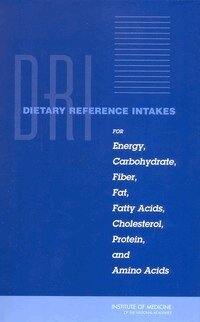
Dietary Reference Intakes for Energy, Carbohydrate, Fiber, Fat, Fatty Acids, Cholesterol, Protein, and Amino Acids
Häftad, Engelska, 2005
1 323 kr
Tillfälligt slut
Responding to the expansion of scientific knowledge about the roles of nutrients in human health, the Institute of Medicine has developed a new approach to establish Recommended Dietary Allowances (RDAs) and other nutrient reference values. The new title for these values Dietary Reference Intakes (DRIs), is the inclusive name being given to this new approach. These are quantitative estimates of nutrient intakes applicable to healthy individuals in the United States and Canada. This new book is part of a series of books presenting dietary reference values for the intakes of nutrients. It establishes recommendations for energy, carbohydrate, fiber, fat, fatty acids, cholesterol, protein, and amino acids.This book presents new approaches and findings which include the following: * The establishment of Estimated Energy Requirements at four levels of energy expenditure * Recommendations for levels of physical activity to decrease risk of chronic disease * The establishment of RDAs for dietary carbohydrate and protein * The development of the definitions of Dietary Fiber, Functional Fiber, and Total Fiber * The establishment of Adequate Intakes (AI) for Total Fiber * The establishment of AIs for linolenic and a-linolenic acids * Acceptable Macronutrient Distribution Ranges as a percent of energy intake for fat, carbohydrate, linolenic and a-linolenic acids, and protein * Research recommendations for information needed to advance understanding of macronutrient requirements and the adverse effects associated with intake of higher amounts Also detailed are recommendations for both physical activity and energy expenditure to maintain health and decrease the risk of disease.
665 kr
Skickas
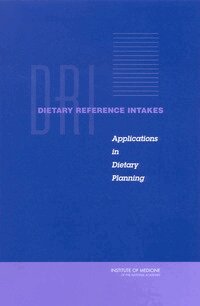
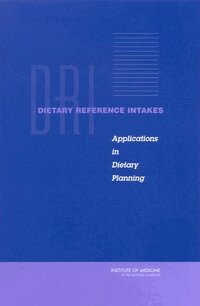
The Dietary Reference Intakes (DRIs) are quantitative estimates of nutrient intakes to be used for planning and assessing diets for apparently healthy people. This volume is the second of two reports in the DRI series aimed at providing specific guidance on the appropriate uses of the DRIs. The first report provided guidance on appropriate methods for using DRIs in dietary assessment. This volume builds on the statistical foundations of the assessment report to provide specific guidance on how to use the appropriate DRIs in planning diets for individuals and for groups. Dietary planning, whether for an individual or a group, involves developing a diet that is nutritionally adequate without being excessive. The planning goal for individuals is to achieve recommended and adequate nutrient intakes using food-based guides. For group planning, the report presents a new approach based on considering the entire distribution of usual nutrient intakes rather than focusing on the mean intake of the group. The report stresses that dietary planning using the DRIs is a cyclical activity that involves assessment, planning, implementation, and reassessment.Nutrition and public health researchers, dietitians and nutritionists responsible for the education of the next generation of practitioners, and government professionals involved in the development and implementation of national diet and health assessments, public education efforts and food assistance programs will find this volume indispensable for setting intake goals for individuals and groups.
582 kr
Tillfälligt slut
The Dietary Reference Intakes (DRIs) are quantitative estimates of nutrient intakes to be used for planning and assessing diets for apparently healthy people. This volume is the second of two reports in the DRI series aimed at providing specific guidance on the appropriate uses of the DRIs. The first report provided guidance on appropriate methods for using DRIs in dietary assessment. This volume builds on the statistical foundations of the assessment report to provide specific guidance on how to use the appropriate DRIs in planning diets for individuals and for groups. Dietary planning, whether for an individual or a group, involves developing a diet that is nutritionally adequate without being excessive. The planning goal for individuals is to achieve recommended and adequate nutrient intakes using food-based guides. For group planning, the report presents a new approach based on considering the entire distribution of usual nutrient intakes rather than focusing on the mean intake of the group. The report stresses that dietary planning using the DRIs is a cyclical activity that involves assessment, planning, implementation, and reassessment.Nutrition and public health researchers, dietitians and nutritionists responsible for the education of the next generation of practitioners, and government professionals involved in the development and implementation of national diet and health assessments, public education efforts and food assistance programs will find this volume indispensable for setting intake goals for individuals and groups.