
Oxford Portraits in Science - Böcker
Visar alla böcker i serien Oxford Portraits in Science. Handla med fri frakt och snabb leverans.
5 produkter
5 produkter
398 kr
Skickas inom 5-8 vardagar
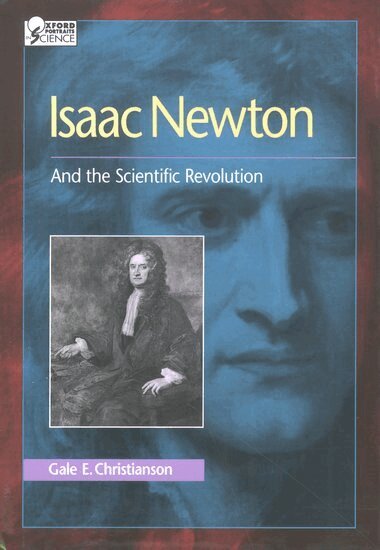
In 1665, when an epidemic of the plague forced Cambridge University to close, Isaac Newton, then a young, undistinguished scholar, returned to his childhood home in rural England. Away from his colleagues and professors, Newton embarked on one of the greatest intellectual odysseys in the history of science: he began to formulate the law of universal gravitation, developed the calculus, and made revolutionary discoveries about the nature of light. After his return to Cambridge, Newton's genius was quickly recognized and his reputation forever established. This biography also allows us to see the personal side of Newton, whose life away from science was equally fascinating. Quarrelsome, quirky, and not above using his position to silence critics and further his own career, he was an authentic genius with all too human faults.Oxford Portraits in Science is an on-going series of scientific biographies for young adults. Written by top scholars and writers, each biography examines the personality of its subject as well as the thought process leading to his or her discoveries. These illustrated biographies combine accessible technical information with compelling personal stories to portray the scientists whose work has shaped our understanding of the natural world.
423 kr
Skickas inom 5-8 vardagar
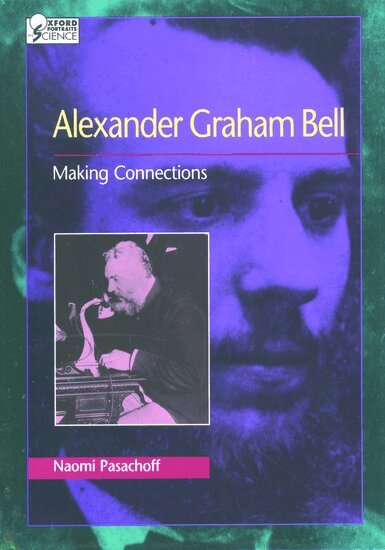
Alexander Graham Bell forever changed the world. The telephone and his many other landmark inventions rank among the most transforming and enduring of the modern era. But it was his work with the deaf, teaching as well as inventing tools to ease communication, that he considered his life's work. The son of a speech therapist father and hearing impaired mother, his stellar achievements in sound reproduction and aviation give proof that he fit his own definition of an inventor. He said, "An inventor a man who looks upon the world and is not contented with things as they are. He wants to improve whatever he sees, he wants to benefit the world." This is a compelling biography of a true scientific visionary.Oxford Portraits in Science is an on-going series of scientific biographies for young adults. Written by top scholars and writers, each biography examines the personality of its subject as well as the thought process leading to his or her discoveries. These illustrated biographies combine accessible technical information with compelling personal stories to portray the scientists whose work has shaped our understanding of the natural world.
180 kr
Skickas inom 5-8 vardagar
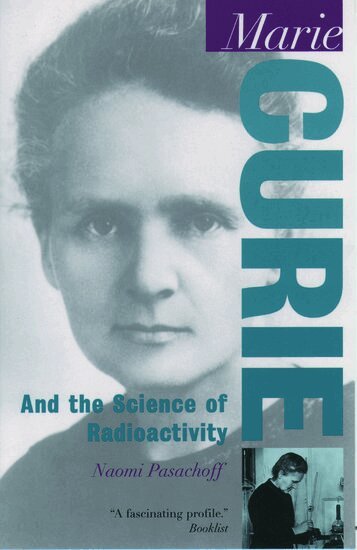
Marie Curie discovered radium and went on to lead the scientific community in studying the theory behind and the uses of radioactivity. She left a vast legacy to future scientists through her research, her teaching, and her contributions to the welfare of humankind. She was the first person to win two Nobel Prizes, yet upon her death in 1934, Albert Einstein was moved to say, "Marie Curie is, of all celebrated beings, the only one whom fame has not corrupted." She was a physicist, a wife and mother, and a groundbreaking professional woman. This biography is an inspirational and exciting story of scientific discovery and personal commitment.
412 kr
Skickas inom 7-10 vardagar
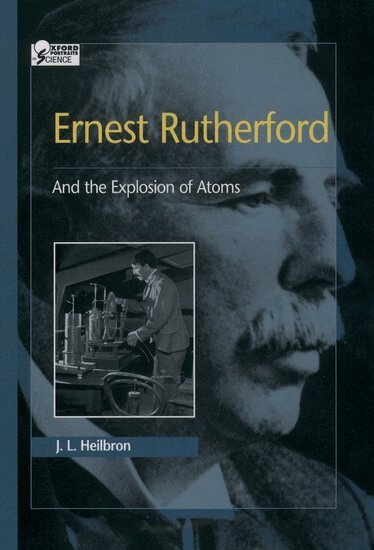
An engaging biography that captures the excitement of the early days of nuclear physics, Ernest Rutherford tells the story of the down-to-earth New Zealander who became one of the foremost pioneers of subatomic physics. Rutherford's achievements were numerous and included:* Inventing a detector for electromagnetic waves* Discovering the existence of alpha and beta rays in uranium radiation* Creating (with Frederick Soddy) the "disintegration theory" of radioactivity, which regards radioactive phenomena as atomic -- not molecular -- processes * Demonstrating that the inner structures of elements correspond with a group of lines that characterize them, which could then be assigned an atomic number and, more important, the properties of each element could be defined by this number * And his greatest contribution of all - he discovered that the atom had a nucleus and that it contained the positively charged proton From his early days as a scholarship student to the end of his life as he continued to work in his lab, Ernest Rutherford reveals the life and times of one of the greatest minds of the twentieth century.Oxford Portraits in Science is an on-going series of scientific biographies for young adults. Written by top scholars and writers, each biography examines the personality of its subject as well as the thought process leading to his or her discoveries. These illustrated biographies combine accessible technical information with compelling personal stories to portray the scientists whose work has shaped our understanding of the natural world.
345 kr
Skickas inom 5-8 vardagar
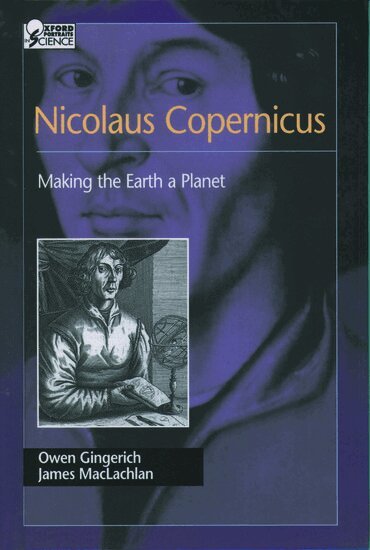
Born in Poland in 1473, Nicolaus Copernicus launched a quiet revolution. No scientist so radically transformed our understanding of our place in the universe as this curious bishop's doctor and church official. In his quest to discover a beautiful and coherent system to describe the motions of the planets, Copernicus placed the sun in the center of the system and made the earth a planet traveling around the sun. Today it is hard to imagine our solar system any other way, but for his time Copernicus's idea was earthshaking. In 1616 the church banned his book Revolutions because it contradicted the accepted notion that God placed Earth in the center of the universe. Even though those who knew of his work considered his idea dangerous, Revolutions remained of interest only to other scientists for many years. It took almost two hundred years for his concept of a sun-centered system to reach the general public. None the less, what Copernicus set out in his remarkable text truly revolutionized science. For this, Copernicus, a quiet doctor who made a tremendous leap of imagination, is considered the father of the Scientific Revolution.