
Woodhead Publishing Series in Civil and Structural Engineering - Böcker
2 325 kr
Skickas inom 7-10 vardagar
Since 1930 more than 100,000 new chemical compounds have been developed and insufficient information exists on the health assessment of 95 percent of these chemicals in which a relevant percentage are used in construction products. For instance Portland cement concrete, the most used material on the Planet (10.000 million tons/year that in the next 40 years will increase around 100 %) currently used in around 15% of total concrete production contains chemicals used to modify their properties, either in the fresh or hardened state.
Biopolymers are materials that are developed from natural resources. They reduce dependence on fossil fuels and reduce carbon dioxide emissions. There is a worldwide demand to replace petroleum-based materials with renewable resources.
Currently bio-admixtures represent just a small fraction of the chemical admixtures market (around 20%) but with environmental awareness for constituents in construction materials generally growing (the Construction Products Regulation is being enforced in Europe since 2013), the trend towards bio-admixtures is expected to continue.
This book provides an updated state-of-the-art review on biopolymers and their influence and use as admixtures in the development of eco-efficient construction materials.
Provides essential knowledge for researchers and producers working on the development of biopolymer-modified construction materials Discusses the various types of biopolymers currently available, their different production techniques, their use as bio-admixtures in concretes and mortars and applications in other areas of civil engineering such as soil stability, wood preservation, adhesives and coatings All contributions are made from leading researchers, who have intensive involvement in the design and use of biopolymers in construction materials
2 117 kr
Skickas inom 7-10 vardagar
The urgent need for infrastructure rehabilitation and maintenance has led to a rise in the levels of research into bituminous materials. Breakthroughs in sustainable and environmentally friendly bituminous materials are certain to have a significant impact on national economies and energy sustainability. This book will provide a comprehensive review on recent advances in research and technological developments in bituminous materials.
Opening with an introductory chapter on asphalt materials and a section on the perspective of bituminous binder specifications, Part One covers the physiochemical characterisation and analysis of asphalt materials. Part Two reviews the range of distress (damage) mechanisms in asphalt materials, with chapters covering cracking, deformation, fatigue cracking and healing of asphalt mixtures, as well as moisture damage and the multiscale oxidative aging modelling approach for asphalt concrete. The final section of this book investigates alternative asphalt materials. Chapters within this section review such aspects as alternative binders for asphalt pavements such as bio binders and RAP, paving with asphalt emulsions and aggregate grading optimization.
Provides an insight into advances and techniques for bituminous materials Comprehensively reviews the physicochemical characteristics of bituminous materials Investigate asphalt materials on the nano-scale, including how RAP/RAS materials can be recycled and how asphalt materials can self-heal and rejuvenator selection
Materials for a Healthy, Ecological and Sustainable Built Environment
Principles for Evaluation
1 837 kr
Skickas inom 7-10 vardagar
Principles for Evaluating Building Materials in Sustainable Construction: Healthy and Sustainable Materials for the Built Environment provides a comprehensive overview of the issues associated with the selection of materials for sustainable construction, proposing a holistic and integrated approach.
The book evaluates the issues involved in choosing materials from an ecosystem services perspective, from the design stage to the impact of materials on the health of building users.
The three main sections of the book discuss building materials in relation to ecosystem services, the implications of materials choice at the design stage, and the impact of materials on building users and their health. The final section focuses on specific case studies that illustrate the richness of solutions that existed before the rise of contemporary construction and that are consistent with a sustainable approach to creating built environments. These are followed by modern examples which apply some, if not all, of the principles discussed in the first three sections of the book.
Provides a holistic and integrated approach to the issues associated with the selection of materials for sustainable construction Provides a thorough understanding of ecosystem services based on ecology research for built environment design Provides an original review of the impact of materials on human health Provides case studies to illustrate the points above
Nonconventional and Vernacular Construction Materials
Characterisation, Properties and Applications
2 251 kr
Skickas inom 7-10 vardagar
Nonconventional and Vernacular Construction Materials: Characterisation, Properties and Applications provides a comprehensive repository of information on materials science and the modern structural engineering application of ancient, vernacular, and nonconventional building materials, with leading experts contributing chapters that focus on current applications and the engineering of these construction materials.
Opening with a historic retrospective of nonconventional materials, Part One includes a review of vernacular construction and a discussion of the future directions for nonconventional and vernacular materials research and applications. Chapters in Part Two focus on natural fibers, including their application in cementitious composites, non-cementitious composites, and strawbale construction. In Part Three, chapters cover the use of industrial by-products and natural ashes in cement mortar and concrete, and construction using soil-cement blocks, clay-based materials, adobe and earthen materials, and ancient stone masonry. Timber, bamboo, and paper construction materials are investigated in the final section of the book.
Provides a state-of-the-art review of the modern use and engineering of nonconventional building materials Contains chapters that focus on individual construction materials and address both material characterization and structural applications Covers sustainable engineering and the trend towards engineering for humanity
2 331 kr
Skickas inom 7-10 vardagar
Performance of Bio-based Building Materials provides guidance on the use of bio-based building materials (BBBM) with respect to their performance. The book focuses on BBBM currently present on the European market. The state-of-the-art is presented regarding material properties, recommended uses, performance expectancies, testing methodology, and related standards.
Chapters cover both 'old and traditional' BBBM since quite a few of them are experiencing a comeback on the market. Promising developments that could become commercial in the near future are presented as well.
The book will be a valuable reference resource for those working in the bio-based materials research community, architects and agencies dealing with sustainable construction, and graduate students in civil engineering.
Takes a unique approach to bio-based materials and presents a broad overview of the topics on relevant areas necessary for application and promotion in construction Contains a general description, notable properties related to performance, and applications Presents standards that are structured according to performance types
1 837 kr
Skickas inom 7-10 vardagar
This book is the fourth, in the series of five, on sustainable construction materials and like the previous three, it is also different to the norm. Its uniqueness lies in using the newly developed, Analytical Systemisation Method, in building the data-matrix sourced from 751 publications, contributed by 1402 authors from 513 institutions in 51 countries, from 1970 to 2017, on the subject of processed waste glass (glass cullet) as a construction material, and systematically analysing, evaluating and modelling this information for use of glass cullet as cement, aggregate or filler in concrete, ceramics, geotechnics and road pavement applications. Environmental issues, case studies and standards are also discussed. The work establishes what is already known and can be used to further progress the use of sustainable construction materials. It can also help to avoid repetitive research and save valuable resources. The book is structured in an incisive and easy to digest manner and is particularly suited for researchers, academics, design engineers, specifiers, contractors, and government bodies dealing with construction works.
Provides an extensive source of valuable database information, supported by an exhaustive list of globally-based published literature over the last 40-50 years Offer an analysis, evaluation, repackaging and modeling of existing knowledge on sustainable construction practices Provides a wealth of knowledge for use in many sectors relating to the construction profession
2 020 kr
Skickas inom 7-10 vardagar
Sustainable Construction Materials: Recycled Aggregate focuses on the massive systematic need that is necessary to encourage the uptake of recycled and secondary materials (RSM) in the construction industry. This book is the fifth and the last of the series on sustainable construction materials and like the previous four, it is also different to the norm. Its uniqueness lies in using the newly developed, Analytical Systemisation Method, in building the data-matrix sourced from 1413 publications, contributed by 2213 authors from 965 institutions in 67 countries, from 1977 to 2018, on the subject of recycled aggregate as a construction material, and systematically analysing, evaluating and modelling this information for use of the material as an aggregate concrete and mortar, geotechnics and road pavement applications. Environmental issues, case studies and standards are also discussed. The work establishes what is already known and can be used to further progress the use of sustainable construction materials. It can also help to avoid repetitive research and save valuable resources. The book is structured in an incisive and easy to digest manner and is particularly suited for researchers, academics, design engineers, specifiers, contractors, and government bodies dealing with construction works.
Provides an exhaustive and comprehensively organized list of globally-based published literature spanning 5000 references Offers an analysis, evaluation, repackaging and modeling of existing knowledge that encourages more responsible use of waste materials Provides a wealth of knowledge for use in many sectors relating to the construction profession, including academia, research, practice and adoption of RSM
1 741 kr
Skickas inom 7-10 vardagar
Sustainable Construction Materials: Copper Slag, as part of a series of five, the book aims to promote the use of sustainable construction materials. It is different to the norm and its uniqueness lies in developing a data matrix sourced from 400 publications, contributed by 712 authors from 337 institutions in 40 countries from 1964 to 2015, on the subject of copper slag as a construction material, and systematically, analysisng, evaluating and modelling this information for use in cement, concrete, geotechnics and road pavement applications. Related environmental issues, case studies and standards are also discussed. The work establishes what is already known and can be used. It would also help to avoid repetitive research and save valuable resources, which can instead be directed towards new research to progress the use of sustainable construction materials.
The book is structured in an incisive and easy to digest manner. As an excellent reference source, the book is particularly suited for researchers, academics, design engineers, specifiers, contractors, developers and certifying and regulatory authorities, seeking to promote sustainability within the construction sector.
Provides an extensive source of valuable database information supported by an exhaustive and comprehensively organized list of globally published literature spanning 40-50 years, up to 2016, with over 400 references Offers an analysis, evaluation, repackaging, and modeling of existing knowledge, encouraging more responsible use of waste materials in construction Presents a wealth of knowledge for use in many sectors relating to the construction profession
1 568 kr
Skickas inom 7-10 vardagar
Sustainable Construction Materials: Sewage Sludge Ash, part of a series of five, aims to promote the use of sustainable construction materials. It is different from the norm, with its uniqueness lying in the development of a data matrix sourced from over 600 publications and contributed by 1107 authors from 442 institutions in 48 countries from 1970 to 2016, all focusing on the subject of sewage sludge ash as a construction material, and systematically analyzing, evaluating, and modeling the information for use in cement, concrete, ceramics, geotechnics, and road pavement applications.
Related environmental issues, case studies, and standards are also discussed. The book helps users avoid repetitive research and save valuable resources, giving them more latitude to explore new research to progress the use of sustainable construction materials. It is structured in an incisive and easy to digest manner.
As an excellent reference source, the book is particularly suited for researchers, academics, design engineers, specifiers, contractors, developers, and certifying and regulatory authorities who seek to promote sustainability within the construction sector.
Provides an extensive source of valuable database information supported by an exhaustive and comprehensively organized list of globally published literature spanning 40-50 years, up to 2016, with 5000 references Offers an analysis, evaluation, repackaging, and modeling of existing knowledge, encouraging more responsible use of waste materials in construction Presents a wealth of knowledge for use in many sectors relating to the construction profession
2 691 kr
Skickas inom 7-10 vardagar
Sustainability of Construction Materials, Second Edition, explores an increasingly important aspect of construction. In recent years, serious consideration has been given to environmental and societal issues in the manufacturing, use, disposal, and recycling of construction materials.
This book provides comprehensive and detailed analysis of the sustainability issues associated with these materials, mainly in relation to the constituent materials, processing, recycling, and lifecycle environmental impacts.
The contents of each chapter reflect the individual aspects of the material that affect sustainability, such as the preservation and repair of timber, the use of cement replacements in concrete, the prevention and control of metal corrosion and the crucial role of adhesives in wood products.
Provides helpful guidance on lifecycle assessment, durability, recycling, and the engineering properties of construction materials Fully updated to take on new developments, with an additional nineteen chapters added to include natural stone, polymers and plastics, and plaster products Provides essential reading for individuals at all levels who are involved in the construction and selection, assessment and use, and maintenance of materials
2 203 kr
Skickas inom 7-10 vardagar
Sustainable Construction Materials: Municipal Incinerated Bottom Ash discusses the global use of virgin aggregates and CO2 polluter Portland cement. Given the global sustainability agenda, much of the demand for these two sets of materials can be substantially reduced through the appropriate use of waste materials, thereby conserving natural resources, energy and CO2 emissions. Realistically, this change can only be realized and sustained through engineering ingenuity and new concepts in design. Although a great deal of research has been published over the last 50 years, it remains fragmented and ineffective. This book develops a single global knowledge-base, encouraging greater use of selected waste streams. The focus of massive systematic reviews is to encourage the uptake of recycled secondary materials (RSM) by the construction industry and guide researchers to recognize what is already known regarding waste.
Provides an extensive source of valuable database information, supported by an exhaustive list of globally-based published literature over the last 40-50 years Offer an analysis, evaluation, repackaging and modeling of existing knowledge on sustainable construction practices Provides a wealth of knowledge for use in many sectors relating to the construction profession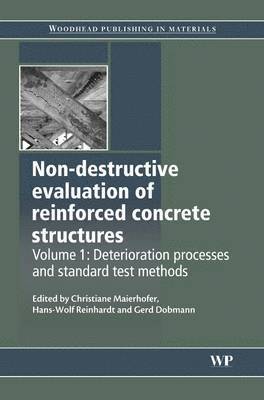
Non-Destructive Evaluation of Reinforced Concrete Structures
Deterioration Processes and Standard Test Methods
1 861 kr
Skickas inom 7-10 vardagar
1 715 kr
Skickas inom 7-10 vardagar
2 017 kr
Skickas inom 7-10 vardagar
1 776 kr
Skickas inom 7-10 vardagar
1 898 kr
Skickas inom 7-10 vardagar
1 898 kr
Skickas inom 7-10 vardagar
1 806 kr
Skickas inom 7-10 vardagar
Long-term Performance and Durability of Masonry Structures
Degradation Mechanisms, Health Monitoring and Service Life Design
2 752 kr
Skickas inom 7-10 vardagar
Long-Term Performance and Durability of Masonry Structures: Degradation Mechanisms, Health Monitoring and Service Life Design focuses on the long-term performance of masonry and historical structures. The book covers a wide range of related topics, including degradation mechanisms in different masonry types, structural health monitoring techniques, and long-term performance and service life design approaches. Each chapter reflects recent findings and the state-of-the-art, providing practical guidelines. Key topics covered include the theoretical background, transport properties, testing and modeling, protective measures and standards and codes. The book's focus is on individual construction materials, the composite system and structural performance.
Covers all issues related to durability, including degradation mechanisms, testing and design, monitoring and service life design Focuses on different masonry construction types Presents a 'one-stop' reference for advanced postgraduate courses that focuses on the durability of masonry and historical constructions
Waste and Supplementary Cementitious Materials in Concrete
Characterisation, Properties and Applications
2 812 kr
Skickas inom 7-10 vardagar
Waste and Supplementary Cementitious Materials in Concrete: Characterisation, Properties and Applications provides a state-of-the-art review of the effective and efficient use of these materials in construction. Chapters focus on a specific type of material, addressing their characterization, strength, durability and structural applications. Sections include discussions of the properties of materials, including their physical, chemical and characterization, their strength and durability, modern engineering applications, case studies, the state of codes and standards of implementation, cost considerations, and the role of materials in green and sustainable construction. The book concludes with a discussion of research needs.
Focuses on material properties and applications (as well as 'sustainability' aspects) of cementitious materials Assembles leading researchers from diverse areas of study Ideas for use as a 'one stop' reference for advanced postgraduate courses focusing on sustainable construction materials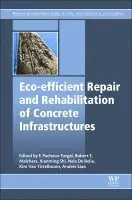
2 896 kr
Skickas inom 7-10 vardagar
Eco-efficient Repair and Rehabilitation of Concrete Infrastructures provides an updated state-of-the-art review on eco-efficient repair and rehabilitation of concrete infrastructure. The first section focuses on deterioration assessment methods, and includes chapters on stress wave assessment, ground-penetrating radar, monitoring of corrosion, SHM using acoustic emission and optical fiber sensors. Other sections discuss the development and application of several new innovative repair and rehabilitation materials, including geopolymer concrete, sulfoaluminate cement-based concrete, engineered cementitious composites (ECC) based concrete, bacteria-based concrete, concrete with encapsulated polyurethane, and concrete with super absorbent polymer (SAPs), amongst other topics.
Final sections focus on crucial design aspects, such as quality control, including lifecycle and cost analysis with several related case studies on repair and rehabilitation. The book will be an essential reference resource for materials scientists, civil and structural engineers, architects, structural designers and contractors working in the construction industry.
Delivers the latest research findings with contributions from leading international experts Provides fully updated information on the European standard on materials for concrete repair (EN 1504) Includes an entire sections on the state-of-the-art in NDT, innovative repair and rehabilitation materials, as well as LCC and LCA information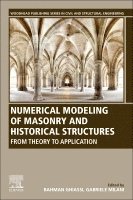
Numerical Modeling of Masonry and Historical Structures
From Theory to Application
3 210 kr
Skickas inom 7-10 vardagar
Numerical Modeling of Masonry and Historical Structures: From Theory to Application provides detailed information on the theoretical background and practical guidelines for numerical modeling of unreinforced and reinforced (strengthened) masonry and historical structures. The book consists of four main sections, covering seismic vulnerability analysis of masonry and historical structures, numerical modeling of unreinforced masonry, numerical modeling of FRP-strengthened masonry, and numerical modeling of TRM-strengthened masonry. Each section reflects the theoretical background and current state-of-the art, providing practical guidelines for simulations and the use of input parameters.
Covers important issues relating to advanced methodologies for the seismic vulnerability assessment of masonry and historical structures Focuses on modeling techniques used for the nonlinear analysis of unreinforced masonry and strengthened masonry structures Follows a theory to practice approach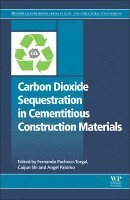
2 582 kr
Skickas inom 7-10 vardagar
Carbon Dioxide Sequestration in Cementitious Construction Materials provides an updated, state-of-the-art review on the development of cementitious construction materials based on carbon dioxide storage, which will have a major eco-efficient and economic benefit for the construction industry. Key chapters include methods for the assessment of carbon dioxide absorbed by cementitious materials, air and water-based carbon dioxide storage, carbon dioxide storage modeling, carbonation mechanisms, carbon dioxide storage on recycled aggregates, calcium, sodium and magnesium- based binders, properties and the durability of carbon dioxide based concrete.
Promotes the importance of CO2 storage in carbonation of these materials, especially reincorporation of CO2 during fabrication Discusses a wide range of cementitious materials with CO2 storage capabilities Features redesign of cementation mechanisms to utilize CO2 during fabrication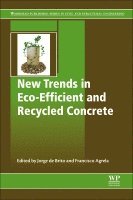
2 812 kr
Skickas inom 7-10 vardagar
New Trends in Eco-efficient and Recycled Concrete describes different recycled materials that have been used in eco-efficient concrete, reviewing previous publications to identify the most effective recycled materials to be applied in concrete manufacture. New trends on eco-efficient concrete are presented, filling a gap in the market. Sections cover various recycled materials applied in concrete production, present the latest on the lifecycle analysis of recycled aggregate concrete, detail new trends in recycled aggregate concrete research, and finally, present updates on upscaling the use of recycled aggregate concrete and structural reliability.
Focuses on new trends in recycled aggregate concrete and its applications (rather than the more subjective 'sustainability' aspects) Contains very important contributions from researchers in eco-efficient concrete, including Chi Sun Poon, Jorge de Brito, Valeria Corinaldesi, Francisco Agrela, etc. Presents a 'one stop' reference for a graduate course on sustainable construction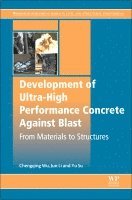
Development of Ultra-High Performance Concrete against Blasts
From Materials to Structures
2 143 kr
Skickas inom 7-10 vardagar
Development of Ultra-High Performance Concrete against Blasts: From Materials to Structures presents a detailed overview of UHPC development and its related applications in an era of rising terrorism around the world. Chapters present case studies on the novel development of the new generation of UHPC with nano additives. Field blast test results on reinforced concrete columns made with UHPC and UHPC filled double-skin tubes columns are also presented and compiled, as is the residual load-carrying capacities of blast-damaged structural members and the exceptional performance of novel UHPC materials that illustrate its potential in protective structural design.
As a notable representative, ultra-high performance concrete (UHPC) has now been widely investigated by government agencies and universities. UHPC inherits many positive aspects of ultra-high strength concrete (UHSC) and is equipped with improved ductility as a result of fiber addition. These features make it an ideal construction material for bridge decks, storage halls, thin-wall shell structures, and other infrastructure because of its protective properties against seismic, impact and blast loads.
Focuses on the principles behind UHPC production, properties, design and detailing aspects Presents a series of case studies and filed blast tests on columns and slabs Focuses on applications and future developments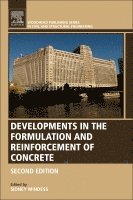
2 896 kr
Skickas inom 7-10 vardagar
Developments in the Formulation and Reinforcement of Concrete, Second Edition, presents the latest developments on topics covered in the first edition. In addition, it includes new chapters on supplementary cementitious materials, mass concrete, the sustainably of concrete, service life prediction, limestone cements, the corrosion of steel in concrete, alkali-aggregate reactions, and concrete as a multiscale material. The book's chapters introduce the reader to some of the most important issues facing today's concrete industry. With its distinguished editor and international team of contributors, users will find this to be a must-have reference for civil and structural engineers.
Summarizes a wealth of recent research on structural concrete, including material microstructure, concrete types, and variation and construction techniques Emphasizes concrete mixture design and applications in civil and structural engineering Reviews modern concrete materials and novel construction systems, such as the precast industry and structures requiring high-performance concrete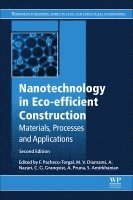
Nanotechnology in Eco-efficient Construction
Materials, Processes and Applications
3 300 kr
Skickas inom 7-10 vardagar
Covering the latest technologies, Nanotechnology in eco-efficient construction provides an authoritative guide to the role of nanotechnology in the development of eco-efficient construction materials and sustainable construction. The book contains a special focus on applications concerning concrete and cement, as nanotechnology is driving significant development in concrete technologies. The new edition has 14 new chapters, including 3 new parts: Mortars and concrete related applications; Applications for pavements and other structural materials; and Toxicity, safety handling and environmental impacts.
Civil engineers requiring an understanding of eco-efficient construction materials, as well as researchers and architects within any field of nanotechnology, eco-efficient materials or the construction industry will find this updated reference to be highly valuable.
Addresses issues such as toxicity and LCA aspects New chapters covering safety handling on occupational exposure of nanoparticles and the assessment of personal exposure to airborne nanomaterials Discusses the effects of adding nano-particles on the durability and on the properties of geopolymers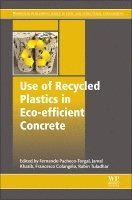
2 812 kr
Skickas inom 7-10 vardagar
Use of Recycled Plastics in Eco-efficient Concrete looks at the processing of plastic waste, including techniques for separation, the production of plastic aggregates, the production of concrete with recycled plastic as an aggregate or binder, the fresh properties of concrete with plastic aggregates, the shrinkage of concrete with plastic aggregates, the mechanical properties of concrete with plastic aggregates, toughness of concrete with plastic aggregates, modulus of elasticity of concrete with plastic aggregates, durability of concrete with plastic aggregates, concrete plastic waste powder with enhanced neutron radiation shielding, and more, thus making it a valuable reference for academics and industrial researchers.
Describes the main types of recycled plastics that can be applied in concrete manufacturing Presents, for the first time, state-of-the art knowledge on the properties of conventional concrete with recycled plastics Discusses the technological challenges for concrete manufactures for mass production of recycled concrete from plastic waste
Sensor Technologies for Civil Infrastructures
Volume 1: Sensing Hardware and Data Collection Methods for Performance Assessment
2 812 kr
Skickas inom 7-10 vardagar
Sensor Technologies for Civil Infrastructure, Volume 1: Sensing Hardware and Data Collection Methods for Performance Assessment, Second Edition, provides an overview of sensor hardware and its use in data collection. The first chapters provide an introduction to sensing for structural performance assessment and health monitoring, and an overview of commonly used sensors and their data acquisition systems. Further chapters address different types of sensor including piezoelectric transducers, fiber optic sensors, acoustic emission sensors, and electromagnetic sensors, and the use of these sensors for assessing and monitoring civil infrastructures. The new edition now includes chapters on machine learning methods and reliability analysis for structural health monitoring. All chapters have been revised to include the latest advances in materials (such as piezoelectric and mechanoluminescent materials), technologies (such as LIDAR), and applications.
Describes sensing hardware and data collection, covering a variety of sensors including LIDAR Examines fiber optic systems, acoustic emission, piezoelectric sensors, electromagnetic sensors, terahertz technologies, ultrasonic methods, and radar and millimeter wave technology Covers strain gauges, micro-electro-mechanical systems (MEMS), multifunctional materials and nanotechnology for sensing, and vision-based sensing and lasers Includes new chapters on machine learning methods and reliability analysis
Nonconventional and Vernacular Construction Materials
Characterisation, Properties and Applications
3 117 kr
Skickas inom 7-10 vardagar
Nonconventional and Vernacular Construction Materials: Characterisation, Properties and Applications, Second Edition covers the topic by taking into account sustainability, the conservation movement, and current interests in cultural identity and its preservation. This updated edition presents case studies, information on relevant codes and regulations, and how they apply (or do not apply) to nocmats. Leading international experts contribute chapters on current applications and the engineering of these construction materials. Sections review vernacular construction, provide future directions for nonconventional and vernacular materials research, focus on natural fibers, and cover the use of industrial byproducts and natural ashes in cement mortar and concrete.
Takes a scientifically rigorous approach to vernacular and non-conventional building materials and their applications Includes a series of case studies and new material on codes and regulations, thus providing an invaluable compendium of practical knowhow Presents the wider context of materials science and its applications in the sustainability agenda