Hans-Wolf Reinhardt - Böcker
Visar alla böcker från författaren Hans-Wolf Reinhardt. Handla med fri frakt och snabb leverans.
6 produkter
6 produkter
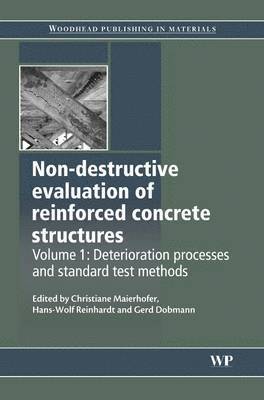
Non-Destructive Evaluation of Reinforced Concrete Structures
Deterioration Processes and Standard Test Methods
Häftad, Engelska, 2016
1 861 kr
Skickas inom 7-10 vardagar
Many concrete structures and elements of concrete infrastructure have exceeded their original design lives and are deteriorating to an extent where they are becoming dangerous. The deterioration can be internal or not obvious and therefore only shows up with detailed testing. Non-destructive evaluation of reinforced concrete structures, Volume 1: Deterioration processes and standard test methods reviews the processes of deterioration and classical and standard test methods.Part one discusses deterioration of reinforced concrete and testing problems with chapters on topics such as key issues in the non-destructive testing of concrete structures, when to use non-destructive testing of reinforced concrete structures, deterioration processes in reinforced concrete, modelling ageing and corrosion processes in reinforced concrete structures, components in concrete and their impact on quality, and predicting the service life of reinforced concrete structures. Part two reviews classical and standard testing methods including microscopic examination of deteriorated concrete, the analysis of solid components and their ratios in reinforced concrete structures, the determination of chlorides in concrete structures, and investigating the original water content of reinforced concrete structures.With its distinguished editors and international team of contributors, Non-destructive evaluation of reinforced concrete structures, Volume 1: Deterioration processes and standard test methods will be a standard reference for civil and structural engineers as well as those concerned with making decisions regarding the safety of reinforced concrete structures.Provides a comprehensive discussion from examination of the components in concrete and their affect on quality through to the role of and tools required for lifetime managementExperts in the field identify the testing problems associated with infrastructure considering design, build and maintenance stagesPresents a guide for when to use non-destructive testing of reinforced concrete structures including the role of time in testing
4 959 kr
Tillfälligt slut
Volume 1: Deterioration processes and standard test methods reviews the processes of deterioration and classical and standard test methods.Part one discusses deterioration of reinforced concrete and testing problems with chapters on topics such as key issues in the non-destructive testing of concrete structures, when to use non-destructive testing of reinforced concrete structures, deterioration processes in reinforced concrete, modelling ageing and corrosion processes in reinforced concrete structures, components in concrete and their impact on quality, and predicting the service life of reinforced concrete structures. Part two reviews classical and standard testing methods including microscopic examination of deteriorated concrete, the analysis of solid components and their ratios in reinforced concrete structures, the determination of chlorides in concrete structures, and investigating the original water content of reinforced concrete structures.Volume 2: Non-destructive testing methods reviews the latest non-destructive testing techniques for reinforced concrete structures and how they are used.Part one discusses planning and implementing non-destructive testing of reinforced concrete structures with chapters on non-destructive testing methods for building diagnosis, development of automated NDE systems, structural health monitoring systems and data fusion. Part two reviews individual non-destructive testing techniques including wireless monitoring, electromagnetic and acoustic-elastic waves, laser-induced breakdown spectroscopy, acoustic emission evaluation, magnetic flux leakage, electrical resistivity, capacimetry, measuring the corrosion rate (polarization resistance) and the corrosion potential of reinforced concrete structures, ground penetrating radar, radar tomography, active thermography, nuclear magnetic resonance imaging, stress wave propagation, impact-echo, surface and guided wave techniques and ultrasonics. Part three covers case studies including inspection of concrete retaining walls using ground penetrating radar, acoustic emission and impact echo techniques and using ground penetrating radar to assess an eight-span post-tensioned viaduct.Provides a comprehensive discussion from examination of the components in concrete and their affect on quality through to the role of and tools required for lifetime managementExperts in the field identify the testing problems associated with infrastructure considering design, build and maintenance stagesReviews the latest non-destructive testing (NDT) techniques and how they are used in practice
297 kr
Skickas
The book is no encyclopedia of construction materials but rather a systematic description with the emphasis on the basics of material behaviour in order to assist the understanding of the dependencies of the material constants, which are not actually constants.
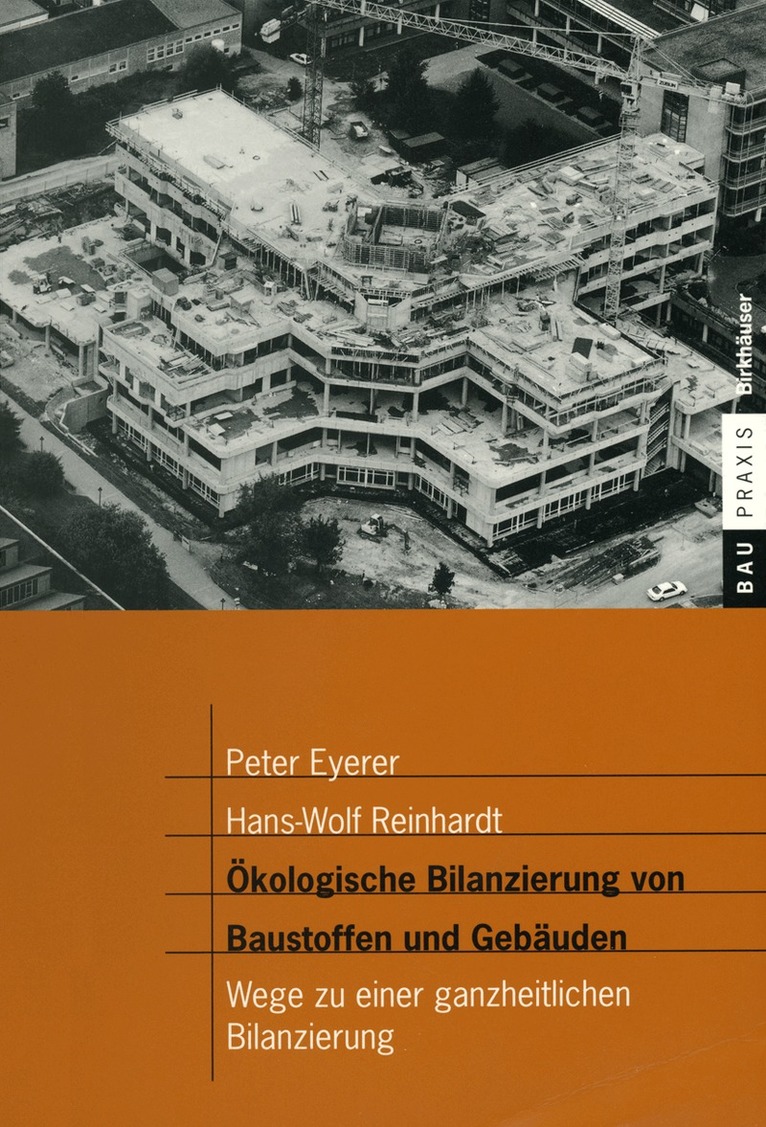
Ökologische Bilanzierung von Baustoffen und Gebäuden
Wege zu einer ganzheitlichen Bilanzierung
Häftad, Tyska, 2000
567 kr
Skickas inom 10-15 vardagar
Del 2 - RILEM State-of-the-Art Reports
Application of Super Absorbent Polymers (SAP) in Concrete Construction
State-of-the-Art Report Prepared by Technical Committee 225-SAP
Inbunden, Engelska, 2012
1 064 kr
Skickas inom 10-15 vardagar
This is the state-of-the-art report prepared by the RILEM TC “Application of Super Absorbent Polymers (SAP) in concrete construction”. It gives a comprehensive overview of the properties of SAP, specific water absorption and desorption behaviour of SAP in fresh and hardening concrete, effects of the SAP addition on rheological properties of fresh concrete, changes of cement paste microstructure and mechanical properties of concrete. Furthermore, the key advantages of using SAP are described in detail: the ability of this material to act as an internal curing agent to mitigate autogenous shrinkage of high-performance concrete, the possibility to use SAP as an alternative to air-entrainment agents in order to increase the frost resistance of concrete, and finally, the benefit of steering the rheology of fresh cement-based materials. The final chapter describes the first existing and numerous prospective applications for this new concrete additive.
Del 2 - RILEM State-of-the-Art Reports
Application of Super Absorbent Polymers (SAP) in Concrete Construction
State-of-the-Art Report Prepared by Technical Committee 225-SAP
Häftad, Engelska, 2014
1 064 kr
Skickas inom 10-15 vardagar
This is the state-of-the-art report prepared by the RILEM TC “Application of Super Absorbent Polymers (SAP) in concrete construction”. It gives a comprehensive overview of the properties of SAP, specific water absorption and desorption behaviour of SAP in fresh and hardening concrete, effects of the SAP addition on rheological properties of fresh concrete, changes of cement paste microstructure and mechanical properties of concrete. Furthermore, the key advantages of using SAP are described in detail: the ability of this material to act as an internal curing agent to mitigate autogenous shrinkage of high-performance concrete, the possibility to use SAP as an alternative to air-entrainment agents in order to increase the frost resistance of concrete, and finally, the benefit of steering the rheology of fresh cement-based materials. The final chapter describes the first existing and numerous prospective applications for this new concrete additive.