• Fri frakt över 249 kr
  • •
  • Snabba leveranser
  • •
  • Billiga böcker
Kundservice

Du är på sajten för privatpersoner.

Företag, bibliotek eller offentlig verksamhet?

Du handlar på classic.bokus.com, där alla dina funktioner finns intakta.
Till classic.bokus.com
Bokus logotyp. Gå till startsidan.
  • Erbjudanden
  • Nyheter
  • Student
  • Topplistor
  • Barn & ungdom
  • Bokus Play
  • E-böcker
  • Pocketböcker
  • Spel & pussel

10% studentrabatt med kod TERM26

Sidfot

Mina sidor

    Hjälp

    • Kundservice
    • Vanliga frågor och svar
    • Frakt och leverans
    • Retur vid ångerrätt
    • Reklamera vara
    • Betalning
    • Köpvillkor
    • Allmänna villkor
    • Information om webbplatsens tillgänglighet

    Om Bokus

    • Om oss
    • Pressrum
    • För studenter
    • För företag
    • För bibliotek och offentlig verksamhet
    • För leverantörer
    • Hållbarhet

    Populärt

    • Aktuella erbjudanden
    • Presentkort
    • Studentlitteratur
    • Nya böcker
    • Topplistor
    • Signerade böcker
    • Engelska böcker

    Inspiration

    • Boktips
    • BookTok
    • Populära bokserier
    • Barnbokskaraktärer
    • Populära författare

    Mina sidor

      Hjälp

      • Kundservice
      • Vanliga frågor och svar
      • Frakt och leverans
      • Retur vid ångerrätt
      • Reklamera vara
      • Betalning
      • Köpvillkor
      • Allmänna villkor
      • Information om webbplatsens tillgänglighet

      Om Bokus

      • Om oss
      • Pressrum
      • För studenter
      • För företag
      • För bibliotek och offentlig verksamhet
      • För leverantörer
      • Hållbarhet

      Populärt

      • Aktuella erbjudanden
      • Presentkort
      • Studentlitteratur
      • Nya böcker
      • Topplistor
      • Signerade böcker
      • Engelska böcker

      Inspiration

      • Boktips
      • BookTok
      • Populära bokserier
      • Barnbokskaraktärer
      • Populära författare
      Logotyp för Bokus
      Följ oss på Facebook (extern länk)Följ oss på Instagram (extern länk)Följ oss på YouTube (extern länk)Följ oss på TikTok (extern länk)
      bokus @ CookiesAnpassa cookiesIntegritetspolicyKöpvillkor
      Till Citymail hemsida (extern länk)Till Budbee hemsida (extern länk)Till Postnord hemsida (extern länk)Till Schenker hemsida (extern länk)Till Early Bird hemsida (extern länk)Till Walleys hemsida (extern länk)
      1. Medicin
      2. Andra medicinska specialiteter
      3. Farmakologi

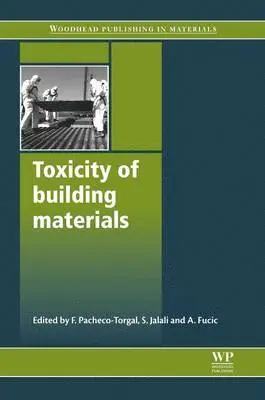
      Toxicity of Building Materials

      AvFernando Pacheco-Torgal,S Jalali

      Häftad, Engelska, 2016

      Del i serien Woodhead Publishing Series in Civil and Structural Engineering

      1 988 kr

      Beställningsvara. Skickas inom 10-15 vardagar. Fri frakt över 249 kr.

      Beskrivning

      From long-standing worries regarding the use of lead and asbestos to recent research into carcinogenic issues related to the use of plastics in construction, there is growing concern regarding the potential toxic effects of building materials on health. Toxicity of building materials provides an essential guide to this important problem and its solutions.

      Beginning with an overview of the material types and potential health hazards presented by building materials, the book goes on to consider key plastic materials. Materials responsible for formaldehyde and volatile organic compound emissions, as well as semi-volatile organic compounds, are then explored in depth, before a review of wood preservatives and mineral fibre-based building materials. Issues related to the use of radioactive materials and materials that release toxic fumes during burning are the focus of subsequent chapters, followed by discussion of the range of heavy metals, materials prone to mould growth, and antimicrobials. Finally, Toxicity of building materials concludes by considering the potential hazards posed by waste based/recycled building materials, and the toxicity of nanoparticles.

      With its distinguished editors and international team of expert contributors, Toxicity of building materials is an invaluable tool for all civil engineers, materials researchers, scientists and educators working in the field of building materials.

      • Provides an essential guide to the potential toxic effects of building materials on health
      • Comprehensively examines materials responsible for formaldehyde and volatile organic compound emissions, as well as semi-volatile organic compounds
      • Later chapters focus on issues surrounding the use of radioactive materials and materials that release toxic fumes during burning

      Produktinformation

      • Utgivningsdatum:2016-08-19
      • Mått:156 x 234 x undefined mm
      • Vikt:700 g
      • Format:Häftad
      • Språk:Engelska
      • Serie:Woodhead Publishing Series in Civil and Structural Engineering
      • Antal sidor:512
      • Förlag:Elsevier Science
      • ISBN:9780081016367

      Utforska kategorier

      • Farmakologi inom Medicin
      • Byggnadsteknik inom Naturvetenskap och teknik

      Mer om författaren

      Fernando Pacheco Torgal is a Principal Investigator at C-TAC, University of Minho. He holds the title of Counsellor (Top 0.5%) from the Portuguese Engineers Association and has been consistently recognized as a Scopus Highly Cited Scientist in the global rankings by Stanford University. With over 300 publications to his name, he has carried out in-depth peer reviews of more than one thousand scientific papers and assessed nearly one hundred research grant proposals across 15 countries. He serves on the editorial boards of nine international journals and has been involved in editorial decisions for several hundred manuscripts. In addition, he has edited 33 international books, many of which are available in the libraries of prestigious institutions such as Harvard, MIT, and Stanford. Said Jalali is former Professor of Civil Engineering at the University of Minho, and is an acknowledged expert on building materials. Dr. Aleksandra Fucic has 30 years of experience working on the biomonitoring of populations exposed to radiation or chemical agents with a special interest in achieving a healthy living environment and investigation of health risks related to new construction materials.

      Recensioner i media

      "...this is one of the first books to take a detailed look at how well different antimicrobial treatments will reduce exposure of the occupants of a building to microbes" --Dr. Graham Atherton of the University of Manchester

      Innehållsförteckning

      • Contributor contact detailsIntroduction: types of potentially toxic building materialsChapter 1: The main health hazards from building materialsAbstract:1.1 Introduction1.2 Radiation1.3 Chemical carcinogens and endocrine disruptors1.4 Nanoparticles1.5 Conclusion and future trendsChapter 2: Plastic materials: polyvinyl chloride (PVC)Abstract:2.1 Introduction2.2 Polyvinyl chloride (PVC – CAS number: 9002-86-2)2.3 Building applications of polyvinyl chloride (PVC)2.4 Health and safety concerns and polyvinyl chloride (PVC)2.5 Alternatives to polyvinyl chloride (PVC)Chapter 3: Plastic materials: chlorinated polyethylene (CPE), chlorinated polyvinylchloride (CPVC), chlorosulfonated polyethylene (CSPE) and polychloroprene rubber (CR)Abstract:3.1 Introduction3.2 Structure and properties of chlorinated polyethylene (CPE), chlorinated polyvinylchloride (CPVC), chlorosulfonated polyethylene (CSPE) and polychloroprene rubber (CR)3.3 Alternative materials3.4 Sources of further informationChapter 4: Materials responsible for formaldehyde and volatile organic compound (VOC) emissionsAbstract:4.1 Introduction4.2 Toxicology of formaldehyde4.3 Emission testing of formaldehyde and other volatile organic compounds (VOCs)4.4 Emission models of formaldehyde and other volatile organic compounds (VOCs)4.5 Determination of the characteristic emission parameters4.6 Influence of environmental factors on emissions of formaldehyde and other volatile organic compounds (VOCs)4.7 Conclusion and future trendsChapter 5: Semivolatile organic compounds (SVOCs): phthalates and flame retardantsAbstract:5.1 Semivolatile organic compounds (SVOCs) in the indoor environment5.2 Emission of semivolatile organic compounds (SVOCs) from building materials and consumer products5.3 Exposure to semivolatile organic compounds (SVOCs) emitted from building materials and consumer productsChapter 6: Wood preservativesAbstract:6.1 Introduction6.2 Types of preservatives and their potential hazards6.3 Potential toxic effects and ways they can be assessed6.4 Remedial action6.5 Conclusion and future trendsChapter 7: Mineral fibre-based building materials and their health hazardsAbstract:7.1 Introduction7.2 Classification of asbestos and mineral fibres, their structure, microstructure and properties7.3 Health effects of asbestos minerals7.4 Use of asbestos in building materials7.5 The reclamation of asbestos7.6 The disposal of asbestos-containing materials (ACMs) and recycling7.7 Conclusion and future trendsChapter 8: Radioactive materialsAbstract:8.1 Introduction8.2 Naturally occurring radioactive materials (NORM)8.3 Radon exhalation, emanation and diffusion length8.4 Measurements of radionuclide composition8.5 Measurement of radon exhalation8.6 Building materials as gamma emitters8.7 Building materials with enhanced concentrations of natural radionuclides8.8 Building products with enhanced radon exhalation rate8.9 Control of radioactivity of building materials in regulationsChapter 9: Materials that release toxic fumes during fireAbstract:9.1 Introduction9.2 Fire behaviour of building materials9.3 The effects of conditions on the initiation and propagation of fire9.4 Health effects and analysis of combustion products9.5 Remedial actions9.6 Future trends for reducing toxic substances in fire and related resources9.7 ConclusionChapter 10: Heavy metals: leadAbstract:10.1 Introduction10.2 Use of lead in buildings and drinking water contamination10.3 Toxicity of lead to humans10.4 Assessing the risk associated with lead in drinking water10.5 Lead pipe replacement and fittings containing lead10.6 Corrective water treatment10.7 Recommendations10.8 Sources of further information and adviceChapter 11: Other heavy metals: antimony, cadmium, chromium and mercuryAbstract:11.1 Introduction11.2 Antimony11.3 Cadmium11.4 Chromium11.5 Mercury11.6 Remedial actions11.7 Future trends11.8 ConclusionsChapter 12: Materials prone to mould growthAbstract:12.1 Introduction12.2 Mould fungi in construction materials12.3 Algae in construction materials12.4 Potential toxic effects and ways they can be monitored12.5 Remedial action and future trends12.6 Sources of further information and adviceChapter 13: Antimicrobial treatment and efficacyAbstract:13.1 Introduction13.2 Research programs13.3 Static microbial test chamber13.4 Dynamic microbial test chamber13.5 Effects of moisture, relative humidity (RH) and dust13.6 Duct cleaning effectiveness on microbial growth13.7 Evaluation of antimicrobial treatments as control technologies13.8 Antimicrobial product acknowledgment13.9 Conclusions13.10 Future trends13.11 Sources of further informationChapter 14: Potential hazards from waste based/recycled building materialsAbstract:14.1 Introduction14.2 Main types of building materials containing wastes14.3 Waste properties and potential hazards14.4 Scenarios of pollutant emission from construction materials14.5 Potential hazard assessment for construction materials in their service life14.6 Conclusion and future trendsChapter 15: Toxicity of nanoparticlesAbstract:15.1 Introduction to nanoparticle and nanomaterial toxicity15.2 Morphology, classification, and properties of nanomaterials15.3 Types of building materials incorporating nanomaterials15.4 The uptake of nanoparticles and their toxicity15.5 Diseases associated with nanoparticle exposure15.6 Detection of occupational nanoparticles and remedial action15.7 Sources of further information and advice15.8 Conclusion and future trendsIndex
      Hoppa över listan

      Du kanske också är intresserad av

      Aleksandra Fucic, S Jalali, Fernando Pacheco-Torgal - Toxicity of Building Materials, E-bok

      Toxicity of Building Materials

      Aleksandra Fucic, S Jalali, Fernando Pacheco-Torgal

      E-bok
      2012

      2 525 kr

      V M John, Joao Labrincha, S Jalali, Fernando Pacheco-Torgal - Eco-Efficient Concrete, E-bok

      Eco-Efficient Concrete

      V M John, Joao Labrincha, S Jalali, Fernando Pacheco-Torgal

      E-bok
      2013

      2 840 kr

      Ivanka Netinger Grubesa, Ivana Barisic, Aleksandra Fucic, Samitinjay Sadashivrao Bansode - Characteristics and Uses of Steel Slag in Building Construction, Inbunden

      Characteristics and Uses of Steel Slag in Building Construction

      Ivanka Netinger Grubesa, Ivana Barisic, Aleksandra Fucic, Samitinjay Sadashivrao Bansode

      Inbunden, 2016

      1 515 kr

      Samitinjay Sadashivrao Bansode, Aleksandra Fucic, Ivana Barisic, Ivanka Netinger Grubesa - Characteristics and Uses of Steel Slag in Building Construction, E-bok

      Characteristics and Uses of Steel Slag in Building Construction

      Samitinjay Sadashivrao Bansode, Aleksandra Fucic, Ivana Barisic, Ivanka Netinger Grubesa

      E-bok
      2016

      1 864 kr

      Fernando Pacheco-Torgal, Prinya Chindaprasirt - Advances in Sustainable Masonry Bricks and Blocks, Häftad

      Advances in Sustainable Masonry Bricks and Blocks

      Fernando Pacheco-Torgal, Prinya Chindaprasirt

      Häftad, 2025

      2 437 kr

      Serji Amirkhanian, Alina Pruna, Claes Goran-Granqvist, Ali Nazari, Maria Vittoria Diamanti, Fernando Pacheco-Torgal - Nanotechnology in Eco-efficient Construction, E-bok

      Nanotechnology in Eco-efficient Construction

      Serji Amirkhanian, Alina Pruna, Claes Goran-Granqvist, Ali Nazari, Maria Vittoria Diamanti, Fernando Pacheco-Torgal

      E-bok
      2018

      4 793 kr

      Pacheco-Torgal,Fernand, Fernando Pacheco-Torgal, Lech Czarnecki, Anna Laura Pisello, Luisa F. Cabeza, Claes Goran-Granqvist - Eco-efficient Materials for Reducing Cooling Needs in Buildings and Construction, Häftad

      Eco-efficient Materials for Reducing Cooling Needs in Buildings and Construction

      Pacheco-Torgal,Fernand, Fernando Pacheco-Torgal, Lech Czarnecki, Anna Laura Pisello, Luisa F. Cabeza, Claes Goran-Granqvist

      Häftad, 2020

      2 430 kr

      Fernando Pacheco-Torgal, Maria Vittoria Diamanti, Ali Nazari, Claes Goran-Granqvist - Nanotechnology in Eco-Efficient Construction, Inbunden

      Nanotechnology in Eco-Efficient Construction

      Fernando Pacheco-Torgal, Maria Vittoria Diamanti, Ali Nazari, Claes Goran-Granqvist

      Inbunden, 2013

      2 157 kr

      Henk Jonkers, Niranjan Karak, Volodymyr Ivanov, Fernando Pacheco-Torgal - Biopolymers and Biotech Admixtures for Eco-Efficient Construction Materials, E-bok

      Biopolymers and Biotech Admixtures for Eco-Efficient Construction Materials

      Henk Jonkers, Niranjan Karak, Volodymyr Ivanov, Fernando Pacheco-Torgal

      E-bok
      2016

      2 929 kr

      Pacheco-Torgal,Fernand, Fernando Pacheco-Torgal, Dan Tsang - Advances in Bio-Based Materials for Construction and Energy Efficiency, Häftad

      Advances in Bio-Based Materials for Construction and Energy Efficiency

      Pacheco-Torgal,Fernand, Fernando Pacheco-Torgal, Dan Tsang

      Häftad, 2025

      3 051 kr